If you want better idle noise
Choose EcoFlow River 3. It scores 4.8 vs 1.0 for idle noise, with a 4.2 overall score.

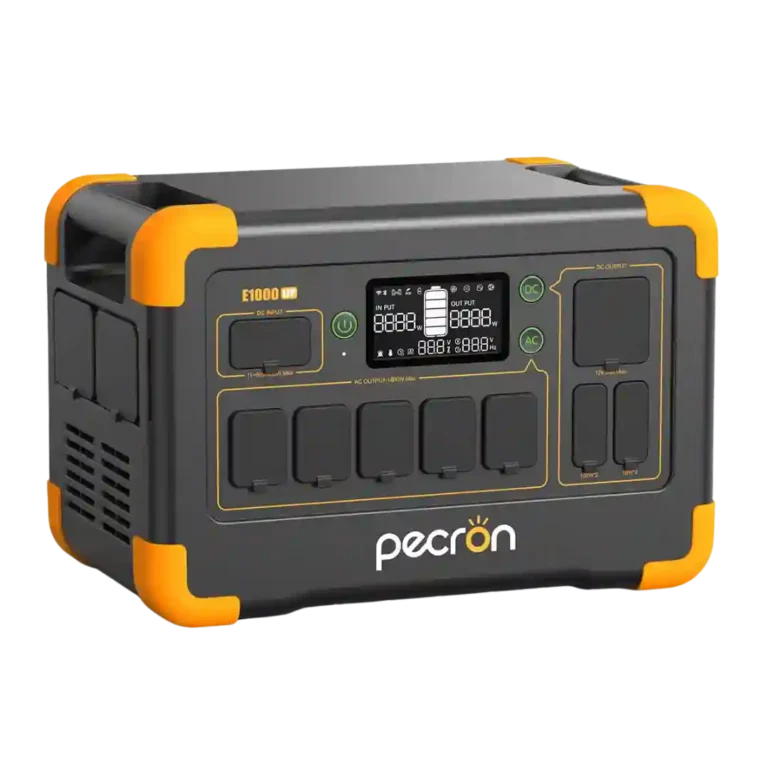
Choose it for budget-friendly camping, RV, and light backup where strong 12V output, fast charging, expansion, and winter self-heating matter. Skip it for large motor loads or demanding emergency backup if limited surge headroom—or the conflicting overheating reports—would be unacceptable.
Best for budget-conscious campers, van/RV users, and light-backup buyers who value high-current DC output, fast solar and AC charging, expansion, and sub-freezing charging support.
Not ideal for large power tools, multiple heavy appliances, or buyers who need unwavering emergency-backup confidence, because surge capability is limited and thermal behavior was inconsistent across units.
The Pecron E1000LFP stands out for value: around 1kWh of LiFePO4 storage, five AC outlets, strong high-current DC output, 600W solar input, fast wall charging, app control, expansion support, and unusually useful cold-weather self-heating. Most hands-on results show solid usable capacity and stable 1,800W operation, while the 12V side is especially efficient and practical for camping or vehicle setups. The main tradeoff is surge performance, which repeatedly struggles with large motors and heavy startup loads. Thermal findings are also inconsistent: several units stayed cool and quiet under load, but one sample repeatedly overheated, shut down, and delayed recharging. That conflict makes the E1000LFP more compelling as a budget camping, RV, and light-backup station than as a no-compromise emergency system for sustained heavy loads.
Compared with other Generators, this product is above average in USB-A ports, DC output, 12-volt outlet, near average in overall product satisfaction, portability, below average in automatic start, idle noise, durability.
| Attribute | This product | Category average | Difference |
|---|---|---|---|
| automatic start | 1.5 | 4.9 | -3.4 |
| idle noise | 1.0 | 4.3 | -3.3 |
| durability | 1.5 | 4.2 | -2.7 |
| Bluetooth connectivity | 1.7 | 3.8 | -2.1 |
| battery reliability | 1.5 | 3.6 | -2.1 |
| cooling performance | 2.3 | 4.3 | -1.9 |
| surge capacity | 2.3 | 4.1 | -1.8 |
| USB-A ports | 5.0 | 3.1 | +1.9 |
Choose EcoFlow River 3. It scores 4.8 vs 1.0 for idle noise, with a 4.2 overall score.
Choose Bluetti Elite 30 V2. It scores 4.9 vs 1.5 for durability, with a 4.4 overall score.
Choose AFERIY P280. It scores 5.0 vs 1.5 for battery reliability, with a 4.5 overall score.
Choose EcoFlow River 2. It scores 5.0 vs 1.5 for automatic start, with a 4.0 overall score.
Products reviewers directly compared with this model, grouped into quick takeaways.
Yes at the sale prices in these reviews, generally around $369-$399. Reviewers repeatedly called the feature set unusually strong for the money, though one test sample's overheating makes the value less convincing for sustained heavy-duty use.
Yes. Multiple hands-on tests ran full-size refrigerators successfully, with measured runtimes ranging from roughly 13 to more than 16 hours depending on the refrigerator and test conditions.
Its internal heaters can warm the LiFePO4 cells before charging in cold conditions, and reviewers demonstrated cold recharging. The heaters need incoming charging power, however, rather than heating from the stored battery alone.
Only selectively. Smaller tools and some compressors worked, but larger saws, vacuums, and overlapping heavy loads often exposed the limited surge headroom.
One measured test recorded a 13.5 ms switchover and kept a desktop computer running. Another reviewer considered the backup implementation only average because the inverter must already be switched on.
Reviewers generally liked the 600W maximum solar input and demonstrated charging near or above that level, making sub-two-hour charging possible with enough panel power. The 60V input ceiling can make larger series-panel arrangements less convenient.
These are a few of the reviews included in our analysis.

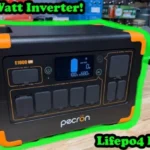
The Pecron E1000LFP offers 1,024Wh capacity, an 1,800W inverter, and five AC outlets for just $379. See its pros, cons, and camping value.
EcoFlow DELTA 3 Plus vs Pecron E1000LFP: we compared recharge speed, solar input, portability and noise. Which portable power station is the...
The Pecron E1000LFP delivers 1,024Wh through an 1,800W inverter and returns 90% of its rated capacity on the DC side, with a 300W XT60 output...
Our Pecron E1000LFP 1800W 1024Wh review: 1,024Wh, 1,800W output, $0.39 per Wh. Calculated runtimes for a fridge, CPAP and laptop, the full...
This power station offers a useful port selection, solid usable capacity, and fast charging on paper, but the review testing found thermal...
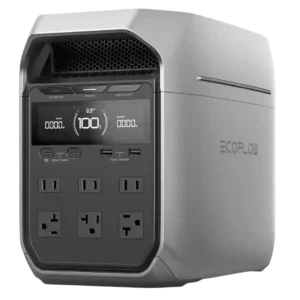
Best for rapid charging, versatile ports, excellent app control, and portable backup for appliances or electronics. Skip it for unattended low-load use or sustained heavy loads unless fan behavior and...
Pros: rated output, peak output
Cons: 30-amp output, parallel operation support
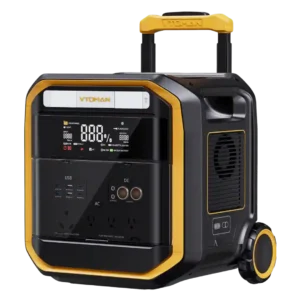
Best for fast-charging, high-output backup power that can run major appliances and roll easily between locations. Skip it if you need frequent lifting, a small footprint, or a screen that...
Pros: power output, surge capacity
Cons: specification accuracy, peak output
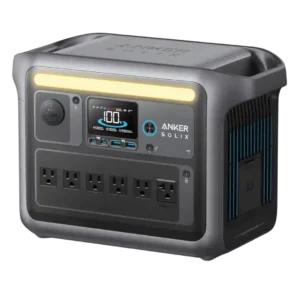
Best for fast charging, strong portable output, and short outage or camping duty. Skip it for quiet rooms, multi-day whole-home backup, or solar-only use with small panels.
Pros: power output, rated output
Cons: dual-input charging, cable storage
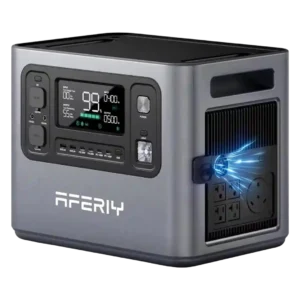
Choose the P280 for high-output home, RV, or off-grid backup with fast charging, strong usable capacity, UPS protection, and expansion. Skip it if you need lightweight portability, polished app control,...
Pros: rated output, peak output
Cons: app connectivity, voltage regulation