If you want better load handling
Choose EcoFlow Delta 3 Plus Review. It scores 5.0 vs 1.4 for load handling, with a 4.6 overall score.

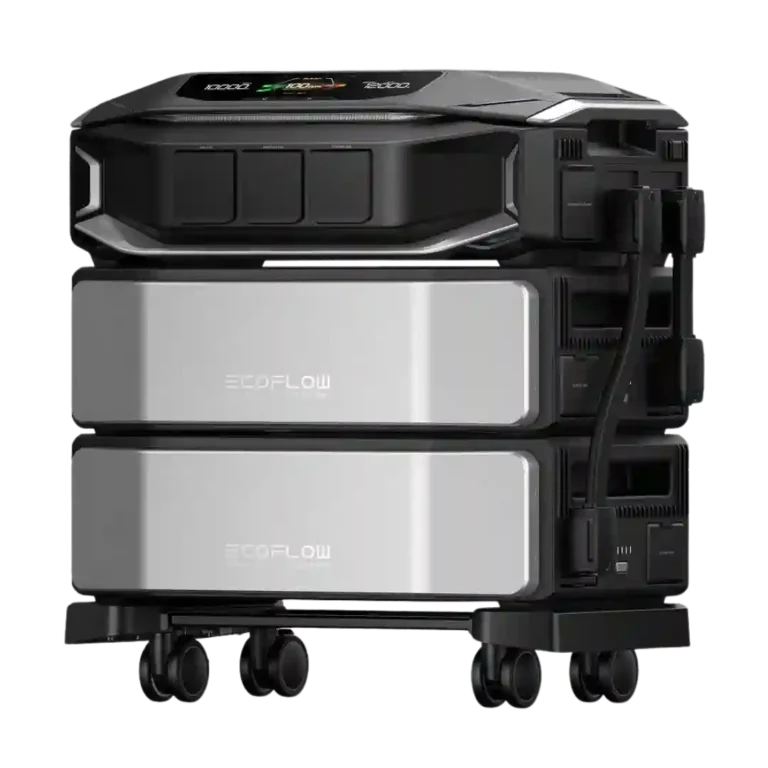
Choose it for scalable whole-home backup, 12kW single-inverter power, fast solar/AC charging, and quiet operation. Skip it if value, simple solar setup, USB/DC ports, or fully polished UPS/load behavior matter more.
Homeowners who want scalable whole-home backup, large solar input, serious HVAC or appliance capability, and a modular system that can be moved or expanded later.
Budget-conscious buyers, campers, and people who only need a few essential circuits should look smaller. It also suits buyers poorly if plug-and-play solar wiring, built-in USB/DC ports, or completely polished UPS behavior are priorities.
The DELTA Pro Ultra X pushes portable backup into true residential territory. Reviewers consistently praise its 12kW single-inverter output, 10kW solar input, huge battery expansion range, quiet operation, and near-instant home-backup switchover. Smart Home Panel 3 integration adds unusually deep circuit monitoring and control, while the modular design remains movable in a way fixed wall batteries are not. The tradeoff is refinement and cost. Several reviewers dislike the missing USB/DC ports, proprietary charging cable, and solar-isolator wiring, while hands-on testing exposes sensitive load balancing, inconsistent surge starts, and awkward UPS or generator-charging behavior. The app also divides opinion. It is a highly capable whole-home platform, but buyers paying this much should understand those early quirks before committing.
Compared with other Generators, this product is above average in weather resistance, off-gassing odor, service network, near average in overall product satisfaction, storage convenience, below average in UPS functionality, load handling, startup performance.
| Attribute | This product | Category average | Difference |
|---|---|---|---|
| UPS functionality | 1.3 | 4.4 | -3.2 |
| load handling | 1.4 | 4.5 | -3.1 |
| startup performance | 1.8 | 4.4 | -2.7 |
| warranty | 1.5 | 4.1 | -2.6 |
| pass-through charging | 2.0 | 4.5 | -2.5 |
| cable storage | 1.5 | 3.9 | -2.4 |
| solar panel bundle value | 1.3 | 3.5 | -2.3 |
| replacement parts availability | 1.7 | 3.9 | -2.2 |
Choose EcoFlow Delta 3 Plus Review. It scores 5.0 vs 1.4 for load handling, with a 4.6 overall score.
Choose AFERIY P280. It scores 5.0 vs 1.0 for solar cable compatibility, with a 4.5 overall score.
Choose Pecron E3600. It scores 5.0 vs 1.3 for solar panel bundle value, with a 4.1 overall score.
Choose Jackery HomePower 3600 Plus. It scores 4.8 vs 1.3 for UPS functionality, with a 4.4 overall score.
Products reviewers directly compared with this model, grouped into quick takeaways.
Yes, several reviewers used the Ultra X for whole-home backup, including HVAC and other large loads. Actual runtime and simultaneous-load headroom depend on battery count, inverter configuration, and how the home's loads are balanced.
Expandability is one of its strongest features. Reviews describe scaling from the required two-battery base into multi-stack, multi-inverter installations approaching roughly 180kWh of storage.
Reviewers repeatedly describe the transfer as effectively seamless, generally under about 20 milliseconds, with lights, clocks, networking gear, and other electronics continuing without a noticeable interruption.
The recurring complaints are high cost, fewer 120V outlets, no USB/DC ports, a proprietary AC charging cable, extra solar-isolator wiring, and early quirks involving load balancing, surge starts, or certain UPS charging modes.
Opinions are mixed. Several reviewers find it intuitive and powerful for circuit control and monitoring, while ZDNET specifically describes the layout as confusing and says some settings take time to learn.
It is movable compared with a permanently mounted home battery, not casually portable like a camping power station. The modules separate and the cart helps on flat floors, but the batteries are heavy and stairs still require lifting.
These are a few of the reviews included in our analysis.




EcoFlow DELTA Pro Ultra vs Ultra X: we compared capacity, solar input and home backup side by side. Which of these two power stations is better?
EcoFlow DELTA Pro Ultra X review: we tested its expandable capacity, output and home install. Is this really the ultimate home backup power...
Discover how the EcoFlow DELTA Pro Ultra X performs for whole-home backup, solar storage, fast charging, and long-term energy resilience.
Despite three power outages in 2 months, the EcoFlow Delta Pro Ultra X kept the lights on. Learn more about how it performed in our review.
The EcoFlow Delta Pro Ultra X is one of the few power stations that has kept my home running like normal without interruption.
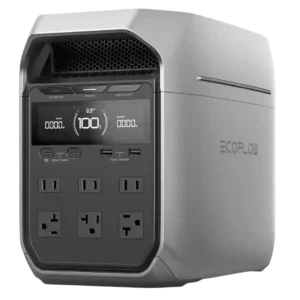
Best for rapid charging, versatile ports, excellent app control, and portable backup for appliances or electronics. Skip it for unattended low-load use or sustained heavy loads unless fan behavior and...
Pros: rated output, peak output
Cons: 30-amp output, parallel operation support
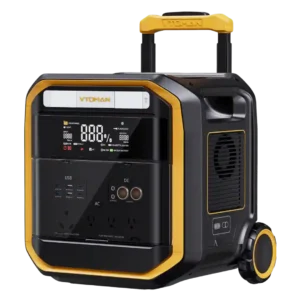
Best for fast-charging, high-output backup power that can run major appliances and roll easily between locations. Skip it if you need frequent lifting, a small footprint, or a screen that...
Pros: power output, surge capacity
Cons: specification accuracy, peak output
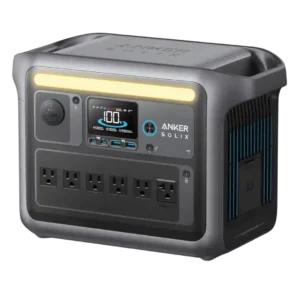
Best for fast charging, strong portable output, and short outage or camping duty. Skip it for quiet rooms, multi-day whole-home backup, or solar-only use with small panels.
Pros: power output, rated output
Cons: dual-input charging, cable storage
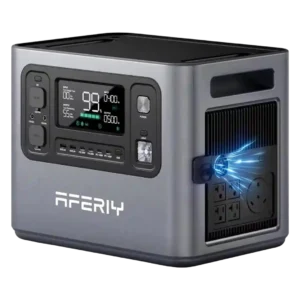
Choose the P280 for high-output home, RV, or off-grid backup with fast charging, strong usable capacity, UPS protection, and expansion. Skip it if you need lightweight portability, polished app control,...
Pros: rated output, peak output
Cons: app connectivity, voltage regulation