If you want better flashlight usefulness
Choose Suunto Race 2. It scores 5.0 vs 4.3 for flashlight usefulness, with a 4.0 overall score.

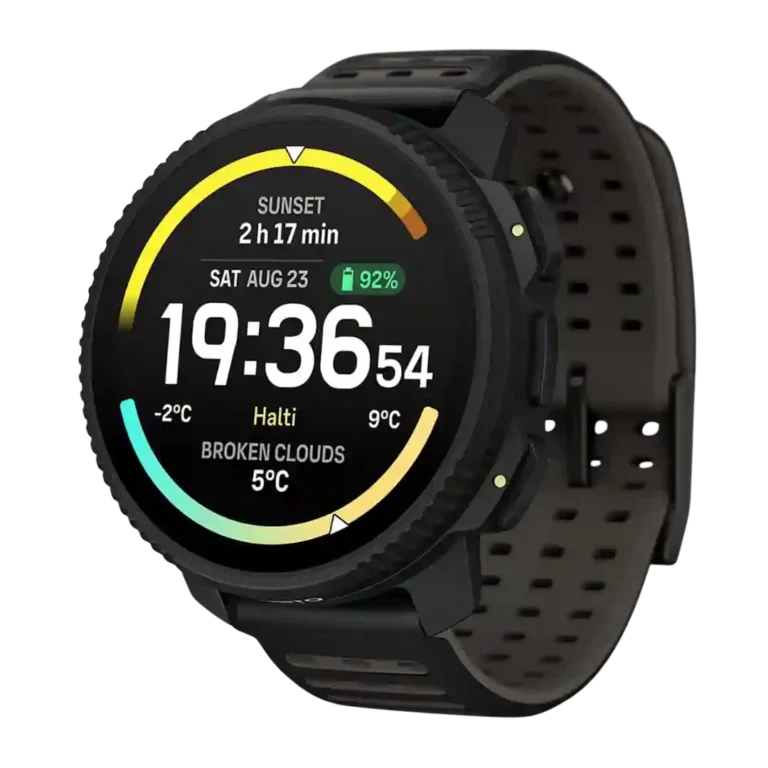
Choose the Suunto Vertical 2 if you want long AMOLED battery life, accurate GPS, offline maps, and a rugged flashlight-equipped outdoor watch. Skip it if you need rich smartwatch apps, payments, calls, onboard music, or a smaller daily watch.
Best for endurance runners, hikers, trail users, and outdoor athletes who prioritize battery life, GPS accuracy, offline maps, rugged hardware, and a wrist flashlight over smartwatch extras.
Not for shoppers who want a smaller everyday smartwatch with deep app support, tap-to-pay, onboard music, call handling, rich notifications, or the most polished navigation ecosystem.
Reviewers largely describe the Suunto Vertical 2 as a serious outdoor watch that finally pairs Suunto’s endurance reputation with a bright AMOLED screen. Battery life, GPS accuracy, maps, build quality, and the LED flashlight are the clear strengths, and several reviewers found the app and training/recovery data cleaner than before. The tradeoff is that it remains more adventure tool than full smartwatch: payments, onboard music, richer notifications, SOS smarts, and Garmin-depth ecosystem support are limited or absent. Comfort also depends on wrist size, strap fit, and tolerance for a heavy 49mm case.
Compared with other Smartwatches, this product is above average in charging convenience, reliability, operating system experience, near average in companion app quality, button controls, below average in safety features, contactless payments, size options.
| Attribute | This product | Category average | Difference |
|---|---|---|---|
| safety features | 2.0 | 3.9 | -1.9 |
| contactless payments | 1.0 | 2.8 | -1.8 |
| charging convenience | 4.9 | 3.3 | +1.6 |
| size options | 1.5 | 3.2 | -1.7 |
| smartwatch features | 2.0 | 3.5 | -1.5 |
| onboard music storage | 1.5 | 2.9 | -1.4 |
| app ecosystem | 2.3 | 3.6 | -1.3 |
| step counting accuracy | 2.5 | 3.8 | -1.3 |
Choose Suunto Race 2. It scores 5.0 vs 4.3 for flashlight usefulness, with a 4.0 overall score.
Choose Suunto Run. It scores 4.7 vs 3.6 for comfort, with a 4.0 overall score.
Choose Garmin Forerunner 165. It scores 5.0 vs 2.6 for smartphone notifications, with a 4.3 overall score.
Choose Garmin Enduro 3. It scores 5.0 vs 1.0 for contactless payments, with a 4.2 overall score.
Products reviewers directly compared with this model, grouped into quick takeaways.
Yes. Battery life was the clearest point of agreement, with reviewers repeatedly calling it class-leading, staggering, or excellent for an AMOLED adventure watch.
Reviewers were strongly positive on land-based GPS accuracy, describing it as spot-on, near-perfect, rock-solid, or very accurate across runs, hikes, and challenging terrain.
It is improved, but not flawless. Several reviewers saw accurate readings, while others reported startup wobble, high-intensity drift, or fit-sensitive results.
It works best as an outdoor performance watch, not a full smartwatch. Reviewers repeatedly noted limited notifications, no onboard music, no tap-to-pay, and weaker app ecosystem depth than Garmin.
Yes. Reviewers found the LED flashlight useful for trails, travel, camp, indoor searching, and night use, though some criticized the software controls or access flow.
Comfort was mixed. Some reviewers found it balanced, secure, and surprisingly wearable, while others called it bulky, heavy, or chunky for sleep and smaller wrists.
These are a few of the reviews included in our analysis.
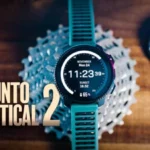
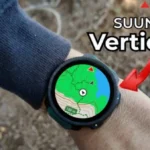
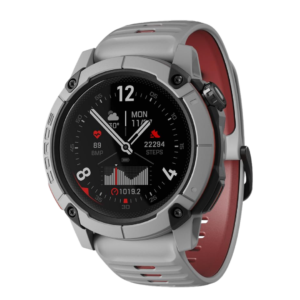
Best for long battery life, accurate GPS and useful offline maps at a strong price. Skip it if you need payments, richer apps, a built-in LED flashlight or polished smartwatch...
Pros: pairing reliability, software smoothness
Cons: activity auto-detection, voice assistant quality
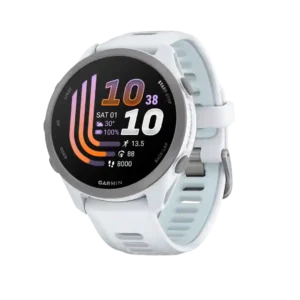
Best for accurate run tracking, deep Garmin coaching and phone-free Spotify in a light package. Skip it if you need full maps, triathlon mode, Apple Music support or the strongest...
Pros: fitness tracking accuracy, music controls
Cons: alert volume controls, charging convenience
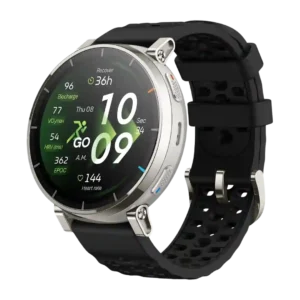
Good if you want premium running features, long battery life, and maps for under $200. Skip it if you need flawless heart-rate data, multiband GPS, LTE, or richer app support.
Pros: pairing reliability, brightness
Cons: Wi-Fi connectivity, Bluetooth connectivity
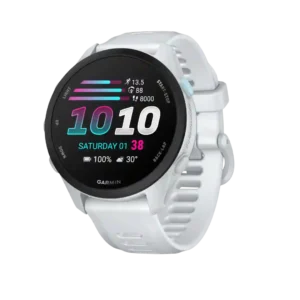
Best for accurate running metrics, excellent coaching tools, a bright AMOLED display, and dependable battery life. Skip it if you need offline maps, music storage, contactless payments, multi-band GPS, or...
Pros: step counting accuracy, app ecosystem
Cons: Bluetooth connectivity, pairing reliability