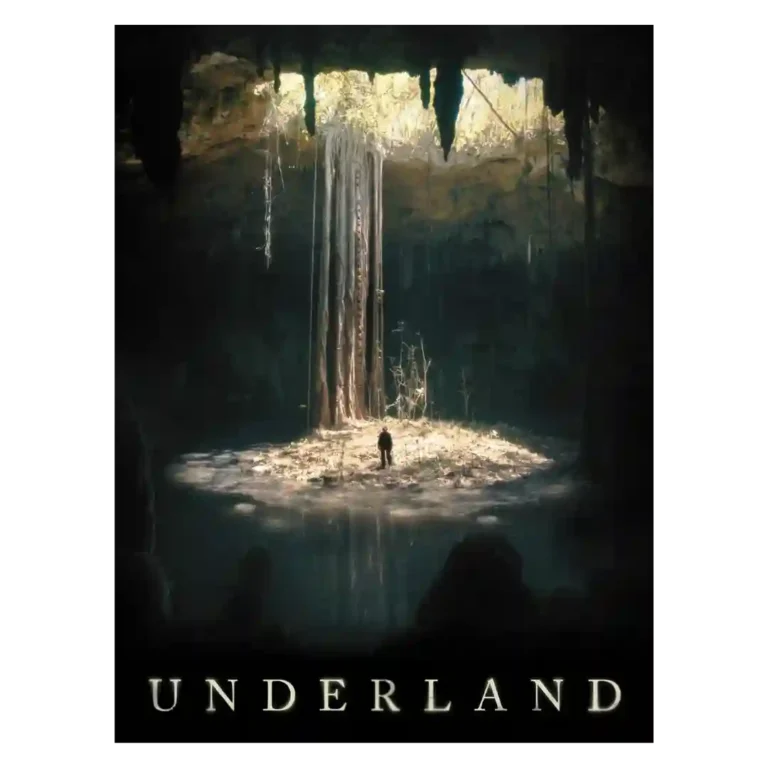
Choose it for breathtaking underground imagery, immersive sound, and an accessible philosophical journey. Skip it if you want sustained focus on each explorer or firm answers to its questions.
Best for
Best for viewers who enjoy visually driven documentaries, philosophical nature writing, unusual science, and atmospheric journeys into rarely filmed places.
Not for
Skip it if you prefer exhaustive explanations, a single sustained storyline, or a comprehensive adaptation of Macfarlane’s book.
Verdict
Underland turns caves, storm drains, and a deep science laboratory into a hypnotic meditation on what humanity buries, seeks, and leaves behind. Its greatest strengths are Ruben Woodin Dechamps’ spectacular low-light photography, Hannah Peel’s ethereal score, intricate sound design, and Sandra Hüller’s often mesmerizing narration. Robert Petit also finds meaningful connections among Mayan archaeology, urban inequality, and the search for dark matter. The tradeoff is compression: at 79 minutes, the film repeatedly leaves compelling people and places before they feel fully explored. Some critics also found the poetic voiceover overworked and the ending too conventional. Even so, the sensory craft and philosophical ambition make it a distinctive, memorable documentary.
Petit’s direction is visually confident, sensorial, and unusually ambitious for a documentary adaptation. He succeeds at creating wonder, though the three-part structure sometimes limits depth and cohesion.
The three underground journeys create an ambitious, often absorbing meditation on human curiosity and deep time. The structure can feel scattered or light on development, especially when it leaves a compelling thread just as it gains momentum.
The underground photography is the film’s clearest triumph, turning caves, storm drains, laboratories, roots, and debris into haunting, otherworldly images. Limited light and close detail make the hidden Earth feel both intimate and immense.
The film sustains a striking, hypnotic aesthetic that blends documentary observation with poetic and science-fiction-like imagery. Even less enthusiastic critics found the subterranean worlds visually arresting.
The film draws rich connections among archaeology, poverty, science, ecology, mortality, and deep time. Its philosophical reach is compelling, though some critics found the narration shallower than the subject deserved.
The cross-cutting often creates elegant visual and thematic links among Mexico, Las Vegas, and Canada. Some critics found the transitions seamless, while others felt the constant switching weakened immersion in each individual story.
At 79 minutes, the film often feels brisk and well judged, but several critics wanted more time with its three central journeys. Its compactness prevents drag while also leaving some discoveries underdeveloped.
The writing ranges from carefully composed and evocative to overly rhetorical. Its best lines clarify the film’s interconnected themes, while weaker passages feel strained or too eager to explain.
The conclusion reinforces the idea that all life is connected, which works powerfully for some viewers. Others found it conventional or visually weaker and felt the film never fully resolved its many ideas.
The 79-minute journey is generally brisk and absorbing, but the rhythm becomes uneven when the film jumps away from its most compelling sections. Some critics praised the restraint, while others wanted longer, more sustained immersion.
The basic journeys are easy to follow, but the film sometimes raises more questions than it answers and does not always explain why the scientific work matters. Its thematic connections can feel suggestive rather than fully argued.
The sparse spoken material can be calm and evocative, but the poetic voiceover divides opinion. Some find it transporting; others think the images would be stronger without it.
Dechamps’ cinematography is repeatedly singled out as gorgeous, sharp, and otherworldly. His limited-light images reveal texture and scale in spaces that could easily have become visually monotonous.
Petit is widely praised for crafting an unusually immersive, visually assured documentary that links science, myth, and human curiosity. Criticism centers on a structure that occasionally feels abbreviated or fragmented.
Peel’s score is consistently praised for its ethereal beauty and its ability to adapt to the film’s changing environments. Her music helps bind the documentary’s scientific and poetic moods.
Hüller’s calm, dreamlike narration often deepens the film’s poetic atmosphere and gives it added prestige. A minority found the prose overworked, portentous, or too insistent.
Tec Pool’s cave journey is often the film’s most compelling thread, combining adventure with a personal connection to Mayan ancestry. Her presence gives the documentary cultural and emotional grounding.
Compared with other Movies, this product is above average in family friendliness, language level, age appropriateness, near average in directing quality, pacing, below average in animation quality, character development, scares.
Yes. The cinematography is the most consistent point of praise, transforming caves, drains, laboratories, roots, and debris into haunting, otherworldly images.
Does the film closely follow Robert Macfarlane’s book?
It preserves the book’s poetic curiosity and subterranean settings, but compresses the material heavily. Several critics felt the film loses some political urgency and thematic depth.
Is the 79-minute runtime a strength or a weakness?
Both. The short runtime keeps the experimental style brisk, but it also leaves the three explorers and several discoveries underdeveloped.
Is the documentary easy to understand?
The scientific material is generally beginner-friendly, and the three journeys are easy to follow. The film favors wonder and open questions over detailed explanations.
Is it suitable for family viewing?
It is broadly accessible to older children and adults, with no major content concerns noted. Tight caves, darkness, flooding danger, and underground spaces may unsettle sensitive viewers.
Sample Expert Reviews We Analyzed
These are a few of the reviews included in our analysis.
Choose this inventive, unsettling documentary for fearless questioning, dark humor, and unpredictable storytelling. Skip it if you want a short, straightforward exposé with definitive answers.
Best for a hypnotic, bookish mystery with tactile visuals and cerebral chills. Skip it if reading-heavy, attention-demanding storytelling sounds more exhausting than exciting.
Best for an intimate, searching documentary that rewards focused attention and invites discussion. Skip it when devastating grief, addiction footage, and unresolved family tensions would be too much.
Best for patient suspense, an unforgettable score, and an unsettling masked killer. Skip it for very young children or if you want to avoid intense scares; its restrained kills also...