
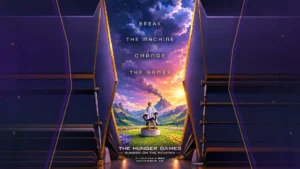
The Hunger Games: Sunrise on the Reaping Feature Scores
Overall Scorata score: 3.7/5
Based on 39 analyzed reviews · View source samples
Explore all 57 feature scores for The Hunger Games: Sunrise on the Reaping, organized into pros and cons.
Scores by Feature
Summary
57 reviewed features-
Very positive 4.5-5.019 (33%)
-
Positive 3.5-4.413 (23%)
-
Neutral 2.5-3.46 (11%)
-
Negative 1.5-2.417 (30%)
-
Very negative below 1.52 (4%)
Pros
Sort
-
Joseph Zada carries the film with a warm, determined young Haymitch whose growing trauma convincingly leads toward the familiar older character, though a few critics find the transition or accent strained.
-
Lush arena landscapes and richly furnished, 1970s-inspired Capitol interiors supply much of the film’s spectacle and distinctive identity.
-
The younger incarnations of established characters generally feel well chosen, and the newcomers bring a welcome mix of vulnerability and showmanship.
-
The large ensemble is a major draw, with many actors finding expressive new interpretations of familiar Panem figures; a minority find individual portrayals too broad.
-
The almost fairy-tale beauty of the deadly arena and colorful retro Capitol earn wide praise, though occasional artificial imagery disrupts immersion.
-
The striking retro-futurist costumes vividly separate decadent Capitol elites from the struggling districts.
-
Haymitch’s losses make this one of the series’ bleakest entries; many find the tragedy devastating, while others feel the relentless sorrow becomes numbing.
-
Francis Lawrence brings assured command of Panem’s spectacle and tension, although some find his familiar approach too restrained or repetitive.
-
Haymitch’s bonds with Maysilee and Lenore often feel genuine, giving the losses and alliances a human core.
-
The movie expands the visual and political workings of Panem, linking the more primitive early Games to the spectacle seen in later stories.
-
Connections to Katniss’s future rebellion reframe Haymitch’s story for returning fans, though forced cameos and conspicuous setup sometimes feel mechanical.
-
Theme depth gets mixed responses: some find it effective, while others feel it weakens the story or presentation.
-
The pageant-like Capitol elites and media machinery create sharp, often grotesque political satire that some viewers find too theatrical.
-
The Capitol’s manipulation of televised footage, political spectacle and bright visual symbolism deepens its portrait of propaganda.
-
The Games’ televised pageantry is treated as machinery that edits out suffering and rebellion, making exploitation itself part of the spectacle.
-
Most find the return to Panem absorbing and often thrilling despite the grief; a vocal minority see an exhausted, overly familiar installment.
-
The tragic resolution gives Haymitch’s future a moving context, but the late cameos are variously celebrated and criticized as forced fan service.
-
The origin story gives Haymitch’s eventual disillusionment deeper meaning, although its familiar trajectory and thin sections divide critics.
-
The story’s critique of children used as televised instruments of oppression remains central, even where the film softens the book’s brutality.
-
Bold imagery, muscular camera work and contrasting bright landscapes with dark events make the film especially cinematic.
-
Plutarch’s double role and the compromises of resisting an oppressive state add intrigue to the political plot.
-
Lavish sets, locations and intricate world details give this prequel an expansive theatrical feel, even where its arena action disappoints.
-
Grotesque prosthetics and elaborate Capitol styling create instantly memorable faces, though some disguises and cameo styling feel overdone.
-
The deadly arena offers inventive traps and urgent action, but other critics find the battles too brief, familiar or overwhelmed by effects.
-
Haymitch and Lenore’s affection gives the film tenderness, but limited shared scenes and familiar YA romantic beats leave some critics cold.
-
The movie mixes high-stakes action with grief and political conflict, building powerful moments despite occasional tonal strain.
-
The orchestral score helps give the grim arena and emotional aftermath dramatic sweep.
-
President Snow remains threatening, with Ralph Fiennes emphasizing his controlling malice even when the script gives him little room.
-
The adaptation broadly preserves the novel’s direction, but removed relationships and softened deaths can diminish its harsher nuance for readers.
-
Sound design is generally considered a strength, helping make this return to Panem compelling and memorable.
-
Value for money is generally considered a strength, helping make this return to Panem compelling and memorable.
-
Zada’s drawl often recalls Woody Harrelson’s delivery, though a few critics find the attempted vocal connection distracting.
Cons
Sort
-
An enormous cast makes the world lively but leaves many supporting tributes and mentors disappointingly underserved.
-
A familiar cycle of new allies followed by losses becomes predictable for some viewers, weakening the shock of successive deaths.
-
The computer-generated animals and arena hazards are a noticeable weak point for several critics, contrasting with otherwise handsome practical environments.
-
The packed cast creates a lively world but sidelines several mentors and tributes, sometimes reducing their stories to brief introductions before tragedy strikes.
-
The prequel adds poignant context but frequently repeats the series’ familiar reaping, parade, arena and rebellion beats rather than discovering a truly new structure.
-
The deaths of young tributes and vicious traps make this difficult viewing for those especially disturbed by bloodshed, even with some softened violence.
-
The colorful Capitol officials provide memorable eccentricity, although their theatrical exaggeration strikes some viewers as unconvincing.
-
At roughly 158 minutes, the expansive scale is rewarding to engaged viewers but a recurring obstacle for those who find the middle or ending overextended.
-
Some find the arena sufficiently brutal, while several argue the PG-13 restraint dulls the book’s horrific violence rather than strengthening the film.
-
The arena and villains are disturbing in concept, although some sequences fall short of the terror one might expect.
-
The prequel subtitle strikes at least one critic as overwrought rather than evocative.
-
The teen-oriented rating allows a broader audience, but some critics think restraining the violence weakens the premise’s horror.
-
The revolt’s early groundwork has contemporary resonance, though some find the resistance too vaguely drawn to carry its thematic weight.
-
Tonal consistency attracts criticism for limiting the film’s effectiveness despite its other strengths.
-
The script delivers powerful political and emotional beats but sometimes overexplains ideas or crams too much context into the running time.
-
A few critics view another prequel as unnecessary exploitation of an established brand, while others think its care and craftsmanship justify the return.
-
A largely predetermined survival outcome can limit suspense, although personal losses and political reprisals still supply strong emotional stakes.
-
Narrative structure attracts criticism for limiting the film’s effectiveness despite its other strengths.
-
Some of Haymitch’s choices and obvious hazards frustrate viewers despite the broader revolutionary plot remaining understandable.
-
The lush world is convincing, but the healthy-looking tributes and some synthetic creatures can briefly break immersion.
-
A few conspicuously risky decisions undermine Haymitch’s otherwise resourceful attempt to survive and sabotage the arena.
-
Individual traps and confrontations can be tense, but the known fate of Haymitch limits surprise about the broad outcome.
-
Decadent Capitol behavior adds dark, outlandish comedy, but some critics find the exaggeration broad or hollow.
-
Some find the film gripping despite its length, while others complain that the setup drags or that its densely packed arena and coda rush crucial moments.
-
Haymitch’s transformation earns sympathy, but the compressed ensemble leaves other tributes thinly developed and some motivations rushed.
Use Cases
Best for
Sort
-
Longtime followers gain new context for Haymitch and familiar characters, although some fan-service elements and repeated conventions are divisive.
-
Its central story can stand alone for newcomers, even if the familiar mythology and callbacks reward existing fans more.
-
The traps and arena battles offer bursts of excitement, yet the film’s interest in loss and revolution sometimes leaves action-focused viewers wanting more.
-
The vibrant arena and Capitol spectacle benefit especially from a large cinema screen, where the environmental contrast makes its strongest impression.
-
Expanded arena framing and vivid scenic design make IMAX especially appealing, although the story does not require the premium format.
-
Its young cast and YA adventure format target teen audiences, but the bleak suffering and fatal violence are far from light entertainment.
-
Rich visuals and an expansive screen presentation make a theatrical screening attractive, particularly for viewers invested in the Games.
-
Thriller fan viewing is generally considered a strength, helping make this return to Panem compelling and memorable.
Conditional or not ideal for
Sort
-
Scare-sensitive viewingThe game’s deadly animals and cruel Capitol officials create an unsettling experience rather than a gentle YA adventure.
-
Book-reader viewingReaders may welcome the recognizable storyline but be frustrated by cut emotional connections and diluted violence in key deaths.
-
Social-commentary viewingThe story’s media manipulation and anti-authoritarian ideas invite conversation, but some find the political arguments too familiar or simplified.
Cast & Creators
-
Haymitch AbernathyZada’s warm, vulnerable young Haymitch is widely considered the movie’s anchor, even by critics who find parts of the story too familiar.
-
Plutarch HeavensbeePlemons brings layered manipulation and moral tension to Plutarch, earning frequent praise even when his screen time feels limited.
-
Maysilee DonnerGrace gives Maysilee memorable grit and vulnerability, with her tense partnership with Haymitch among the stronger character bonds.
-
Caesar FlickermanCulkin’s heightened Caesar Flickerman divides opinion: many love the manic showmanship, while some find him abrasive or too similar to his familiar screen persona.
-
President SnowFiennes makes President Snow quietly threatening, although some wish his part were larger or closer to the menace of earlier films.
-
Drusilla SickleClose’s grotesque, theatrical Drusilla is often a standout, but the campy excess alienates critics who prefer a more grounded tone.
-
Effie TrinketFanning gives Effie sparkling energy and a hint of humanity; a few critics find the link to her older incarnation less convincing.
-
DirectorLawrence’s command of spectacle and political darkness earns praise, though some think repeating the formula holds the film back.
-
Lenore Dove BairdWhitney Peak earns enthusiastic praise for a memorable contribution to the film.
-
Wyatt CallowBen Wang earns enthusiastic praise for a memorable contribution to the film.
-
ActorKelvin Harrison Jr. earns enthusiastic praise for a memorable contribution to the film.
-
ActorBilly Porter draws varied reactions, with strong moments alongside criticism of the characterization.
-
WriterBilly Ray earns enthusiastic praise for a memorable contribution to the film.
-
WriterMichael Lesslie earns enthusiastic praise for a memorable contribution to the film.
-
WriterSuzanne Collins earns enthusiastic praise for a memorable contribution to the film.
-
ActorMaya Hawke disappoints several critics in this installment, with a portrayal that can feel exaggerated or underdeveloped.