
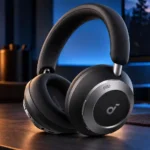
Soundcore Anker Space One Pro Feature Scores
Explore all 96 feature scores for Soundcore Anker Space One Pro, organized into pros and cons.
Scores by Feature
Summary
96 reviewed features-
Very positive 4.5-5.018 (19%)
-
Positive 3.5-4.443 (45%)
-
Neutral 2.5-3.428 (29%)
-
Negative 1.5-2.47 (7%)
Pros
Sort
-
Small folded dimensions, long battery life and effective low-rumble cancellation make travel a strong use case. A protective case may be worth obtaining separately.
-
The compact twisting fold is a standout advantage for pockets and small bags. It takes a little practice, and a few users question its benefit over conventional folding.
-
Long endurance is one of the most consistent strengths, often lasting days or a working week. ANC intensity and LDAC reduce runtime, and measured results do not always meet the headline claim.
-
Soft, broadly padded headband contact helps avoid pressure hotspots during long sessions. It is frequently credited for comfort on working days and flights.
-
Brief top-ups provide enough listening time to make last-minute charging practical. The Pro’s fast-charge boost is repeatedly welcomed as an improvement over older models.
-
Soft cushioning makes long workdays and flights comfortable for many users. Shallow cups, heat, a loose small-head fit or a firmer clamp leave others preferring competing models.
-
Plush cushioning is a repeated strength, especially where ears clear the driver wall. The pads feel shallow or cramped to some listeners with larger or protruding ears.
-
The Soundcore app is often praised for accessible controls and extensive listening options. Limited button remapping and occasional setup or personalization frustrations temper that praise.
-
Pairing and app navigation are generally simple, especially with Fast Pair. A short learning period can be necessary for finding controls or recognizing mode feedback.
-
ANC is widely valued for traffic rumble, fans and flights at this price. Some find it remarkably strong, while others still hear too much speech or train noise compared with premium rivals.
-
Generous rotation makes it easy to lay the cups flat in either direction. That flexibility is especially welcome when wearing the headphones around the neck.
-
Everyday Bluetooth and video playback work well across Android, iPhone and computers. Several users also report clear calls across meeting platforms.
-
Phone-and-computer switching usually works conveniently across ecosystems. LDAC and occasional notification behavior introduce tradeoffs in a multi-device setup.
-
Safe Volume is repeatedly valued for monitoring or limiting listening levels. Buyers appreciate the extra control when protecting hearing or sharing headphones with children.
-
The slimmer, clean design looks attractive and sometimes premium. Opinions split on chunky proportions, faux-metal details and the loss of the original model’s distinctive styling.
-
The weight is manageable and sometimes barely noticeable over hours. Lighter competitors remain easier to forget, especially when walking or comparing models directly.
-
The firmer clamp can keep the headphones secure without squeezing. Buyers who prefer a loose fit often find the original Space One, Bose or Sony alternatives more natural.
-
Switching between two devices is often smooth and saves manual reconnection. Some experience notification interruptions or failed playback, and LDAC requires giving up the second connection.
-
The reinforced, flexible structure often feels sturdier than older Soundcore models. Loose tolerances and synthetic coverings keep some users from viewing it as fully premium.
-
High-resolution wireless playback is praised for clear, detailed sound with suitable material. The feature is most useful to listeners with a compatible source and an interest in tuning.
-
A well-fitting seal usefully softens chatter and higher-frequency noise before ANC engages. Passive blocking is less convincing when the fit or seal is imperfect.
-
Clean two-tone finishes and slimmer cups appeal to buyers wanting understated styling. Others find the look chunky, generic or less distinctive than the original.
-
Bluetooth is usually stable across phones, tablets and laptops, with several strong range reports. Ordinary connections are more dependable than the few problematic multipoint setups.
-
LDAC is appreciated for high-resolution wireless listening alongside the standard codec options. Its inability to run with multipoint frustrates buyers who want both functions together.
-
Several listeners hear a worthwhile improvement with LDAC and good source material. Android support is welcome, but using it restricts multipoint and increases battery demands.
-
Adjustable transparency makes brief conversations and environmental awareness easier. Reports range from natural and clear to muffled or too quiet, particularly outdoors.
-
Custom EQ and HearID can substantially improve balance and tailor the sound. Results vary: some profiles miss the listener’s taste, and a few find adjustments change other frequencies undesirably.
-
Movies and ordinary videos generally stay synchronized on Android and iPhone. Bluetooth delay is more noticeable in demanding games without a dedicated low-latency mode.
-
Sound is often enjoyable and full, particularly after EQ. The stock tuning divides listeners: some love its energy, while others find it muddy, dull or insufficiently refined for the Pro price.
-
Fast Pair makes Android setup quick, and LDAC offers appreciated high-resolution listening. Android assistant interaction is also responsive in one test.
-
Many users remain delighted by comfort and everyday practicality. Disappointment centers on stock tuning, noisy calls and the gap between the Pro label and its conveniences.
-
Comfort, folding, ANC and endurance can make the Pro excellent value, especially on sale. Its higher price is harder to justify for buyers satisfied with older Soundcore models or newer cheaper alternatives.
-
The Pro is often recommended for comfortable, portable commuting with long endurance. Buyers seeking neutral stock sound, reliable noisy calls or the best upgrade value receive more qualified advice.
-
The integrated microphones can deliver clear quiet-room speech and useful road-noise suppression. Noisy calls receive mixed feedback, especially when sidetone is enabled.
-
Quiet-room calls often sound clear and useful for everyday conversations. Busy surroundings and sidetone produce sharply different results, including reports of robotic, faint or unclear speech.
-
Ordinary wireless connections are usually dependable and analog listening adds flexibility. A few dual-device playback problems weaken confidence in more complicated setups.
-
Physical buttons earn praise for clear clicks and responsive operation. Small size, mushy feedback, awkward placement and hold-to-skip controls make them frustrating for some users.
-
Analog listening is useful for flight entertainment and when the battery runs out. Powered-off sound receives mixed feedback, ranging from excellent to dull compared with tuned wireless playback.
-
Highs earn praise for sparkle and natural detail, but some listeners hear a sharp upper-frequency peak. Lowering bass or adjusting treble helps several users, without satisfying everyone.
-
Vocals can sound clear and present with suitable tuning. Heavy bass or aggressive EQ sometimes pushes voices back or masks quieter nuances.
-
Road-noise suppression can keep speech understandable and outperform some rivals. Chatter and wind are harder: aggressive processing can reduce the speaker’s voice along with background noise.
-
Soft finishes and a cleaner silhouette can feel upscale for the price. Plasticky leatherette, chunky details and slight wobble keep others from accepting the premium positioning.
-
The folding joints are convenient and can feel reassuringly sturdy. Other users find them loose or prone to collapsing during handling, so hinge confidence is mixed.
-
Several users expect the flexible construction and metal joints to hold up well. Flimsy-feeling hinges leave others less confident, and long-term durability is not uniformly established.
-
Wind handling ranges from impressively quiet outdoor listening to little improvement at all. Some reduction settings also lower transparency volume, and windy calls remain difficult.
-
A firmer fit usually keeps the headphones stable during ordinary movement. Smaller heads, loose adjustment arms and inverted exercises can still cause slipping.
-
Vocals and suitable instruments can occupy clear positions with a useful sense of depth. Dense backing tracks are less reliably defined.
-
Normal playback often stays clean, including a report of no audible distortion. Very high volume can make vocals or treble harsh for other listeners.
-
Deep bass gives electronic music and hip-hop satisfying weight. Its stock emphasis can overwhelm vocals and detail, so bass-sensitive listeners often prefer reducing it.
-
Smooth continuous adjustment offers a broad fitting range. Loose arms can move unintentionally, and the smallest setting may still be too large for smaller heads.
-
Vocals and bright instrumental details can be clear, particularly after EQ. Bass masking and complex arrangements reveal a recurring detail gap against more refined rivals.
-
The wireless standard delivers useful range and reliable connections in practice. Newer Space 2 hardware makes the Pro’s older version less attractive in direct comparisons.
-
One assessment praises keeping quiet surroundings quiet without obvious ANC artifacts. Avoiding masking hiss is also appreciated in a separate test.
-
A good seal keeps listening reasonably private. One comparison finds less leakage than older Soundcore headphones.
-
Some hear an expansive presentation, while others find the stage narrow beside more refined headphones. EQ and the choice of music noticeably affect that impression.
-
Glasses and hats do not prevent comfortable wear for some users. One test still finds glasses can break the seal and reduce bass markedly.
-
Output is ample for many listeners, but several want another notch or two of headroom. One comparison needs extra volume to give bass the newer model’s impact.
-
Quiet-environment listening can remain free of distracting static or processing artifacts. That contributes to a calmer ANC experience.
-
Automatic power-off helps prevent unnecessary battery drain after the headphones are left unused. It is useful for listeners who forget to switch them off.
-
Android voice-assistant control is responsive in one test. Another assessment flags missing dedicated assistant support as a caveat rather than an essential loss.
-
Movement can transmit subtle thumps during running. One user finds them less intrusive than on many other headphones.
Cons
Sort
-
The accessory package attracts criticism for its pouch and, in some cases, thin or short cables. Obtaining a proper hard case improves travel protection.
-
Automatic wear detection is a frequently missed convenience. Its absence matters less to listeners who manually pause or normally disable wear sensors.
-
Absent wear sensors are an unexpected convenience loss for many buyers. Others do not consider them essential because they prefer manual control.
-
Missing automatic pause is a recurring convenience complaint. Some users tolerate its absence, but others see it as an unexpected downgrade from cheaper Soundcore models.
-
Removing the headphones does not provide the expected automatic pause for many users. That omission is especially frustrating to buyers coming from the original Space One.
-
Wear-detection behavior cannot supply automatic convenience when sensors are absent. Many regard that omission as disappointing on a Pro model, while a few accept the tradeoff.
-
The supplied pouch repeatedly disappoints buyers expecting a protective hard case. Later full hard cases and promotional cases receive better feedback, though not everyone needs the extra protection.
-
ANC-off tuning can become much bassier than the ANC-on presentation. Some hear an acceptable change, but several strongly dislike the muddier balance.
-
Changing ANC modes can noticeably change musical balance. Several find the extra bass outside ANC muddy or unpleasant enough to require different tuning.
-
The supplied analog cable is criticized as thin and cheap. A separate complaint finds the included charging cable inconveniently short.
-
Casual play may be acceptable, but noticeable Bluetooth delay and no dedicated low-latency mode limit demanding games. A wired connection is the more suitable route where timing matters.
-
Charging is straightforward, but USB audio is a recurring missing convenience. Buyers wanting to listen over a USB cable need a different option.
-
The lack of water and sweat protection limits rainy-day and workout use. These are better suited to dry travel and indoor listening.
-
Sealed cushions often become warm during long sessions or exercise. Some users avoid sweat in ordinary desk use, but strenuous workouts are a less convincing use case.
-
Sidetone is helpful for hearing your own voice without shouting. Multiple tests warn that enabling it can severely lower or degrade call speech, so disabling it may improve results.
-
The lack of aptX is a drawback for buyers who specifically want that codec. LDAC supplies the principal high-resolution wireless option instead.
-
Missing Auracast limits appeal for buyers wanting broadcast-audio support. It does not affect the familiar individual wired and Bluetooth listening options.
-
Missing LE Audio is a drawback for buyers prioritizing newer wireless features. The existing connection options remain adequate for ordinary listening.
-
One user cannot find replacement ear pads despite searching. Owners planning to replace worn cushions may encounter limited availability.
-
Replacement cushioning can be difficult to locate. That uncertainty matters for owners who want to refresh the pads instead of replacing the headphones.
-
The white finish is considered more likely to show dirt. Buyers concerned about visible marks may prefer the darker option.
-
Difficulty finding replacement pads is a repairability concern. Buyers hoping to refresh worn cushioning may find replacement availability limiting.
-
A few presets, including Acoustic and Classical, improve clarity and balance for particular listeners. Many others sound redundant, muffled or excessively boosted, making custom tuning more useful.
-
Dynamic contrasts are broad but not especially nimble in one assessment. Quiet-to-loud changes lack the subtle swing of stronger performers.
-
The feature package has some conspicuous convenience omissions. Missing assistant and device-finding support may matter to particular buyers, though one assessment considers them nonessential for most.
-
Device-finding support is missed as a nice-to-have feature in one assessment. It is a caveat for buyers who rely on tracking rather than a universal dealbreaker.
-
One early assessment hopes firmware will improve dual-device reliability and aggressive tuning. That is a request for refinement rather than a confirmed software fix.
-
Many prefer the physical buttons to touch input. Others miss touch operation or the original model’s intentional cup-cover conversation gesture.
-
Mode chimes provide helpful feedback for some users. Others find the unusual sounds unpleasant or need time to learn what each means.
-
The tuning favors bass weight over strict neutrality. A few hear a balanced, faithful presentation, but others find excessive low end and uneven highs hard to correct.
-
Dolby processing can add useful space to movies and live recordings. For music, several listeners prefer it off because it exaggerates bass or weakens their chosen EQ balance.
-
Easy Chat is convenient when it lowers music promptly for a brief exchange. Coughing, humming and accidental activation can be irritating, especially when the waiting period cannot be canceled.
-
Layered vocals and instruments can remain distinct after tuning. Dense jazz, bass-heavy settings and busy arrangements expose a recurring tendency to blend musical parts together.
-
Strong isolation and optional processing can make films and suitable music immersive. Excess bass in Dolby mode can instead reduce vocal clarity and musical involvement.
-
Adjustable listening modes, personalization and conversation tools add useful flexibility. Over-sensitive automation and limited control customization can make that feature set less practical.