If you want better onboard music storage
Choose Garmin Venu 3. It scores 4.6 vs 1.1 for onboard music storage, with a 4.1 overall score.

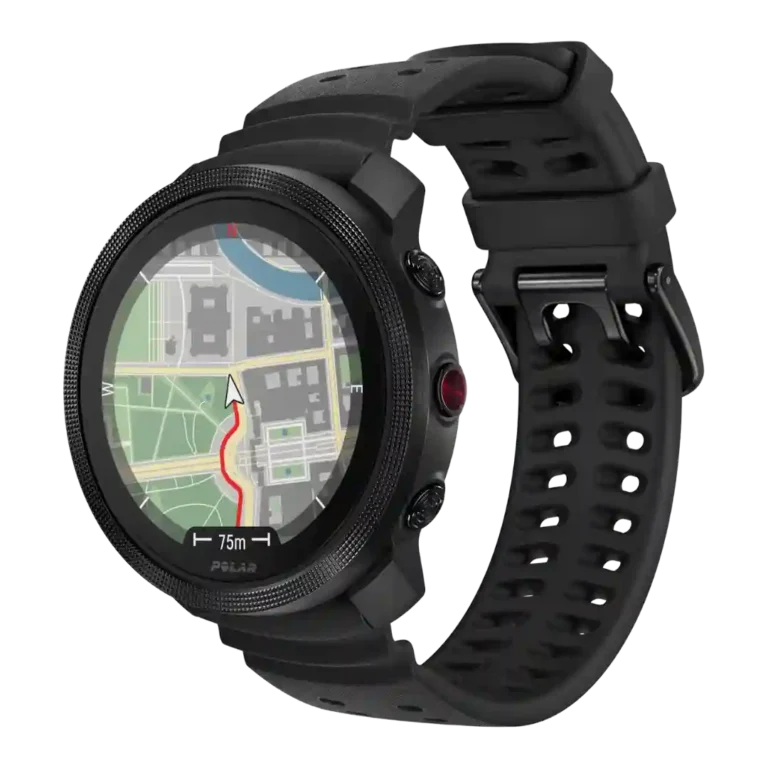
Choose the Polar Vantage M3 for a bright, comfortable fitness watch with strong GPS, offline maps, recovery tools and value. Skip it if you need polished smartwatch features, onboard music, contactless payments or consistently precise optical heart-rate data.
Best for runners, multisport athletes and Polar users who want strong GPS, offline maps, bright AMOLED visibility, recovery guidance and flagship-like training tools at a mid-range price.
Not for buyers who want a full smartwatch experience, onboard music, contactless payments, LTE, wrist calls or the most dependable wrist-based heart-rate data for intervals, cycling and strength work.
Reviewers see the Polar Vantage M3 as Polar’s best-value recent watch: it brings the same core training platform, offline maps, dual-band GPS and recovery tools as pricier Polar models into a lighter mid-range package. The biggest wins are the AMOLED display, outdoor readability, comfort, GPS reliability and fitness-focused coaching depth. The tradeoff is that it behaves much more like a sports watch than a modern smartwatch, with no app store, payments, voice assistant, LTE or onboard music. Polar Flow and the watch UI also feel dated to several reviewers, and optical heart-rate accuracy is inconsistent in hard efforts, cycling, strength training and some early-run readings.
Compared with other Smartwatches, this product is above average in charging convenience, value for money, fit, near average in outdoor visibility, GPS accuracy, below average in app ecosystem, call handling, third-party app support.
| Attribute | This product | Category average | Difference |
|---|---|---|---|
| app ecosystem | 1.2 | 3.6 | -2.4 |
| call handling | 1.0 | 3.3 | -2.3 |
| third-party app support | 1.0 | 3.2 | -2.2 |
| voice assistant quality | 1.0 | 3.1 | -2.1 |
| pairing reliability | 2.0 | 4.1 | -2.1 |
| smartwatch features | 1.7 | 3.6 | -1.9 |
| onboard music storage | 1.1 | 3.0 | -1.9 |
| contactless payments | 1.0 | 2.8 | -1.8 |
Choose Garmin Venu 3. It scores 4.6 vs 1.1 for onboard music storage, with a 4.1 overall score.
Choose Huawei Watch GT 6 Pro. It scores 4.7 vs 3.1 for heart rate accuracy, with a 4.0 overall score.
Choose Huawei Watch Fit 4 Pro. It scores 4.7 vs 3.6 for battery life, with a 4.1 overall score.
Choose Apple Watch Series 11. It scores 4.8 vs 1.0 for third-party app support, with a 4.2 overall score.
Products reviewers directly compared with this model, grouped into quick takeaways.
Yes. Reviewers generally praise its GPS accuracy, comfort, AMOLED visibility and training tools, but several recommend an external heart-rate sensor for intervals or more demanding accuracy needs.
The display is one of the strongest points. Reviewers repeatedly call the AMOLED screen bright, crisp, punchy and easy to read outdoors.
Yes. Reviewers like that it includes offline maps at this price, though they also note that Garmin still offers more detailed and comprehensive navigation.
It is mixed. Some steady runs matched well, but reviewers reported lag, spikes or poor results during intervals, cycling, strength training and some early-run periods.
Only in a basic way. Reviews say it can show notifications and control phone music, but it lacks an app store, onboard music, payments, voice assistant, LTE and wrist calls.
Polar Flow has depth, but reviewers often describe the phone app as dated, confusing or in need of streamlining; the web experience receives more positive comments.
These are a few of the reviews included in our analysis.



Best for long battery life, accurate GPS and useful offline maps at a strong price. Skip it if you need payments, richer apps, a built-in LED flashlight or polished smartwatch...
Pros: mapping and navigation, value for money
Cons: smartwatch features, contactless payments

Best for accurate run tracking, deep Garmin coaching and phone-free Spotify in a light package. Skip it if you need full maps, triathlon mode, Apple Music support or the strongest...
Pros: value for money, GPS accuracy
Cons: mapping and navigation, third-party app support

Good if you want premium running features, long battery life, and maps for under $200. Skip it if you need flawless heart-rate data, multiband GPS, LTE, or richer app support.
Pros: value for money, battery life
Cons: heart rate accuracy, third-party app support

Best for accurate running metrics, excellent coaching tools, a bright AMOLED display, and dependable battery life. Skip it if you need offline maps, music storage, contactless payments, multi-band GPS, or...
Pros: battery life, value for money
Cons: mapping and navigation, smartwatch features