If you want better fit
Choose Garmin Forerunner 255S. It scores 4.7 vs 2.7 for fit, with a 4.1 overall score.

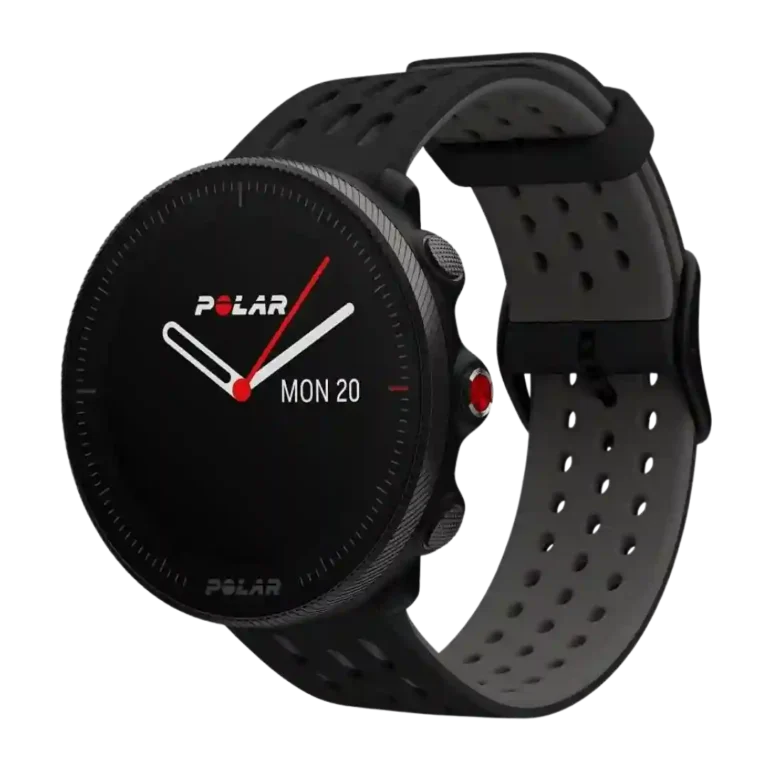
Choose the Polar Vantage M2 for affordable multisport training, strong Polar Flow insights, sleep/recovery tools and solid battery life. Skip it if you need polished smartwatch features, navigation, payments, or consistently chest-strap-level heart-rate/GPS accuracy.
Best for runners, triathletes, and fitness-focused users who want broad sport tracking, Polar Flow analysis, sleep/recovery insights, and useful coaching without paying flagship prices.
Not for users who prioritize polished smartwatch features, rich navigation, mobile payments, onboard music, or consistently high-precision wrist heart-rate and GPS data across every sport.
Reviewers frame the Polar Vantage M2 as a fitness-first multisport watch with unusually strong value, broad sport profiles, useful coaching, and deep Polar Flow analysis. Sleep tracking, recovery guidance, battery life, buttons, outdoor visibility, and style receive frequent praise. The tradeoff is that the M2 is not a polished general smartwatch: notifications are limited, payments and apps are missing, watch-face customization is thin, and navigation is basic. Accuracy evidence is mixed rather than universal; heart rate and GPS can be excellent in some workouts, but several reviewers saw drift, lag, or wrist-HR readings that require a chest strap for serious training.
Compared with other Smartwatches, this product is above average in running power support, third-party app support, calorie tracking usefulness, near average in GPS accuracy, workout tracking variety, below average in contactless payments, brightness, software smoothness.
| Attribute | This product | Category average | Difference |
|---|---|---|---|
| contactless payments | 1.0 | 2.8 | -1.8 |
| brightness | 2.8 | 4.2 | -1.4 |
| running power support | 4.8 | 3.4 | +1.4 |
| software smoothness | 2.8 | 4.0 | -1.2 |
| fit | 2.7 | 3.9 | -1.2 |
| materials quality | 2.8 | 4.0 | -1.1 |
| smartwatch features | 2.5 | 3.6 | -1.1 |
| smartphone notifications | 2.4 | 3.5 | -1.1 |
Choose Garmin Forerunner 255S. It scores 4.7 vs 2.7 for fit, with a 4.1 overall score.
Choose Polar Grit X. It scores 5.0 vs 2.8 for materials quality, with a 3.8 overall score.
Choose Garmin Lily 2 Active. It scores 4.8 vs 3.0 for pairing reliability, with a 4.3 overall score.
Choose Polar Ignite 2. It scores 4.7 vs 4.3 for coaching features, with a 3.7 overall score.
Products reviewers directly compared with this model, grouped into quick takeaways.
Yes. Reviewers repeatedly praised its multisport and triathlon feature set, broad sport profiles, and training tools, especially at the price.
Evidence is mixed. Some reviewers found it highly accurate for running or daily use, while others saw high readings or drift and recommended pairing a chest strap for trusted training-zone data.
GPS results varied by reviewer and activity. Some reported quick locks and accurate routes, while others saw slow acquisition, drift, or merely average GNSS performance.
Yes, for data-focused users. Reviewers praised Polar Flow as robust, comprehensive, and athlete-focused, though some found the app crowded or overwhelming for newcomers.
Only in a limited way. Reviewers liked additions such as phone music controls, weather, watch-face views, and notifications, but noted missing apps, payments, smart assistants, and richer notification control.
Battery life is generally a strength. Reviews commonly describe around five days to a full week in watch mode, although advanced sleep tracking and heavy use can reduce remaining charge.
These are a few of the reviews included in our analysis.

Best for long battery life, accurate GPS and useful offline maps at a strong price. Skip it if you need payments, richer apps, a built-in LED flashlight or polished smartwatch...
Pros: mapping and navigation, value for money
Cons: smartwatch features, contactless payments

Best for accurate run tracking, deep Garmin coaching and phone-free Spotify in a light package. Skip it if you need full maps, triathlon mode, Apple Music support or the strongest...
Pros: value for money, GPS accuracy
Cons: mapping and navigation, third-party app support

Good if you want premium running features, long battery life, and maps for under $200. Skip it if you need flawless heart-rate data, multiband GPS, LTE, or richer app support.
Pros: value for money, battery life
Cons: heart rate accuracy, third-party app support

Best for accurate running metrics, excellent coaching tools, a bright AMOLED display, and dependable battery life. Skip it if you need offline maps, music storage, contactless payments, multi-band GPS, or...
Pros: battery life, value for money
Cons: mapping and navigation, smartwatch features