If you want better firmware updates
Choose Pecron E3800LFP. It scores 5.0 vs 1.0 for firmware updates, with a 4.2 overall score.

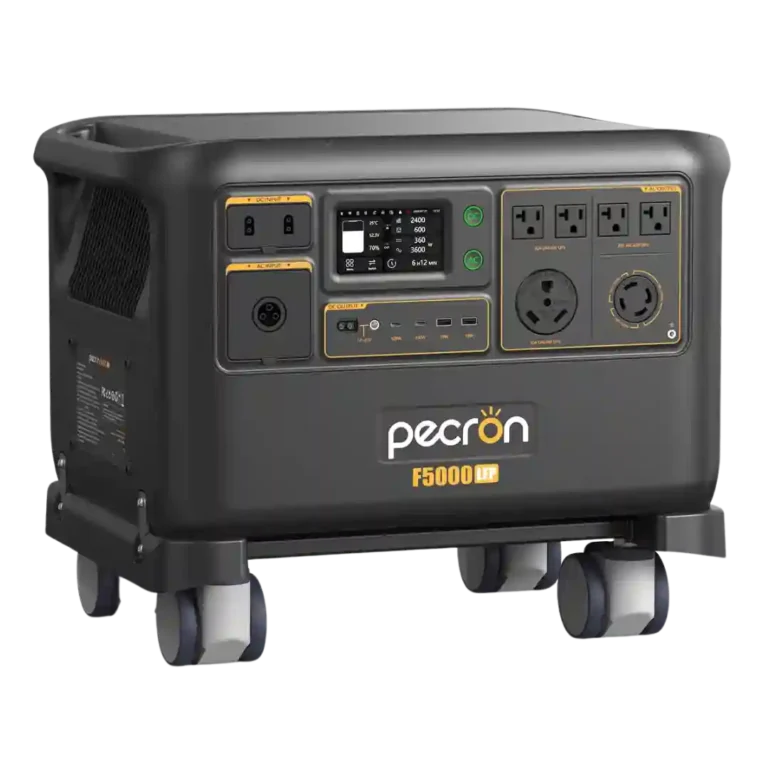
Choose the Pecron F5000LFP for high-power home backup, large solar arrays, and exceptional performance per dollar. Skip it if you need easy portability, quiet heavy-load operation, or the cleanest AC waveform for sensitive equipment.
Best for homeowners, RV or cabin users, and off-grid setups that need native 240V, high appliance output, large solar arrays, and expandable storage without flagship-system pricing.
Less suitable for buyers who must carry the unit frequently, keep it near sleeping areas under heavy load, or prioritize the cleanest possible AC waveform and a mature smart-home accessory ecosystem.
The Pecron F5000LFP earns strong praise for combining 5,120Wh of storage, 7,200W split-phase output, very high solar input, useful 120V-to-240V pass-through behavior, and deep expandability at unusually aggressive pricing. Hands-on reviewers repeatedly show it running demanding household loads and appreciate the responsive touchscreen, battery heaters, high-power adjustable DC output, and fast UPS behavior. The tradeoffs are meaningful: at roughly 124 pounds it is difficult to move, fans can become loud under heavy load, 240V AC charging is absent, and several tests measured total harmonic distortion around 3.5% near full output. App quality and trolley hardware also draw inconsistent feedback. For stationary or semi-stationary home backup where value and solar capability matter most, it is exceptionally compelling; buyers prioritizing refined software, quiet operation, or the cleanest waveform have stronger reasons to look elsewhere.
Compared with other Generators, this product is above average in battery voltage compatibility, replacement battery cost, app privacy, near average in overall product satisfaction, AC charging speed, below average in firmware updates, accessory ecosystem, overload protection.
| Attribute | This product | Category average | Difference |
|---|---|---|---|
| battery voltage compatibility | 5.0 | 1.7 | +3.3 |
| replacement battery cost | 5.0 | 2.0 | +3.0 |
| firmware updates | 1.0 | 3.7 | -2.7 |
| accessory ecosystem | 1.5 | 4.0 | -2.5 |
| app privacy | 5.0 | 2.5 | +2.5 |
| overload protection | 2.0 | 4.5 | -2.5 |
| startup performance | 2.0 | 4.4 | -2.4 |
| weight | 1.2 | 3.3 | -2.1 |
Choose Pecron E3800LFP. It scores 5.0 vs 1.0 for firmware updates, with a 4.2 overall score.
Choose Pecron E1000LFP. It scores 5.0 vs 1.5 for accessory ecosystem, with a 4.0 overall score.
Choose Jackery HomePower 3600 Plus. It scores 5.0 vs 2.0 for battery reliability, with a 4.4 overall score.
Choose Bluetti Elite 200 V2. It scores 4.9 vs 2.0 for solar panel compatibility, with a 4.4 overall score.
Products reviewers directly compared with this model, grouped into quick takeaways.
Yes. Reviewers repeatedly show it powering demanding household loads, and its native 120V/240V split-phase output makes transfer-switch and generator-inlet setups practical.
Solar charging is one of its biggest strengths. Reviewers repeatedly praise the dual-input platform, with up to roughly 6,400W discussed and near-one-hour recharge potential under ideal array and sun conditions.
Multiple hands-on reviewers say no: AC charging is capped around 3,600W from 120V. They still praise the ability to accept 120V AC while providing 240V output.
It can be very quiet at light load or in quiet operation, but fan noise rises substantially under heavy output or fast charging. Several tests measured upper-50dB behavior near full load.
It is movable, but not easy to carry. At roughly 124 pounds, reviewers commonly recommend two people for lifting, while the trolley is most useful on flat surfaces.
No. Reviewers praise the touchscreen for exposing most important settings directly on the unit; the app adds remote control and monitoring, but opinions on its polish are mixed.
UPS transfer is generally excellent, but several testers measured THD rising to about 3.5% near full inverter load. Buyers powering especially waveform-sensitive equipment should weigh that concern carefully.
These are a few of the reviews included in our analysis.

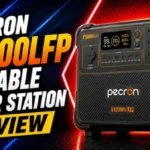
We tested the Pecron F5000LFP: 5,120Wh, single-unit 240V output & a huge 6,400W solar input for under $2,000. See its pros and cons.
This guide compares the EcoFlow DELTA Pro Ultra and Pecron F5000 to find out which power station is the best option for home backup.
Complete Pecron F5000LFP review: 5,120Wh capacity, 7,200W 120/240V dual-voltage output, 6,400W solar input, expandable to 35.8kWh. Full...
The Pecron F5000LFP delivers 4,440Wh of its 5,120Wh rating behind a 7,200W split-phase inverter that transfers instantaneously and arms...
Our Pecron F5000LFP 7200W 5120Wh 120V/240V PRE-ORDER review: 5,120Wh, $0.43 per Wh. Calculated runtimes for a fridge, CPAP and laptop, the...
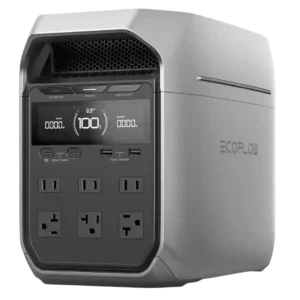
Best for rapid charging, versatile ports, excellent app control, and portable backup for appliances or electronics. Skip it for unattended low-load use or sustained heavy loads unless fan behavior and...
Pros: rated output, peak output
Cons: 30-amp output, parallel operation support
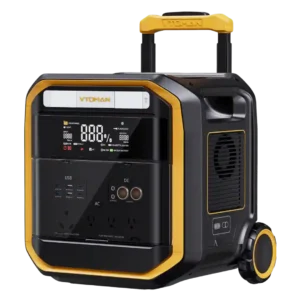
Best for fast-charging, high-output backup power that can run major appliances and roll easily between locations. Skip it if you need frequent lifting, a small footprint, or a screen that...
Pros: power output, surge capacity
Cons: specification accuracy, peak output
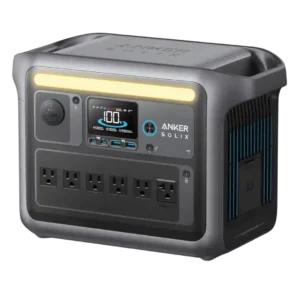
Best for fast charging, strong portable output, and short outage or camping duty. Skip it for quiet rooms, multi-day whole-home backup, or solar-only use with small panels.
Pros: power output, rated output
Cons: dual-input charging, cable storage
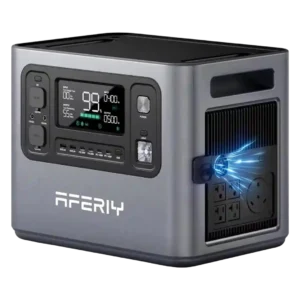
Choose the P280 for high-output home, RV, or off-grid backup with fast charging, strong usable capacity, UPS protection, and expansion. Skip it if you need lightweight portability, polished app control,...
Pros: rated output, peak output
Cons: app connectivity, voltage regulation