If you want better replacement battery cost
Choose Pecron E3600. It scores 5.0 vs 1.0 for replacement battery cost, with a 4.1 overall score.

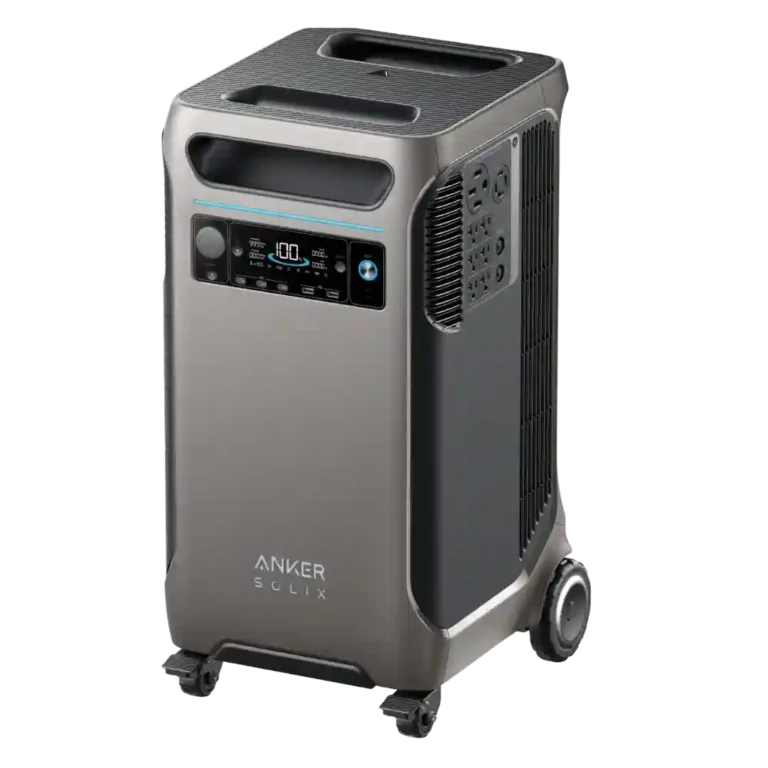
Choose the F3800 for quiet, single-unit 240V home backup, heavy appliances, and expandable capacity. Skip it if you need easy lifting, unrestricted third-party solar, dependable AC pass-through, or a low-cost off-grid system.
Homeowners, RV owners, workshops, and outage-prone households that need quiet single-unit 240V power for pumps, HVAC, appliances, medical equipment, or transfer-switch circuits. It is especially attractive when expansion batteries and a semi-permanent installation are planned.
Buyers who must carry a station up stairs, depend on common rooftop panels for maximum solar input, need unrestricted AC pass-through, or want inexpensive multi-day off-grid power. Cold, unheated storage also requires careful planning.
The F3800’s biggest achievement is delivering genuine 6,000W, 120/240V split-phase power from one wheeled unit. Reviewers repeatedly ran refrigerators, well pumps, dryers, air conditioners, tools, RVs, and selected home circuits, while praising its quiet operation, clean output, fast wall charging, and exceptional battery expansion. The tradeoffs are substantial: at roughly 132 pounds it is rollable rather than truly portable, and the original model disables 240V plus some 120V outlets during AC charging. Its restrictive solar voltage and amperage windows also make the advertised 2,400W input difficult to reach with common panels. The app is generally easy and useful, but historical data and advanced scheduling remain inconsistent. For homeowners who specifically need serious 240V backup, the capability is compelling; for mobile or solar-first use, the limitations matter.
Compared with other Generators, this product is above average in solar cable compatibility, whole-home integration, specification accuracy, near average in power output, overall product satisfaction, below average in operating temperature range, battery management system, pass-through charging.
| Attribute | This product | Category average | Difference |
|---|---|---|---|
| operating temperature range | 1.0 | 4.2 | -3.2 |
| battery management system | 1.5 | 4.5 | -3.0 |
| pass-through charging | 1.9 | 4.5 | -2.6 |
| charging cable quality | 1.0 | 3.7 | -2.7 |
| energy usage tracking | 2.0 | 4.6 | -2.6 |
| input and output monitoring | 2.0 | 4.4 | -2.4 |
| MPPT controller performance | 1.8 | 4.2 | -2.4 |
| lifting ease | 1.5 | 3.9 | -2.4 |
Choose Pecron E3600. It scores 5.0 vs 1.0 for replacement battery cost, with a 4.1 overall score.
Choose AFERIY P280. It scores 5.0 vs 1.3 for battery reliability, with a 4.5 overall score.
Choose EcoFlow Delta 3 Plus Review. It scores 5.0 vs 1.0 for USB-A ports, with a 4.6 overall score.
Choose DJI Power 2000. It scores 5.0 vs 1.0 for car charging speed, with a 3.9 overall score.
Products reviewers directly compared with this model, grouped into quick takeaways.
Its 6,000W split-phase output can run selected whole-home circuits and many 240V loads. The 3.84kWh base battery is best for essentials or shorter outages unless expansion batteries are added.
Yes. Reviewers successfully powered dryers, well pumps, air conditioners, EV chargers, tools, and transfer-switch setups from the single-unit 240V output.
No. On the original F3800, AC charging disables the 240V outlets and part of the 120V bank; solar charging allows much more flexible simultaneous output.
Tests ranged from roughly 20 to 30 hours for a refrigerator or similar essential-load setup, though appliance cycling, added loads, and conversion losses change the result.
A well-matched large array can charge quickly, but the 60V and amperage limits make the full 2,400W rating difficult to reach with many common panels.
It rolls easily on its wheels and telescoping handle, but at about 132 pounds it usually needs two people for stairs or vehicle loading.
The app is generally easy for live monitoring, settings, and firmware updates, but advanced history and scheduling are limited. UPS switchover worked seamlessly in most tests, with one reported PC failure.
These are a few of the reviews included in our analysis.

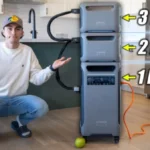
We tested the Anker SOLIX F3800 with a car lift, welder, air compressor, and full kitchen. See what this 6,000W power station can handle.
We tested the Anker SOLIX F3800, a 3,800Wh, 6,000W expandable power station built for home backup and off-grid. Here's our honest hands-on...
The SOLIX F3800 is the only sub-$4,000 portable power station with 6,000 W continuous output and 240 V split-phase from a single unit. 3,840...
Anker SOLIX F3800 review: 6000W whole-home power, 3840Wh LFP battery, expandable to 26.9kWh. Real-world performance, pros/cons, pricing...
The Anker SOLIX F3800 packs immense power, but is it truly portable? At TeqClub, we did a hands-on review of its suitcase design, rugged...

Best for rapid charging, versatile ports, excellent app control, and portable backup for appliances or electronics. Skip it for unattended low-load use or sustained heavy loads unless fan behavior and...
Pros: overall product satisfaction, solar panel compatibility
Cons: long-term reliability, standby power loss

Best for fast-charging, high-output backup power that can run major appliances and roll easily between locations. Skip it if you need frequent lifting, a small footprint, or a screen that...
Pros: overall product satisfaction, recharge speed
Cons: weight, lifting ease

Best for fast charging, strong portable output, and short outage or camping duty. Skip it for quiet rooms, multi-day whole-home backup, or solar-only use with small panels.
Pros: overall product satisfaction, runtime
Cons: noise level, weight

Choose the P280 for high-output home, RV, or off-grid backup with fast charging, strong usable capacity, UPS protection, and expansion. Skip it if you need lightweight portability, polished app control,...
Pros: overall product satisfaction, battery expandability
Cons: weight, built-in light