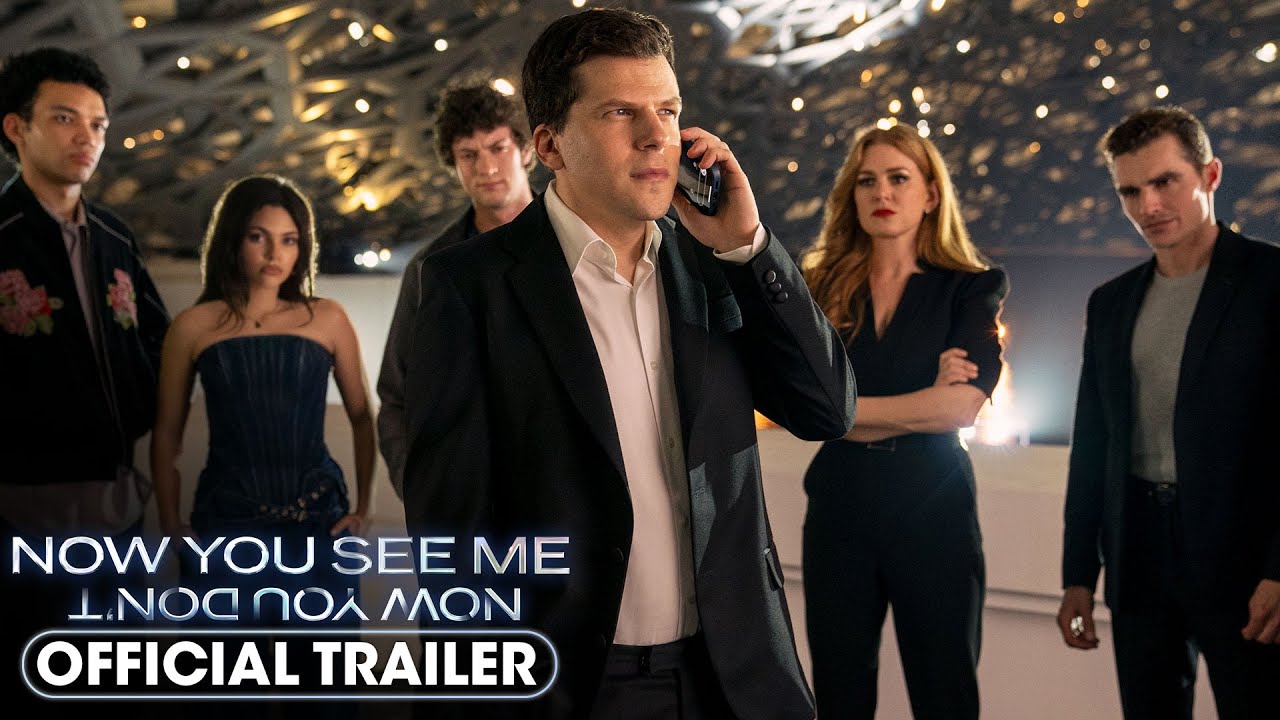
Best suited to ages 13+ for strong language, violence and peril, plus suggestive references and innuendo. The violence is often sanitized, but the combined material supports a teen recommendation.
Official ratingPG-13
Bottom Line
Choose it for lively ensemble chemistry, playful heists, and glossy trick-house spectacle. Skip it if you need airtight logic, deep characterization, or movie magic that feels plausibly practical.
Best for
Best for franchise fans and viewers who want breezy ensemble chemistry, colorful heists, fast pacing, and knowingly ridiculous magic spectacle.
Not for
Not ideal for viewers who want realistic sleight of hand, airtight heist logic, deep character development, or a restrained visual-effects approach.
Verdict
Now You See Me: Now You Don’t works best as breezy ensemble spectacle. The returning Horsemen still have lively chemistry, the younger recruits add energy, and several heists—especially the illusion-house material—deliver the playful showmanship fans expect. Rosamund Pike is a frequent scene-stealer, while Jesse Eisenberg remains a strong center for the group. The tradeoff is a script that many critics found rushed, exposition-heavy, thin on character development, and far too willing to substitute CGI or impossible contrivance for convincing magic. Some reviewers embraced that silliness as part of the franchise’s charm; others found it hollow or exhausting. It is a glossy, knowingly ridiculous crowd-pleaser whose success depends heavily on how much disbelief you are willing to suspend.
The movie’s best reviews praise how comfortably it mixes comedy, suspense, awe, and self-aware absurdity. That light touch helps the film survive plot logic that would be harder to accept in a more serious tone.
chemistry between characters: 4.5, 15 reviews, low consensus
The cast’s banter and camaraderie are among the clearest strengths, with old and new Horsemen often clicking surprisingly well. Even mixed reviews frequently say the ensemble chemistry carries weak plotting.
production design: 4.5, 8 reviews, strong consensus
The illusion-house material is a standout, with mirrored spaces, forced perspective, rotating corridors, and other puzzle-room designs repeatedly earning praise. Even negative reviews often find this environment visually playful.
lead performance: 4.4, 4 reviews, strong consensus
Jesse Eisenberg’s Atlas is usually seen as a strong center for the movie, with reviewers praising his more commanding, grounded arrogance. Even skeptical takes tend to find him watchable when the script gives him room.
Set pieces are a consistent bright spot, especially the illusion-house fights, chase material, parkour, and heist escapes. A minority find some action confusing or dull, but most reactions favor the movie when it is moving.
The movie is widely seen as slick, glossy, and stylish, with strong illusion-house imagery and big-screen polish. Some critics call that same look chintzy, sanitized, or flatter than the earlier films.
Logic and clarity are major weak points. Reviewers repeatedly describe the plot as convoluted, hole-ridden, overstuffed, or dependent on explanations that do not survive scrutiny.
The screenplay is one of the broadest sources of criticism, with complaints about rushed structure, exposition, weak twists, and contrived logic. A minority appreciates how efficiently it handles a large amount of setup.
Believability is the movie’s most consistent technical complaint: tricks often resemble superpowers and depend on impossible preparation or technology. A few reviewers think this entry is more grounded than its predecessors, but that is clearly the minority view.
The sequel is widely criticized for recycling franchise beats, legacy-sequel formulas, and familiar blockbuster references. Its newer cast and settings provide some freshness, but few reviewers see the overall construction as genuinely original.
The movie often feels longer than its material warrants, especially to critics frustrated by repeated exposition or crowded subplots. Even some who enjoy the spectacle suggest the nearly two-hour experience could be leaner.
Exposition, clichés, and self-conscious quips are frequent complaints, with several reviewers calling the dialogue clunky or outright terrible. The brighter side is the cast’s banter, which can still pop when the script gets out of the way.
Sessa emerges as one of the best-received newcomers, frequently praised for charisma, sass, and likability even when Bosco is abrasive. Only a small minority find the performance unappealing.
Pike is one of the most consistently discussed performers, often stealing scenes with gleeful Bond-villain camp and sharp presence. Her South African accent is the recurring caveat, drawing everything from amused approval to harsh ridicule.
Smith is widely praised as a fresh, intelligent presence and often stands out among the new trio. One strongly negative review dislikes him, but the broader response is favorable.
Fleischer is mostly credited with keeping the movie brisk, slick, and self-aware, often balancing action and comedy effectively. Negative takes see him as constrained by the material or complicit in its empty excess.
Eisenberg is usually praised as a commanding, prickly center for the ensemble, and several reviewers enjoy his evolved Atlas persona. Dissenting reactions question his charisma, styling, or ability to balance smugness with likability.
Greenblatt’s physicality and comic energy earn substantial praise, especially in action-heavy moments. A few reviewers think her character is underwritten or hampered by clunky dialogue, keeping the response from being uniformly strong.
Compared with other Movies, this product is above average in tonal consistency, pacing, world-building, near average in chemistry between characters, entertainment value, below average in historical accuracy, cultural representation, realism.
Products reviewers directly compared with this model, grouped into quick takeaways.
Austin Powers: Goldmember
Similar: third-installment quality dropThe film is compared with Austin Powers: Goldmember as a noticeably weaker third installment.
Avengers Endgame
Similar: large ensemble and spectacleThe oversized magic-heist spectacle is compared with Avengers Endgame while criticizing its heightened illogic.
Fast and Furious
Similar: action-franchise formulaIts action-and-teamwork formula is compared with Fast and Furious, swapping car chases for sleight of hand.
FAQ
Is Now You See Me: Now You Don't worth watching?
It is a solid fit for viewers who enjoy the franchise's breezy chemistry, elaborate heists, and knowingly ridiculous magic. Viewers who need airtight logic or deep characters are much less likely to connect with it.
Do the original Four Horsemen still work well together?
Yes. Their banter and chemistry are among the most consistently praised parts of the film, even when reviewers dislike the plot.
Are the new younger magicians good additions?
Mostly. Dominic Sessa, Justice Smith, and Ariana Greenblatt are often praised for energy and individual strengths, though some critics think the expanded cast leaves everyone underdeveloped.
Is the magic practical or CGI-heavy?
Both. Several practical tricks and the illusion-house sequences earn strong praise, but many reviewers criticize the heavier CGI and impossible tricks for making the magic feel weightless.
Is the story easy to follow?
Not always. The movie moves quickly, but the crowded cast, exposition, plot holes, and rapid explanations make the story feel convoluted or rushed for many critics.
Is it appropriate for younger viewers?
The supported U.S. rating is PG-13, with strong language, violence or peril, and suggestive references or innuendo. Age 13 is the youngest generally supported recommendation from the supplied content details.
Sample Expert Reviews We Analyzed
These are a few of the reviews included in our analysis.
Best for pristine archival footage, immersive sound, and a surprisingly tense look at Disneyland’s construction. Skip it if you want a comprehensive, deeply critical history; several reviewers found the 78–79-minute...
Best for an intimate, inventive archival portrait with strong emotional and cultural impact. Skip it if substantial nudity or an occasionally wandering biographical structure will frustrate you.
Pros: chemistry between characters, emotional impact
Best for an audacious, text-driven conspiracy thriller with gorgeous 16mm atmosphere and mounting dread. Skip it if long stretches of reading, deliberate repetition, and an intentionally austere narrative sound more...
Best for slow-burn suspense, iconic synth music, and shadow-soaked filmmaking that still feels influential. Skip it if you need fast pacing, polished sound, consistently natural dialogue, or modern gore-heavy kills.
Pros: chemistry between characters, directing quality