If you want better emotional impact
Choose Cronos: The New Dawn. It scores 5.0 vs 3.0 for emotional impact, with a 3.9 overall score.

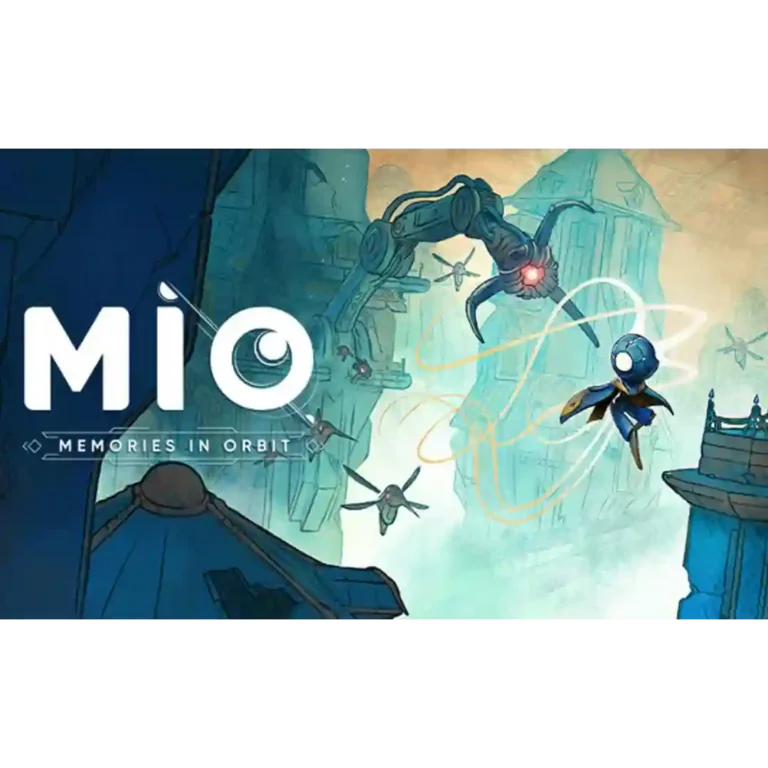
Choose MIO if you want gorgeous, exploration-led Metroidvania play with fluid movement and memorable music. Skip it if punishing precision sections, sparse checkpoints, or intentionally simple combat quickly wear you down.
Best for experienced Metroidvania players who value exploration, atmosphere, movement mastery, and optional secrets more than constant combat variety.
Less suited to players who dislike repeated precision attempts, sparse checkpoints, hands-off navigation, or accessibility gaps around reaction-heavy late-game challenges.
MIO: Memories in Orbit is at its best when The Vessel is inviting you to get lost. Its watercolor art, haunting soundtrack, expressive animation, and fluid traversal make exploration feel consistently rewarding, and the interconnected world gives curiosity real payoff. The tradeoff is friction: difficulty can spike sharply, checkpoints and navigation sometimes make failure tedious, and the Hairpin can feel unreliable when late-game platforming demands precision. Combat is generally responsive but simpler than the movement system, so boss quality varies depending on how much an encounter leans on traversal. For experienced Metroidvania players who enjoy mastery and self-directed discovery, those rough edges are easier to accept; players wanting forgiving navigation or deep combat may find them harder to overlook.
Compared with other Video Games, this product is above average in bug frequency, enemy variety, frame rate stability, near average in fun factor, boss design, below average in lore depth, checkpoint system, emotional impact.
| Attribute | This product | Category average | Difference |
|---|---|---|---|
| lore depth | 2.0 | 4.0 | -2.0 |
| checkpoint system | 1.8 | 3.5 | -1.7 |
| bug frequency | 4.5 | 2.9 | +1.6 |
| enemy variety | 5.0 | 3.5 | +1.5 |
| frame rate stability | 4.9 | 3.7 | +1.2 |
| emotional impact | 3.0 | 4.2 | -1.2 |
| level design | 5.0 | 3.8 | +1.2 |
| handheld play suitability | 5.0 | 3.9 | +1.1 |
Choose Cronos: The New Dawn. It scores 5.0 vs 3.0 for emotional impact, with a 3.9 overall score.
Choose Pragmata. It scores 4.9 vs 4.5 for fun factor, with a 4.3 overall score.
Choose Mouse: P.I. For Hire. It scores 5.0 vs 2.0 for lore depth, with a 4.0 overall score.
Choose Shinobi: Art of Vengeance. It scores 5.0 vs 1.8 for checkpoint system, with a 4.4 overall score.
Products reviewers directly compared with this model, grouped into quick takeaways.
It can be very demanding, especially in later platforming gauntlets and some boss fights. The challenge is rewarding for some players but frustrating or overtuned for others.
Exploration, art direction, atmosphere, movement, and music are the strongest recurring positives. The Vessel rewards curiosity with hidden paths, optional areas, upgrades, and striking new environments.
Combat is responsive but intentionally simple at its core, often built around a three-hit combo plus movement tools and modifiers. Bosses add variety, though some players found fights repetitive or too long.
Yes. Assists can weaken bosses after failed attempts, make regular enemies passive until attacked, and restore an extra protection layer while grounded; some accounts still found reaction-heavy platforming insufficiently supported.
Several accounts reached an ending in roughly 14–21 hours, while deeper exploration, a better or secret ending, and completion can push playtime into the 25–40+ hour range.
Steam Deck play was praised after switching graphics from High to Medium for a stable 60fps, while Switch 2 performance was also reported as smooth at 60fps.
These are a few of the reviews included in our analysis.


I have my issues with some of the pacing choices in MIO: Memories in Orbit, particularly in the game’s early hours, and I think some of its...
Play as android MIO in this mesmerizing metroidvania where you explore the Vessel, an enormous technological ark overgrown with machines gone...
MIO: Memories in Orbit looks and feels so good, you’ll forgive its flaws.
MIO: Memories in Orbit is a game that attempts to capture that feeling while also expressing it in the form of a Souls-like Metroidvania...
‘MIO: Memories in Orbit’ is a Metroidvania platformer with a lot to robotically beep and boop over.

Best for fluid traversal, rewarding exploration, striking art, and forgiving quality-of-life features. Skip it if you want deep combat, radical genre innovation, or consistently demanding bosses.
Pros: difficulty balance, boss design
Cons: innovation, sandbox freedom

Good if you want fast, tactical roguelite combat with huge progression depth, striking art, and standout music. Skip it if repetition, resource micromanagement, or a less emotionally satisfying sequel story...
Pros: combat system, progression system
Cons: originality

Good if you want a beautiful, demanding survival sandbox built around exploration, building, progression, and memorable co-op. Skip it if long resource runs, harsh death recovery, and deliberate pacing sound...
Pros: town-building system, exploration quality
Cons: grind level, fast travel convenience

Best for joyful destruction, dense exploration, and a charming DK-Pauline adventure. Skip it if camera quirks, frame-rate dips, easy bosses, or premium Switch 2 pricing are dealbreakers.
Pros: fun factor, world interactivity
Cons: frame rate stability, boss design