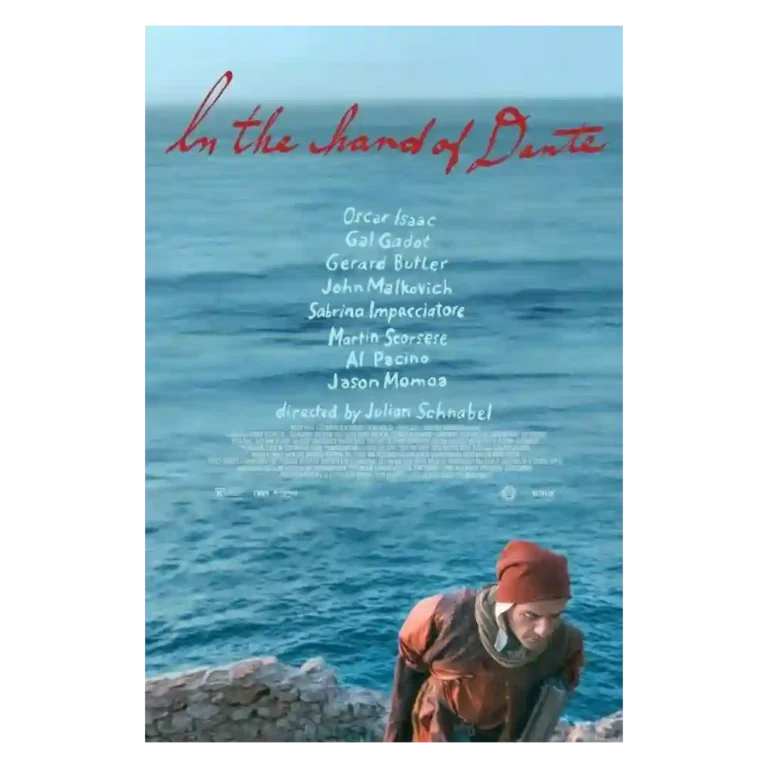
Choose it if you want a visually extravagant, aggressively strange literary crime epic and can tolerate confusion. Skip it if you need tight pacing, coherent timelines, convincing romance, or consistently strong performances.
Best for
Adventurous viewers who enjoy visually ambitious auteur swings, literary mysteries, eccentric casting, and films that invite debate even when they fail.
Not for
Anyone seeking a fast, coherent thriller, a persuasive historical drama, a moving romance, or an efficient use of two and a half hours should skip it.
Verdict
In the Hand of Dante is an audacious collision of gangster pulp, medieval biography, spiritual reverie, and romantic melodrama. Roman Vasyanov’s contrasting monochrome and color photography gives the film a striking visual identity, while Oscar Isaac usually provides the necessary center and Gerard Butler supplies its liveliest comic menace. The strengths are overwhelmed by a two-and-a-half-hour structure that meanders through disconnected ideas, underdeveloped characters, florid dialogue, and a romance that rarely feels credible. The manuscript theft and authentication passages generate genuine intrigue, but the period storyline and metaphysical links repeatedly stall the momentum. Its singular ambition may fascinate adventurous viewers, yet the dominant experience is an exhausting, tonally unstable epic whose beauty and boldness cannot compensate for weak narrative control.
Oscar Isaac is usually the film's strongest anchor, differentiating Nick Tosches and Dante with commitment and charisma. Even favorable assessments note that the sprawling script makes his task unnecessarily difficult.
Gerard Butler is the most frequent standout, with John Malkovich, Al Pacino, and Martin Scorsese also earning praise. The ensemble remains uneven because several prominent performances feel miscast or tonally disconnected.
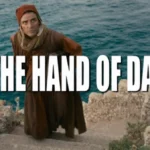
The crisp black-and-white modern sequences and vivid color period scenes are the film's most consistent achievement. Painterly compositions, roaming camera work, and striking locations give it a grand visual identity.
The lost-manuscript caper and reincarnated-writer structure create a genuinely unusual plot. Its singularity is a major asset, even though the execution is unwieldy.
The contrast between widescreen monochrome and boxier color imagery gives the film a distinctive look. Even harsh critics often admire its painterly frames, textures, and locations.
The theft, manuscript authentication, and early criminal pursuit create the film's best suspense. That tension fades as romance and metaphysical reflection take over.
The story is an audacious literary-gangster epic with flashes of fascination, suspense, and beauty. Its dominant impression, however, is of an overstuffed, confusing mess that collapses under its scope.
The two timelines, dual casting, side plots, and metaphysical links are difficult to track. Their connection remains tenuous until a late explanation that does little to unify the story.
At roughly two and a half hours, the film is consistently described as bloated. Its length magnifies the repetition, tonal drift, and weak second half.
The cross-century romance is the most repeated weakness. It is underwritten, rushed, and emotionally cold, leaving the declarations of timeless love unconvincing.
entertainment value: 2.1, 16 reviews, low consensus
The experience is highly divisive. Some enjoy the strange cast, violent pulp, and trainwreck fascination, but most find the film exhausting, dull, and difficult to recommend.
The dialogue is frequently florid, repetitive, and self-consciously poetic. Period speeches, odd accents, and grand declarations often become confusing or accidentally funny.
Roman Vasyanov: 4.3, 12 reviews, moderate consensus
Roman Vasyanov's cinematography is the most consistently praised contribution. The luminous color, crisp monochrome, unusual framing, and painterly movement give the film beauty even when the story fails.
Al Pacino makes a strong impression in a very small role. His understated, gravelly presence gives the opening moral lesson more weight than most of the later drama.
Gerard Butler is the film's most frequent scene-stealer, attacking Louie with comic menace and full commitment. Some find the work overplayed or miscast, but many consider it the movie's liveliest performance.
John Malkovich: 3.9, 8 reviews, moderate consensus
John Malkovich gives the mob storyline eccentric menace and dry humor. He is often praised as compelling, though one account felt he was simply coasting on familiar mannerisms.
Oscar Isaac is the consensus anchor, bringing charisma, commitment, and contrast to the dual lead. Even severe detractors usually recognize the difficulty of his task, though a few consider the material one of his weaker showcases.
Benjamin Clementine brings an electrifying presence and also contributes the music. His brief appearance stands out within the film's crowded collection of cameos.
Compared with other Movies, this product is above average in originality, suspense, near average in cinematography, humor, below average in costume design, emotional impact, cast chemistry.
No. The film jumps between centuries, genres, and dual roles, and the connection between its timelines remains unclear until a late explanation.
Are the performances good?
Oscar Isaac is usually the strongest anchor, and Gerard Butler is frequently the standout. The rest of the ensemble is uneven, with Gal Gadot and Jason Momoa drawing the most criticism.
Is the movie visually impressive?
Yes. The crisp monochrome crime scenes, vivid color period sequences, painterly compositions, and Italian locations are the most consistently praised elements.
Who is most likely to enjoy it?
Viewers who appreciate audacious, strange, divisive films may enjoy the spectacle and ambition. Those sensitive to slow pacing, confusion, or self-serious dialogue are unlikely to find it worthwhile.
Sample Expert Reviews We Analyzed
These are a few of the reviews included in our analysis.
Choose this inventive, unsettling documentary for fearless questioning, dark humor, and unpredictable storytelling. Skip it if you want a short, straightforward exposé with definitive answers.
Best for a hypnotic, bookish mystery with tactile visuals and cerebral chills. Skip it if reading-heavy, attention-demanding storytelling sounds more exhausting than exciting.
Best for an intimate, searching documentary that rewards focused attention and invites discussion. Skip it when devastating grief, addiction footage, and unresolved family tensions would be too much.
Best for patient suspense, an unforgettable score, and an unsettling masked killer. Skip it for very young children or if you want to avoid intense scares; its restrained kills also...