If you want better crash stability
Choose Welcome to Elderfield. It scores 5.0 vs 1.8 for crash stability, with a 4.3 overall score.

Stylized wild animals can surround or intimidate the player, causing fainting and lost items, and villages face threatening disasters. Encounters are handled through avoidance, food, or protective companions rather than fighting.
Choose it for animal companions, easy farmwork, and a large world full of discoveries. Skip at full price if restrictive travel, unclear quests, or performance problems would spoil a cozy routine.
Farming simulation fans who also enjoy wandering a large world, collecting animals, and using companions to reach new discoveries. Existing fans of the previous open-world Harvest Moon are a stronger fit than players hoping for a complete reinvention.
Players seeking effortless relaxation or unhurried, unrestricted exploration may find stamina costs and prescribed routes frustrating. Story-focused players and anyone specifically considering the criticized Switch 2 build should weigh the weak characterization and technical concerns carefully.
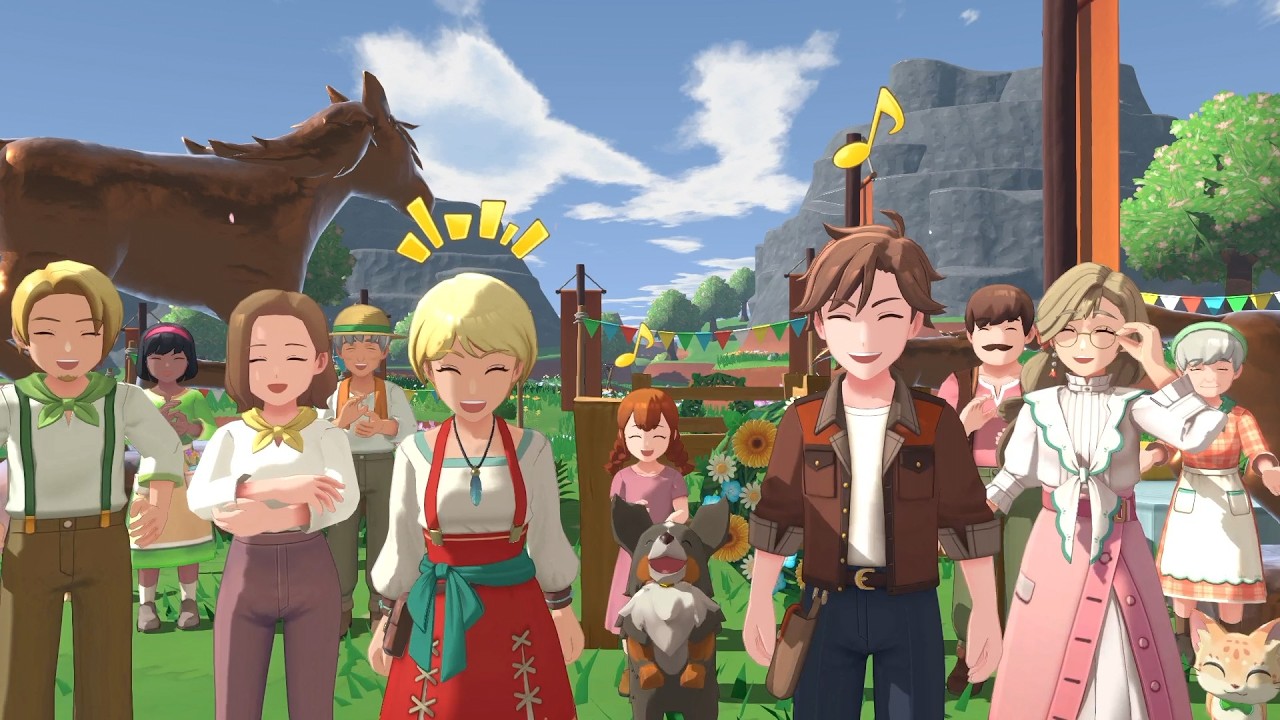
Echoes of Teradea is most convincing when a detour reveals a useful animal, hidden passage, or statue challenge. Contextual tools keep farming approachable, while soil quality and crop mutations leave room to experiment. Companions add practical help with travel and supplies, giving animal collecting a purpose beyond filling a barn. The tradeoff is a world whose scale often exceeds the freedom of its movement: small ledges, limited jump spots, and stamina costs can turn curiosity into frustration. Quest guidance, late feature unlocks, frequent loading, and uneven performance further divide opinion. The story and character presentation are similarly inconsistent. Farming fans who enjoy extended exploration may find plenty to love, but several accounts make a stronger case for buying on sale than paying full price.
Compared with other Video Games, this product is above average in achievement list quality, cutscene visual quality, user interface design, near average in exploration quality, farming system, below average in death mechanics, world-building, emotional impact.
| Attribute | This product | Category average | Difference |
|---|---|---|---|
| death mechanics | 1.3 | 3.8 | -2.6 |
| world-building | 2.0 | 4.2 | -2.2 |
| emotional impact | 2.0 | 4.2 | -2.2 |
| sandbox freedom | 2.4 | 4.1 | -1.7 |
| movement feel | 2.2 | 3.8 | -1.5 |
| sound design | 2.5 | 4.2 | -1.7 |
| house decoration | 2.0 | 3.6 | -1.6 |
| load times | 2.2 | 3.7 | -1.5 |
Choose Welcome to Elderfield. It scores 5.0 vs 1.8 for crash stability, with a 4.3 overall score.
Choose Crimson Desert. It scores 5.0 vs 3.0 for soundtrack quality, with a 3.5 overall score.
Choose Dungeons of Hinterberg. It scores 5.0 vs 2.4 for value for money, with a 4.1 overall score.
Choose The Legend of Heroes: Trails beyond the Horizon. It scores 5.0 vs 2.3 for polish, with a 3.6 overall score.
Products reviewers directly compared with this model, grouped into quick takeaways.
Exploration receives the most attention, with hidden routes, animals, statues, and useful resources encouraging travel beyond the farm. Farming remains a regular routine rather than the only focus.
Contextual actions automatically select tools for tilling, planting, and watering. Soil quality, crop rotation, and mutations add more to consider after those basics.
Yes. Depending on the animal, skills can improve travel, deter wildlife, carry supplies, or send items home.
Jumping is limited to designated locations, and small ledges can force long detours. Mounts, warp statues, and later upgrades help, but do not make the world unrestricted.
Friendship develops during the main story, while dating and marriage open after the main campaign. Clear preference tracking helps with gifts, although opinions on character depth are mixed.
Performance accounts range from mostly smooth play with occasional dips to severe Switch 2 slowdowns. Crashes and infrequent autosaving are also reported, making regular manual saves worthwhile.
The large world and collections offer considerable content, but several accounts recommend waiting for a sale. Existing fans who value exploration and animals are the most likely to find the price worthwhile.
These are a few of the reviews included in our analysis.


2026.10.22 Harvest Moon: Echoes of Teradea gives players a large open world to explore and restore. Read our review to see what it does...
Harvest Moon: Echoes of Teradea is the eighth entry in the Natsume Harvest Moon series. The farmer has just started their new life as the...
Bella’s 5/5 Harvest Moon: Echoes of Teradea review, with gameplay screenshots, exploration highlights, beginner guide links, and where to buy...
Our Harvest Moon Echoes of Teradea review covers the open-world exploration, farming loop, romance options, and the launch-day Steam reception.
Harvest Moon: Echoes of Teradea is an entertaining open world farming sim. With multiple systems simple to start, difficult to master, it's...

Best for fluid traversal, rewarding exploration, striking art, and forgiving quality-of-life features. Skip it if you want deep combat, radical genre innovation, or consistently demanding bosses.
Pros: difficulty balance, boss design
Cons: innovation, sandbox freedom

Best for superb combat, inventive builds, and richly voiced characters. Skip it if repeated runs, resource gathering, or visually busy battles outweigh the appeal of steady progress.
Pros: overall quality, combat system
Cons: pacing, grind level

Good if you want a beautiful, demanding survival sandbox built around exploration, building, progression, and memorable co-op. Skip it if long resource runs, harsh death recovery, and deliberate pacing sound...
Pros: town-building system, exploration quality
Cons: grind level, fast travel convenience
Choose Clair Obscur if you want a story-rich RPG with thrilling timed combat, gorgeous art, and standout music. Skip it if poor maps, tight parry timing, or occasional bugs and...
Pros: narrative quality, combat system
Cons: map and navigation design, menu usability