If you want better pairing reliability
Choose Garmin Vivomove Sport. It scores 5.0 vs 2.3 for pairing reliability, with a 3.7 overall score.

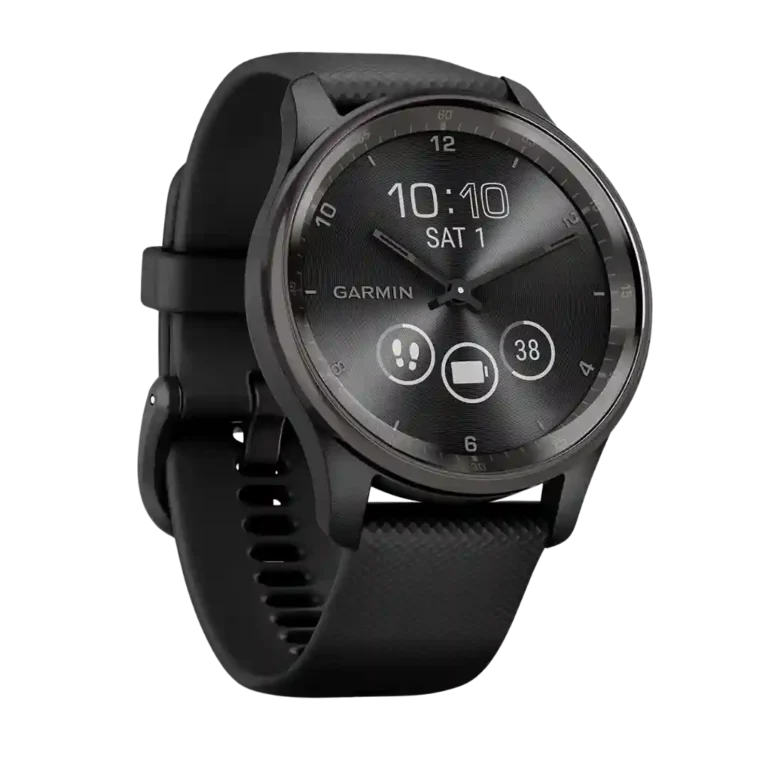
Choose the Garmin Vivomove Trend if you want a stylish analog-looking Garmin with a bright hidden display, useful wellness data, and Qi charging. Skip it if you need built-in GPS, strong sports controls, long Garmin-style battery life, or consistently responsive touch.
Best for users who want Garmin wellness tracking, notifications, and casual workout stats in an analog-looking watch that feels more like daily jewelry than a sports device.
Not for runners or athletes who need built-in GPS, physical buttons, detailed workout guidance, onboard apps/music, or multi-week Garmin battery life.
The Garmin Vivomove Trend lands best as a polished hybrid watch rather than a serious training tool. Reviewers consistently liked the analog styling, bright hidden display, comfortable wear in many cases, Garmin Connect data, Body Battery-style wellness insights, and the convenience of Qi charging. The tradeoff is that its hidden touchscreen-first interface can be finicky, the connected-GPS experience depends heavily on the phone and sometimes syncs slowly, and battery life is modest by Garmin standards. Heart-rate, sleep, stress, and everyday tracking were often praised, but blood oxygen readings and step counting were less consistently trusted. It feels strongest for casual fitness and daily wellness, with enough smartwatch features to be useful without looking like a full smartwatch.
Compared with other Smartwatches, this product is above average in activity auto-detection, third-party app support, stress tracking, near average in charging convenience, brightness, below average in button controls, pairing reliability, Bluetooth connectivity.
| Attribute | This product | Category average | Difference |
|---|---|---|---|
| button controls | 2.0 | 3.9 | -1.9 |
| pairing reliability | 2.3 | 4.1 | -1.7 |
| Bluetooth connectivity | 2.0 | 3.7 | -1.7 |
| durability | 2.5 | 4.2 | -1.7 |
| blood oxygen tracking | 2.0 | 3.4 | -1.4 |
| coaching features | 2.5 | 3.9 | -1.4 |
| operating system experience | 2.5 | 3.9 | -1.4 |
| charging speed | 2.9 | 4.1 | -1.2 |
Choose Garmin Vivomove Sport. It scores 5.0 vs 2.3 for pairing reliability, with a 3.7 overall score.
Choose Garmin Forerunner 165. It scores 4.9 vs 2.0 for button controls, with a 4.3 overall score.
Choose OnePlus Watch 3. It scores 4.9 vs 2.0 for blood oxygen tracking, with a 4.0 overall score.
Choose Garmin MARQ Gen 2. It scores 4.8 vs 2.9 for charging speed, with a 4.2 overall score.
Products reviewers directly compared with this model, grouped into quick takeaways.
It is best for casual running and everyday workouts. Reviews found run data often usable, but the connected GPS, limited on-watch data, and touch-only controls make it weaker than a dedicated Forerunner-style sports watch.
Reviewers generally saw about three to five days depending on workouts, notifications, GPS use, and Pulse Ox. Several said Garmin's five-day estimate was accurate, while others called that short for a Garmin fitness watch.
Qi charging was one of the most praised additions because it is convenient and reduces dependence on Garmin-only cables. The tradeoff is that some pads are finicky or incompatible, and several reviewers said charging is not especially fast.
Most reviewers thought the hidden LCD was much brighter and clearer than earlier Vivomove models. A few still found it reflective or harder to read in bright sunlight, especially before brightness adjusted.
Heart rate, stress, and sleep timing were usually reviewed positively for casual wellness tracking. Blood oxygen readings, sleep-stage precision, and step counts were more mixed.
Notifications can be read on both platforms, and reviewers found iPhone use reliable. Message replies are limited to Android, so iPhone users lose that part of the smartwatch experience.
These are a few of the reviews included in our analysis.


Best for long battery life, accurate GPS and useful offline maps at a strong price. Skip it if you need payments, richer apps, a built-in LED flashlight or polished smartwatch...
Pros: mapping and navigation, value for money
Cons: smartwatch features, contactless payments

Best for accurate run tracking, deep Garmin coaching and phone-free Spotify in a light package. Skip it if you need full maps, triathlon mode, Apple Music support or the strongest...
Pros: value for money, GPS accuracy
Cons: mapping and navigation, third-party app support

Good if you want premium running features, long battery life, and maps for under $200. Skip it if you need flawless heart-rate data, multiband GPS, LTE, or richer app support.
Pros: value for money, battery life
Cons: heart rate accuracy, third-party app support

Best for accurate running metrics, excellent coaching tools, a bright AMOLED display, and dependable battery life. Skip it if you need offline maps, music storage, contactless payments, multi-band GPS, or...
Pros: battery life, value for money
Cons: mapping and navigation, smartwatch features