Suicide by overdose, depression, and drug dependence are central concerns, with nudity in an opening bedroom scene. References to Nazism, concentration camps, and political imprisonment add mature historical context.
Bottom Line
Luminous photography and superbly controlled performances give this compact historical drama its power. Its dense references and emotional restraint can also leave viewers wanting more context and a deeper connection.
Arthouse viewers and cinephiles who enjoy rigorous visual storytelling, along with readers interested in its literary concerns. It also gives discussion-minded viewers plenty to unpack.
Viewers who want motivations plainly explained or lack patience for indirect historical references may struggle. Newcomers can connect deeply, but the amount of assumed background knowledge is a real divide.
Verdict
Fatherland is especially rewarding for viewers drawn to precise images, restrained performances, and questions that linger after the credits. Sandra Hüller and Hanns Zischler make the father-daughter journey compelling through glances, silences, and eruptions of feeling, while Łukasz Żal’s monochrome photography gives the ruined landscape extraordinary presence. The short running time concentrates a remarkable range of ideas about belonging, family obligations, and culture’s relationship with political power. That economy also divides opinion: some find an emotionally devastating miniature, while others see thin characterization, missing historical context, or a story that ends just as it opens up. It suits reflective arthouse viewing and discussion, with the strongest recommendation for those comfortable with implication and unresolved questions.
The cast is a major strength, led by performances that communicate thought and grief through glances, posture, and brief emotional eruptions. Even several less enthusiastic assessments admire the acting.
lead performance: 4.8, 39 reviews, strong consensus
Sandra Hüller supplies the film’s emotional center through controlled anger, fatigue, and grief. Her small changes of expression are frequently praised as much as the occasional outbursts.
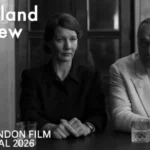
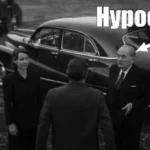
Luminous monochrome, evocative shadows, and meticulously composed images are among the most consistently praised strengths. Even viewers left cold by the drama usually admire its visual beauty.
Pawlikowski’s precise staging and ability to concentrate meaning earn extensive praise. The strongest objections concern an overcontrolled approach that can suppress spontaneity and emotional access.
The austere black-and-white style gives the ruined landscape a painterly, haunted presence. Most admire its elegance, although a few find the refinement clinical or mannered.
The script intertwines family conflict, historical politics, and cultural ideas with remarkable economy for its admirers. Others feel the compression leaves gaps, thin characterization, and unrealized dramatic possibilities.
Some find the brief context-setting scenes sufficient; others struggle with unexplained history and dense literary references. Background knowledge can make the journey easier to follow.
entertainment value: 3.3, 6 reviews, low consensus
The drama is gripping and rewarding for receptive viewers, but its subdued energy leaves others bored. Visual beauty alone does not make it absorbing for everyone.
The film changes who accompanied Mann and shifts the timing of family tragedy. Some accept these choices as useful dramatic liberties; others see a misleading simplification of history.
character screen time: 2.2, 3 reviews, strong consensus
Klaus’s limited presence is a recurring frustration: his significance can feel greater than his allotted development. Several assessments want the family and side relationships to receive more time.
Queer identities emerge through looks, gestures, and implication rather than exposition. Some appreciate the subtlety, while others feel important sources of character tension are left unexplored.
This is a selective portrait of a few days rather than a full account of Mann’s life. The narrow scope works for some but leaves others wanting basic background and a fuller sense of the people.
The film strongly suits viewers who enjoy concise, intellectually rich arthouse work. Its restraint and specialized cultural interests reward an audience receptive to that style.
Meticulous props, period detail, and compositions offer substantial rewards for viewers drawn to filmmaking craft. The visual design can be absorbing in its own right.
Questions about home, grief, political co-option, and history give viewers plenty to discuss afterward. Even a mixed response can lead to interesting conversations.
Not ideal for
Straightforward-story viewing
2.0
1 review
Straightforward-story viewing: 2.0, 1 review
Viewers who want motivations and ethical positions plainly explained may find the screenplay frustrating. Much is conveyed indirectly through gestures, silences, and implication.
Theater viewing
2.5
1 review
Theater viewing: 2.5, 1 review
One viewer recommends waiting for streaming despite the excellent photography. The limited personal engagement makes a theatrical outing feel less urgent in that assessment.
Hüller’s controlled stillness conveys thought, anger, and grief without flattening them. Her occasional eruptions gain force from the restraint, and she is repeatedly singled out as the emotional center.
Żal’s luminous monochrome and exact compositions are among the film’s most consistently admired achievements. Even mixed assessments tend to value the images, though one finds them clinical.
Zischler makes Mann imposing, guarded, and privately vulnerable through measured speech and small shifts of expression. His late emotional release is a particular highlight.
Paweł Pawlikowski: 4.5, 45 reviews, moderate consensus
Pawlikowski earns strong praise for precise staging, rich images, and concentrated storytelling. The main criticism is that his control can become emotionally restrictive or leave material underdeveloped.
The co-written script is praised for subtle backstory, literary density, and economy. Less enthusiastic assessments find the characters and dramatic conflicts insufficiently explored.
Diehl’s brief opening turn communicates despair vividly and leaves a haunting impression. His small amount of screen time does not prevent the performance from resonating.
Compared with other Movies, this product is above average in runtime, theme depth, film framing, near average in family dynamics, emotional impact, below average in Biographical fairness, historical accuracy, Biographical coverage.
Comparison summary
46 compared features
Above average0.4+ pts higher
33(72%)
Same as averagewithin 0.3 pts
8(17%)
Below average0.4+ pts lower
5(11%)
Largest category differences
Attribute
This product
Category average
Difference
Biographical fairness
1.5
3.8
-2.3
runtime
4.4
2.9
+1.5
theme depth
4.6
3.6
+0.9
film framing
4.6
3.7
+0.9
ending satisfaction
4.3
3.3
+1.0
writing quality
3.9
3.0
+0.9
lighting quality
5.0
3.7
+1.3
pacing
3.9
2.9
+1.0
Consider This Instead
If you want better character development
Choose Possible Love. It scores 4.8 vs 3.5 for character development, with a 4.7 overall score.
Better: enjoyment of Hüller’s performanceThis viewer enjoys Hüller less here than in Project Hail Mary.
Cold War
Compared: romance versus political ironyThe review contrasts Cold War’s earnest romance with Fatherland’s bitter political irony.
Better: development of artistic compromiseFatherland feels slight beside Cold War’s fuller exploration of art and assimilation.
Compared: dramatic scaleFatherland feels smaller and more like a chamber piece than Cold War.
FAQ
How long is Fatherland?
It runs about 82 minutes, including credits. Many admire its concentration, while others want more time with the characters.
Do I need to know Thomas Mann’s work?
Not necessarily, but familiarity with the writer and postwar Germany can help. Some newcomers find it moving without preparation; others struggle with unexplained references.
What are its strongest qualities?
The monochrome photography and the performances by Sandra Hüller and Hanns Zischler receive the most consistent praise.
Is it emotionally moving?
Many find powerful grief beneath the stillness, especially in the final scene. Others feel the restraint keeps them at a distance.
Is it historically exact?
It fictionalizes aspects of Mann’s journey, including his traveling companion and the timing of family tragedy. The dramatic value of those changes divides opinion.
Is it suitable for younger viewers?
It is generally best suited to ages 16 and up because of suicide, substance-related themes, nudity, and mature historical concerns.
Does it reward another viewing?
Several assessments expect its historical references and small emotional gestures to deepen with repeat viewing. That appeal depends on connecting with the quiet style.
Sample Expert Reviews We Analyzed
These are a few of the reviews included in our analysis.
Choose this inventive, unsettling documentary for fearless questioning, dark humor, and unpredictable storytelling. Skip it if you want a short, straightforward exposé with definitive answers.
Extraordinary performances and richly observed relationships make this a rewarding, emotionally forceful drama. Its nearly three-hour length and slow opening demand patience and undivided attention.
Best for a hypnotic, bookish mystery with tactile visuals and cerebral chills. Skip it if reading-heavy, attention-demanding storytelling sounds more exhausting than exciting.
Best for an intimate, searching documentary that rewards focused attention and invites discussion. Skip it when devastating grief, addiction footage, and unresolved family tensions would be too much.