
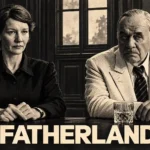
Fatherland Feature Scores
Explore all 54 feature scores for Fatherland, organized into pros and cons.
Scores by Feature
Summary
54 reviewed features-
Very positive 4.5-5.024 (44%)
-
Positive 3.5-4.423 (43%)
-
Neutral 2.5-3.44 (7%)
-
Negative 1.5-2.43 (6%)
Pros
Sort
-
The cast is a major strength, led by performances that communicate thought and grief through glances, posture, and brief emotional eruptions. Even several less enthusiastic assessments admire the acting.
-
Sandra Hüller supplies the film’s emotional center through controlled anger, fatigue, and grief. Her small changes of expression are frequently praised as much as the occasional outbursts.
-
Luminous monochrome, evocative shadows, and meticulously composed images are among the most consistently praised strengths. Even viewers left cold by the drama usually admire its visual beauty.
-
Pawlikowski’s precise staging and ability to concentrate meaning earn extensive praise. The strongest objections concern an overcontrolled approach that can suppress spontaneity and emotional access.
-
The film connects belonging, family wounds, political compromise, and the power of art within a very small canvas. Its density is a strength for many, though some find ideas insufficiently tied to emotional development.
-
The nearly square frame uses negative space, geometric placement, and confinement to express isolation and historical pressure. Its rigor is widely admired, though one critic finds the figures too tightly controlled.
-
The austere black-and-white style gives the ruined landscape a painterly, haunted presence. Most admire its elegance, although a few find the refinement clinical or mannered.
-
Jazz, choral music, and classical selections establish opposing political worlds and deepen the drama. Bach’s final appearance is especially valued for expressing grief that words cannot release.
-
Many find the depiction of political denial, authoritarianism, and cultural appropriation urgently relevant beyond 1949. The historical setting becomes a warning about recurring habits.
-
The 82-minute running time impresses many with its emotional and thematic concentration. Others wish the film gave its characters and side stories more room before stopping.
-
The opening telephone conversation is frequently singled out for its expressive staging and concentrated despair. It establishes an absence that continues to shape the journey.
-
The return home becomes a painful encounter with a country and identity that no longer feel available. The strongest responses value how displacement connects national division with family wounds.
-
The different ways a father and daughter carry loss give the film much of its emotional power. Shared listening finally offers a release that their words and public roles have withheld.
-
The final church scene is widely admired for turning withheld grief into a powerful wordless release. A smaller group finds the resolution abrupt, sentimental, or too easy.
-
Ruined buildings, detailed interiors, cars, and carefully chosen props make the postwar setting vivid. The physical world often carries as much expressive weight as the dialogue.
-
Devotion, resentment, and unequal emotional obligations give the family journey much of its force. Critics of the film want more time and openness within that relationship.
-
The film questions whether culture can resist political power or merely lend it prestige. Admirers find that inquiry lucid and timely, while one critic thinks its most urgent thread is sidelined.
-
The film’s questions about art, responsibility, and political denial are valued for avoiding easy reassurance. Its ideas are most effective when they emerge through people rather than overt instruction.
-
The most positive assessments value the attention to contradictions on both sides of the border. Political ideas remain entangled with compromise and personal responsibility.
-
Responses divide over the emotional restraint: many find deep feeling beneath the stillness, culminating in a devastating release. Others remain distant from the characters despite admiring the craft.
-
The script intertwines family conflict, historical politics, and cultural ideas with remarkable economy for its admirers. Others feel the compression leaves gaps, thin characterization, and unrealized dramatic possibilities.
-
Period spaces, clothing, cars, and political rituals often make the journey feel convincingly lived in. One sharp dissent finds the refinement too artificial to preserve history’s messiness.
-
Expressive shadows and carefully controlled light give the images depth and psychological force. The lighting is praised as an integral part of the compositions.
-
Dry put-downs, awkward receptions, and ideological absurdities provide flashes of bitter humor. Much of the comedy comes through precise reactions rather than broad jokes.
-
Brief supporting work can leave a lasting impression, especially August Diehl’s despairing opening scene. Hanns Zischler also receives awards-level praise in an assessment that treats his work as supporting.
-
Hüller and Zischler complement one another through contrasting physical presences and tightly controlled interactions. Their shared scenes make the relationship legible even when little is said.
-
The film often makes a divided postwar Germany feel immediate and morally complicated. Dissenters argue that its elegant compression flattens the period or leaves connections too superficial.
-
Sharp suits and carefully recreated period clothing help distinguish the historical world. The costume work is admired for bringing the era to life.
-
Admirers value the crisp economy and graceful movement between encounters. For others, the measured tempo and repeated receptions feel sleepy or slow.
-
References to literature, art, and music enrich the script’s cultural fabric. The strongest praise concerns how those allusions interweave with the themes rather than decorate them.
-
Political pageantry and cultivated evasions become sources of bitter, absurd comedy. The satire is sharpest when grand cultural claims meet banal or sinister behavior.
-
The ruined landscape and constrained interiors create a somber, haunted mood. Admirers find the atmosphere expressive; detractors experience it as muffled or overly sealed off.
-
Several viewers expect the historical and emotional layers to deepen on repeat watches. One less engaged viewer feels little pull to return despite appreciating the craft.
-
Joanna Kulig’s brief appearance as a singer is welcomed as a delightful connection to Pawlikowski’s earlier work. The cameo is especially rewarding for familiar viewers.
-
The intimate road trip becomes a compelling study of a family and country in ruins for many viewers. Dissenters find the narrative slight or feel it follows the less interesting family member.
-
Restrained exchanges and cultured barbs carry much of the drama. The dialogue can be devastatingly economical, with Erika receiving some especially strong lines.
-
The central relationship conveys a complicated mix of professional duty and private attachment. Actions and silence often communicate its ambiguity more effectively than explanation.
-
The leads can feel richly human through tiny gestures, contrasting public poise with private distress. Critics of the approach find their inner lives insufficiently explored and Klaus particularly underdeveloped.
-
The shifts among languages support the international setting and showcase Hüller’s fluency. One assessment also finds that the changing spoken language adds intensity.
-
The intimate perspective and immediate postwar setting feel fresh to several viewers. A dissenting assessment instead finds the meanings and moods too predetermined.
-
Hüller’s quietly grand performance makes the film lasting for some viewers. Others find that excellent acting and imagery cannot make the whole drama stick.
-
Giving Hüller a central role is welcomed as a strong casting choice. Her ability to command a scene through a look makes the altered family setup rewarding.
-
The father is compelling as both an imposing public figure and a damaged, isolated man. That duality adds interest to the father-daughter relationship.
-
The title’s double meaning neatly joins the German homeland with the father-daughter story. That verbal compression suits the film’s dense design.
-
The cutting has a stark, deliberate precision that suits the carefully composed images. That same formality contributes to the impression of a highly controlled art object.
-
Rain is singled out as a sound motif that gains importance beyond the opening scene. Its recurrence contributes to the film’s expressive design.
-
The consistent handling of the film’s viewpoints helps its political and personal concerns hold together. Some scenes land more strongly than others, but the overall construction remains assured in this assessment.
Cons
Sort
-
Klaus’s limited presence is a recurring frustration: his significance can feel greater than his allotted development. Several assessments want the family and side relationships to receive more time.
-
The film changes who accompanied Mann and shifts the timing of family tragedy. Some accept these choices as useful dramatic liberties; others see a misleading simplification of history.
-
A strongly dissenting assessment finds Mann reduced to a vain bore without enough explanation for the film’s hostility. The concern is an unbalanced portrait rather than the character’s likability alone.
-
Queer identities emerge through looks, gestures, and implication rather than exposition. Some appreciate the subtlety, while others feel important sources of character tension are left unexplored.
-
Some find the brief context-setting scenes sufficient; others struggle with unexplained history and dense literary references. Background knowledge can make the journey easier to follow.
-
This is a selective portrait of a few days rather than a full account of Mann’s life. The narrow scope works for some but leaves others wanting basic background and a fuller sense of the people.
-
The drama is gripping and rewarding for receptive viewers, but its subdued energy leaves others bored. Visual beauty alone does not make it absorbing for everyone.
Use Cases
Best for
Sort
-
The film strongly suits viewers who enjoy concise, intellectually rich arthouse work. Its restraint and specialized cultural interests reward an audience receptive to that style.
-
Meticulous props, period detail, and compositions offer substantial rewards for viewers drawn to filmmaking craft. The visual design can be absorbing in its own right.
-
Questions about home, grief, political co-option, and history give viewers plenty to discuss afterward. Even a mixed response can lead to interesting conversations.
-
Close attention helps the small gestures and withheld feelings register. Repeated, focused viewing is expected to reveal more of the film’s density.
-
The compact scale works especially well as an intimate chamber drama. Precise images and performances carry weight well beyond the small narrative canvas.
-
Knowledge of the era and its personalities can reveal more in the brief encounters. Historically curious viewers may enjoy investigating the references beyond the film.
-
Readers are directly encouraged to see the film for its central literary figure and concerns. The connection between literature, culture, and personal life gives it particular appeal.
-
Cinephiles receive a direct recommendation for the film’s rigorous form and thematic richness. Its restrained surface rewards interest in how images and performances carry meaning.
-
One assessment recommends waiting to stream the film rather than prioritizing a cinema visit. Its historical and political interest still makes it worth considering at home.
Conditional or not ideal for
Sort
-
Straightforward-story viewingViewers who want motivations and ethical positions plainly explained may find the screenplay frustrating. Much is conveyed indirectly through gestures, silences, and implication.
-
Theater viewingOne viewer recommends waiting for streaming despite the excellent photography. The limited personal engagement makes a theatrical outing feel less urgent in that assessment.
-
Background viewingThe imagery can serve as attractive background, but the suggestion comes with a pointed complaint about the drama’s sleepy energy. Passive viewing is a qualified use rather than a wholehearted recommendation.
-
Returning fan viewingFans can settle into the familiar monochrome style and restrained emotional language. Some nevertheless consider this less compelling than the earlier historical films.
-
Newcomer viewingPrior knowledge is helpful but not universally necessary: several newcomers connect deeply without it. Others find the literary and historical assumptions a substantial barrier.
Cast & Creators
-
Erika MannHüller’s controlled stillness conveys thought, anger, and grief without flattening them. Her occasional eruptions gain force from the restraint, and she is repeatedly singled out as the emotional center.
-
CinematographerŻal’s luminous monochrome and exact compositions are among the film’s most consistently admired achievements. Even mixed assessments tend to value the images, though one finds them clinical.
-
Thomas MannZischler makes Mann imposing, guarded, and privately vulnerable through measured speech and small shifts of expression. His late emotional release is a particular highlight.
-
DirectorPawlikowski earns strong praise for precise staging, rich images, and concentrated storytelling. The main criticism is that his control can become emotionally restrictive or leave material underdeveloped.
-
WriterThe co-written script is praised for subtle backstory, literary density, and economy. Less enthusiastic assessments find the characters and dramatic conflicts insufficiently explored.
-
Klaus MannDiehl’s brief opening turn communicates despair vividly and leaves a haunting impression. His small amount of screen time does not prevent the performance from resonating.
-
ActorKulig’s brief singing appearance is warmly received as a delightful cameo. Familiar viewers especially enjoy the connection she brings to the filmmaker’s earlier work.
-
Production DesignerThe historical setting is admired as beautifully realized and convincingly bleak. The production design helps make the period feel tangible.
-
Production DesignerThe production design is praised for bringing the period vividly to life. Its carefully realized historical world works closely with the photography and costumes.
-
Costume DesignerThe costume work helps bring the historical period to life. It contributes to the film’s carefully realized visual world.