
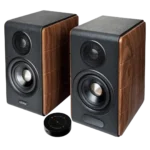
Edifier S880DB MKII Feature Scores
Explore all 57 feature scores for Edifier S880DB MKII, organized into pros and cons.
Scores by Feature
Summary
57 reviewed features-
Very positive 4.5-5.035 (61%)
-
Positive 3.5-4.49 (16%)
-
Neutral 2.5-3.43 (5%)
-
Negative 1.5-2.410 (18%)
Pros
Sort
-
Connectivity is one of the clearest strengths, with USB-C, optical, coaxial, and RCA options covering desktops, TVs, streamers, and other sources. The speakers are unusually flexible for a compact active pair.
-
The compact footprint and strong output make these especially good for desktops, offices, and small to medium rooms. Only very tight desk spaces may find them a bit larger than ideal.
-
Build, styling, connectivity, and sound combine into a highly capable compact system that earns enthusiastic recommendations. The touch remote is the clearest flaw keeping the overall experience from feeling as polished as the hardware.
-
Music performance is a core strength across rock, pop, jazz, electronic, and record playback. The pair is detailed, engaging, and versatile enough to move between casual listening and more focused near-field sessions.
-
Overall sound quality is the product's strongest consensus point: clean, detailed, balanced, and surprisingly full for compact active speakers. Bass depth, upper-air, and vocal character draw some criticism, but the broad sonic verdict remains very positive.
-
The small OLED display is consistently well liked because it clearly shows source, volume, or mode without becoming distracting. Auto-dimming and subtle presentation suit both desks and living rooms.
-
Fine detail is a standout strength, with cymbals, guitars, vocals, and layered mixes coming through cleanly and distinctly. Near-field listening especially highlights the resolution.
-
The design earns near-universal praise for looking more like compact hi-fi than ordinary computer speakers. Curved details, wood accents, and a premium two-tone look help them fit comfortably in visible living spaces.
-
The two-tone finishes are a major visual strength, especially the wood-look side panels paired with white or dark surfaces. Fit and finish generally feel premium, with only one minor finish-quality complaint.
-
Cabinets feel solid, weighty, and well finished, with construction quality that supports the premium impression. One sample had a small finish-adhesion flaw, but that was the exception.
-
The dedicated sub output is widely praised and makes it easy to add deeper low-end weight. The speakers have useful bass on their own, but a sub is the better route for true deep-bass effects.
-
Treble is usually clear, smooth, and detailed without becoming fatiguing. A few listeners wanted more air or heard some edge at the extremes, but harshness is not the dominant character.
-
The default balance is generally neutral and easy to live with, and Monitor mode is a frequent favorite. Some presets push bass and treble too far, while room placement can also shift the balance.
-
Stereo imaging is usually precise and spacious, especially near field, with instruments and vocals easy to place. The main limitation is that some TV material can feel less expansive than ideal.
-
Midrange is usually clean, natural, and informative, with vocals often pushed pleasantly forward. Some listeners wanted more thrust, openness, or expressiveness, so the tuning is not universally lush.
-
Value is strong when discounted, where the sound, build, and connectivity can compete well above the price. At full MSRP, the cheaper MR5 and other alternatives make the value case less automatic.
-
Sound tailoring is unusually flexible through rear tone controls, presets, and the ConneX app's custom EQ. Monitor is often preferred, while Classic or Dynamic can sound overcooked to some listeners.
-
Bass opinion depends heavily on room, placement, and expectations: many found it surprisingly deep, punchy, and controlled for the size, while others heard limited low-end extension or boom near walls. The sub output neatly addresses the deepest-bass gap.
-
Bluetooth pairing is consistently simple and quick, with devices finding the speakers easily. Wireless setup is one of the least troublesome parts of daily use.
-
Setup is usually plug-and-play: connect the speakers, power them, choose a source, and start listening. One reviewer found the channel-identification instructions unclear, but the overall process is considered easy.
-
They work well as compact TV or movie speakers, with strong dialogue and useful optical connectivity. They are less convincing as a complete soundbar replacement when HDMI ARC, very deep bass, or a wider cinematic spread matters.
-
LDAC support is a major wireless-audio plus and is repeatedly praised. The tradeoff is no aptX family support, while iPhone users fall back to SBC.
-
The physical volume, bass, and treble knobs feel precise and useful, and they provide a welcome escape from the touch remote. Their rear placement can make daily access awkward.
-
Bluetooth stability is excellent in the tested setups, with rock-solid pairing and no reported connection dropouts.
-
Metal protection over the tweeters is a practical strength, reducing the risk of damage from fingers or accidental contact without hiding the drivers.
-
The box includes a generous set of useful cables, and multiple reviewers appreciated not having to immediately buy basic connection accessories.
-
Compact cabinets still get very loud, with enough output for small rooms and more than enough at a desk. Volume capability is a clear strength.
-
Low-volume listening remains clear and satisfying, making the pair well suited to near-field desks and quiet background sessions.
-
Full retail pricing feels premium and divided opinion, especially beside cheaper Edifier alternatives. Sale and street prices around the lower end of the range make the package much more compelling.
-
The speakers handle dynamic swings and punch surprisingly well for their size, including movies and energetic records. Classical material can expose some limits in large-scale dynamic range.
-
High-resolution playback over USB and digital inputs is treated as a real strength for buyers who want better-quality source files without adding another DAC.
-
The presentation is praised for staying integrated and coherent, with bass, mids, and upper detail blending naturally rather than feeling disjointed.
-
For TV and movies, dialogue comes through crisp and easy to follow. The speakers can push speech forward convincingly even in a simple two-channel setup.
-
Gaming use benefits from punchy sound and very low perceived Bluetooth latency. The compact footprint also suits a gaming or creative desk.
-
Packaging is sturdy and protective, including well-packed or double-boxed treatment that inspires confidence before setup.
-
Optical input works well as the practical TV connection, delivering clear dialogue and solid bass without needing an AV receiver.
-
Vocals are often clear, lively, and forward, but placement and tuning matter. A few takes found central voices restrained, dry, or slightly muffled until the speakers were adjusted.
-
Built-in amplification is a major convenience: the system works without a separate amp, reducing both setup complexity and additional cost.
-
Edifier customer service responded quickly and thoroughly to a channel-setup question, resolving unclear documentation with a helpful explanation.
-
The long inter-speaker cable gives enough reach for wide placement, including either side of a large TV. It offers useful placement flexibility even though the cable itself is bulky.
-
Bluetooth latency was described as barely noticeable in computer use, making wireless playback feel responsive for timing-sensitive desktop use.
-
Even a scratched, dusty vintage record remained highly enjoyable, suggesting the speakers can stay musical without making every source flaw dominate the experience.
-
Playback stays clean through normal listening levels. One test reported no distortion at all, while another heard only a hint of clipping near maximum volume.
-
The pair is not especially tiny or lightweight, but it remains manageable enough to move between setups. Very cramped desks may still find the size more substantial than expected.
Cons
Sort
-
Touch-control responsiveness is a recurring weakness. Wake delays, late reactions, and accidental commands can turn simple adjustments into repeated attempts.
-
HDMI ARC is missing, and that repeatedly comes up as a convenience loss for TV-centered setups. Optical is the main workaround.
-
The USB-C audio input does not provide 5V power for peripherals, a missed convenience for desk setups where spare powered USB ports are valuable.
-
The proprietary inter-speaker cable is repeatedly described as chunky or unwieldy. It works, but it is the least graceful part of an otherwise tidy compact setup.
-
Native AirPlay is absent, which is a meaningful drawback for buyers who want Apple-centric network streaming.
-
Native Spotify Connect is not supported, so Spotify users must rely on another playback path rather than direct service integration.
-
The rechargeable touch puck is the most consistent usability complaint: gestures can misfire, volume changes can trigger other commands, and wake-up can lag. A few reviewers still liked the concept or found it workable when used slowly.
-
There is no headphone output, which reduces convenience for desktop users who want to switch quickly from speakers to private listening.
-
There is no RGB or flashy lighting, so buyers looking for a gaming-style visual show may find the design too restrained.
-
There is no internal phono stage, so a turntable needs its own phono preamp or an external one. That omission limits the otherwise broad all-in-one appeal.
-
One movie-focused test found the stage too contained vertically and laterally, with less sense of sound spreading toward the room boundaries than desired.
-
The remote's energy-saving behavior can delay the first command after it wakes, adding friction to otherwise simple adjustments.
-
The app can be useful for EQ and source control, but several reviewers found its smart features limited or unnecessary. Native streaming integrations are also sparse.