
Bose Lifestyle Ultra Speaker Feature Scores
Explore all 49 feature scores for Bose Lifestyle Ultra Speaker, organized into pros and cons.
Scores by Feature
Summary
49 reviewed features-
Very positive 4.5-5.027 (55%)
-
Positive 3.5-4.49 (18%)
-
Neutral 2.5-3.46 (12%)
-
Negative 1.5-2.44 (8%)
-
Very negative below 1.53 (6%)
Pros
Sort
-
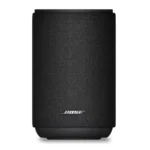
The compact, premium-looking design is one of the strongest points of agreement. Reviewers liked the soft fabric, rounded form, and furniture-friendly finishes, with Driftwood Sand drawing particular praise despite its surcharge.
-
Sound quality is the product's strongest consensus win: reviewers consistently praise its clarity, detail, room-filling scale, and convincing height for the size. A handful of critics found rivals fuller, more dynamic, or better in deep bass, but the overall response remains very favorable.
-
Stereo pairing is consistently praised for adding real left-right separation, a stronger center image, and a much larger sense of scale. Reviewers who heard a working pair generally preferred it clearly over a single speaker.
-
Clarity and fine detail are among the most consistent sonic strengths. Reviewers repeatedly heard crisp vocals, well-separated instruments, and small recording details that remain easy to follow across genres.
-
Initial setup is one of the most consistently praised parts of the experience. The refreshed Bose app guides users clearly through Wi-Fi, pairing, and home-theater configuration with little friction when everything connects properly.
-
The speaker's modular flexibility is a major strength: it can work alone, in stereo, in multi-room groups, or as rear channels in the Lifestyle Ultra home-theater system. Open AirPlay and Google Cast support also make mixed-brand grouping easier.
-
Home-theater integration is a major reason to buy into the system. Used as rear channels with the Lifestyle Ultra Soundbar and Subwoofer, the speakers add convincing surround and height effects and turn a modular setup into a strong 7.1.4 package.
-
The up-firing driver delivers a noticeably taller presentation than the cabinet suggests and is a defining sonic advantage. Width is less consistent from a single speaker, but stereo pairing makes the spatial presentation much more convincing.
-
Overall sentiment is strongly positive, with reviewers praising the combination of sound, design, flexibility, and connectivity. Reservations center on price, software quirks, stereo-pair reliability, and the limits of deep bass from such a small enclosure.
-
The speaker plays surprisingly loud for its compact cabinet and can fill small-to-medium rooms without needing a stereo partner. Several reviewers preferred keeping it below the top of its range, where balance and composure are stronger.
-
The top-panel controls are useful and comprehensive, covering playback, volume, Bluetooth, microphone mute, and voice-assistant access. Reviewers especially liked the circular volume control when it registered gestures properly.
-
Voice-assistant performance is a strong point. Alexa and Alexa+ were repeatedly described as quick, responsive, and easy to interact with from across a room.
-
Day-to-day use is generally easy thanks to familiar casting standards, simple controls, and minimal dependence on Bose's app after setup. The always-plugged-in design and occasional software friction are the main practical compromises.
-
Bass is impressive for the speaker's size, with punch, control, and useful midbass weight. The recurring limitation is true sub-bass: the deepest notes lack the authority of larger speakers or a dedicated subwoofer, and wall placement can make the port boomy.
-
Google Cast is a major flexibility win: reviewers found it easy to access from familiar apps and able to group Bose with third-party speakers. One mixed-brand Google Home group worked flawlessly with no perceptible timing problems.
-
The 3.5mm auxiliary input is a welcome inclusion on a modern wireless speaker. Reviewers liked being able to connect turntables and other legacy sources without buying a proprietary adapter.
-
Build and overall execution feel appropriately premium, with solid materials, polished fit and finish, and a design suited to visible living spaces. Even more critical reviews generally treat the hardware itself as well made.
-
Its compact footprint and ability to fill a modest room make it a particularly good fit for bedrooms, offices, kitchens, and smaller living spaces. Reviewers found it easy to place without sacrificing a sense of scale.
-
Bass, midrange, treble, and height controls give useful room for personal tuning. Reviewers generally found the adjustments effective, though some felt the basic three-band EQ could not fully correct every tonal preference.
-
Music playback is lively, spacious, and enjoyable across varied genres, with clean vocals and strong instrument separation. Reviewers especially liked how much more convincing the experience becomes with a stereo pair.
-
AirPlay 2 is generally a strong compatibility point, making mixed-brand playback easy and working across Bose, Apple, and Sonos devices. One reviewer did encounter intermittent Apple Music dropouts, so reliability was not flawless in every test.
-
Tonal balance is generally controlled and enjoyable, with clear mids and highs and bass that integrates well. A few reviewers found the stock sound thin, bright, or slightly harsh and used EQ to smooth it out.
-
Voices are usually clean and well defined, both in music and spoken content. One Bluetooth video test briefly sounded off, but the issue disappeared after restarting playback.
-
The Bose app earns praise for its clean layout, guided setup, and straightforward controls, but reliability is inconsistent. Several reviewers hit connection, pairing, or status glitches, especially when managing multiple speakers.
-
Value opinions are split. Many reviewers think the sound, design, connectivity, and expandability justify $299, while others point to cheaper Sonos alternatives or feel the premium is harder to defend given software quirks.
-
With the soundbar, subwoofer, and rear speakers working together, the system was praised for feeling coherent and genuinely immersive rather than like separate components competing for attention.
-
At modest listening levels the speaker remains clear and balanced, making it well suited to background or office listening rather than requiring high volume to sound complete.
-
The built-in microphone picked up voice commands from across the room in testing, supporting reliable hands-free Alexa use.
-
Alexa+ is a meaningful smart-home strength: its integration was described as welcome and well implemented, adding capable voice control without making the Bose app the center of playback.
-
The status lights are subtle rather than distracting, fitting the speaker's understated home-friendly design while still providing useful state and microphone-mute feedback.
-
When used as rear speakers with the Lifestyle Ultra Soundbar and Subwoofer, one long-running setup remained faultless for weeks. That is a strong result for home-theater connection stability.
-
Alexa+ understood spoken requests reliably in testing, with the reviewer reporting that it seemed to understand nearly everything said.
-
Once connected to Wi-Fi, one reviewer found network stability excellent. That positive result suggests the basic connection can be dependable even though multi-speaker setup proved fussier elsewhere.
-
TrueSpatial can make ordinary stereo material feel taller and more enveloping, but it does not fully replace native Dolby Atmos. Some recordings also become slightly vague when the processing is pushed.
-
Video dialogue was ultimately clear in the one direct test, although Bluetooth playback initially made voices sound wrong until the video was restarted. That makes it usable for spoken content, but not entirely glitch-free in this role.
-
Spotify playback proved more stable than AirPlay in one direct test, with no recurrence of the dropout problem that affected Apple Music.
Cons
Sort
-
Stereo-pair reliability is the clearest recurring weakness. Multiple reviewers encountered failed pairing, severe sync delays, one-sided playback, or repeated restarts before two speakers worked correctly.
-
The new Lifestyle Ultra ecosystem does not work with Bose's older soundbars and related home-audio hardware. Reviewers repeatedly criticized this clean break in compatibility as a frustrating limitation for existing Bose owners.
-
This is a home speaker, not a grab-and-go model: it needs AC power and offers no built-in battery. Its compact size makes repositioning around the house manageable, but true portability is a weak point.
-
Bluetooth 5.3 works, but codec support is limited to SBC and AAC. Several reviewers wanted aptX or LDAC for higher-quality local wireless playback at this price.
-
Smart features are capable but not exhaustive. Alexa+ is useful and casting is flexible, yet the speaker lacks automatic room calibration, native Dolby Atmos music, and some of the deeper ecosystem tools found on rivals.
-
Format support has a notable ceiling: the speaker lacks native Dolby Atmos music and some high-resolution Bluetooth options, while one review also noted a 24-bit/48kHz playback limit. TrueSpatial adds height, but it is not a full substitute for native immersive formats.
-
Using the speakers as a TV's main audio source over Bluetooth or the analog input is a poor fit because Bose warns of latency and lip-sync problems. Home-theater use is better handled through the Lifestyle Ultra Soundbar.
-
One comparison found the speaker's large dynamic swings somewhat flattened next to the Sonos Era 300. That keeps it from matching bigger rivals when music demands dramatic changes in scale and intensity.
-
The inability to add the Lifestyle Ultra Subwoofer to a standalone stereo pair was called a genuine missed opportunity. That limitation matters most for listeners who want deeper low-end authority without buying the full soundbar system.
-
High-volume behavior is mixed. One test found clean sound close to maximum output, while others heard bass-port chuffing or loss of cohesion and distortion when the speaker was pushed hard.
-
The microphone can be muted from the top panel, which gives users a clear privacy control. One reviewer would have preferred a physical hardware switch for stronger reassurance.
-
At about 3.7 pounds the speaker is easy enough to move around the home, but its required power connection limits how convenient that mobility really is.
-
The top controls are thoughtfully laid out, and the circular volume gesture can be intuitive, but responsiveness varies. Some reviewers found taps laggy or the volume ring required more pressure than expected.