Strong profanity, sexual situations and marijuana use accompany tense scenes of police intimidation. Better suited to older teens and adults.
Official ratingR
Bottom Line
Ruth Madeley and a remarkable cast make the disability-rights struggle feel urgent, funny and human. The film's conventional speeches and sentimentality don't always match the radical force of its subject.
Viewers interested in disability-rights history, real-world social change and an inspiring, character-led drama. It also works as an accessible introduction to the Section 504 movement.
Viewers seeking a comprehensive life biography or an unsentimental, formally daring account of activism may find the tidy speeches, sentimental tone and missing personal backstory frustrating.
Verdict
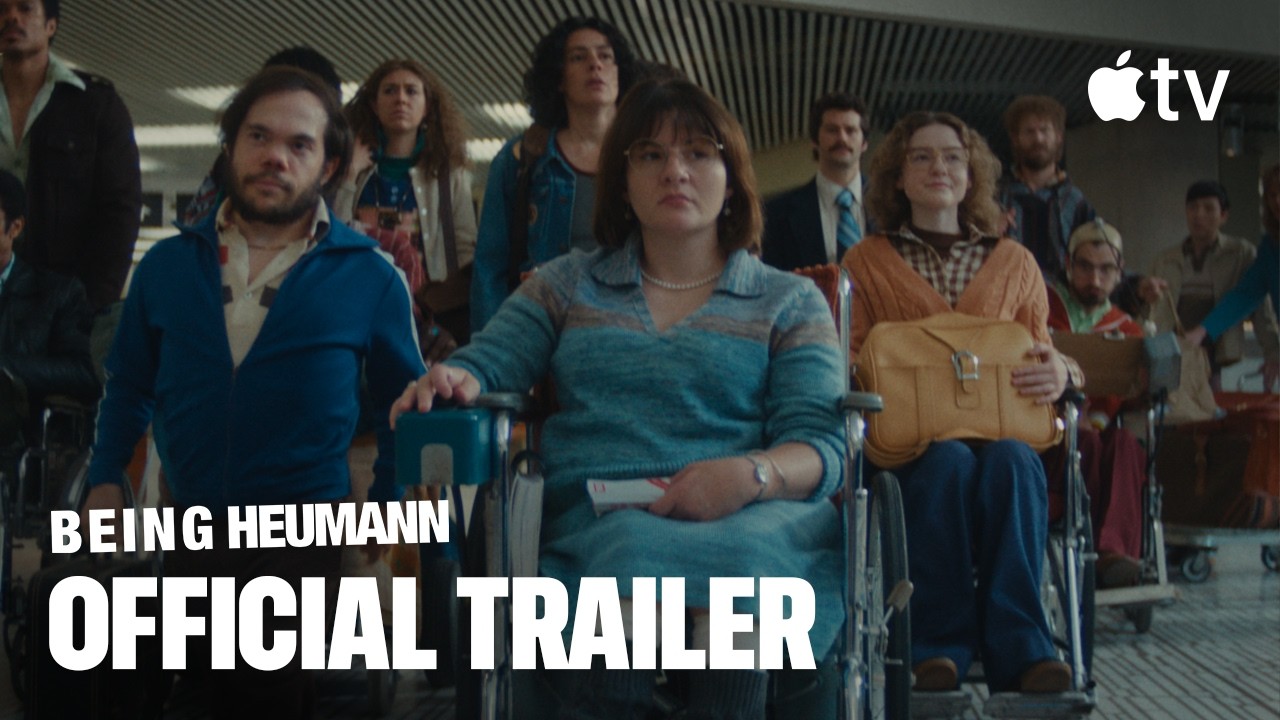
Being Heumann turns the fight to enforce Section 504 into a vivid ensemble drama, with Ruth Madeley giving the film its fierce, funny, unmistakably human center. Its greatest achievement is the sheer number of disabled performers placed at the forefront, alongside candid attention to access barriers, physical care and the hard work of organizing a protest. The film also finds joy, sexuality and friendship amid bureaucratic opposition, making a neglected chapter of American civil-rights history approachable without denying the coalition's differences. But its ambition is constrained by a familiar inspirational-biopic shape. Speeches sometimes explain too much, several supporting figures deserve richer development, and the lengthy occupation loses pace toward the finish. Some critics also find the government antagonists too cartoonish and the overall tone too sanitized. It remains an affecting introduction to an important movement, particularly for viewers willing to accept crowd-pleasing filmmaking over a more challenging portrait.
lead performance: 4.7, 20 reviews, strong consensus
Ruth Madeley gives Heumann ferocity, quick wit and vulnerability, anchoring the film even when its writing becomes conventional. Her performance is praised across the critical spectrum.
character development: 3.6, 17 reviews, low consensus
Heumann's stubbornness and conflicts with allies provide welcome texture, but some relationships and supporting arcs are rushed. Several critics wish more time were spent getting to know people beyond the campaign.
The film foregrounds disabled actors, varied access needs, intimacy and the practical realities of care without reducing its people to objects of pity. This is the clearest point of admiration.
The protesters' jokes, flirting and irreverent exchanges make the sit-in unexpectedly lively without necessarily diminishing the stakes. Some critics feel the comic uplift comes at the expense of harsher truths.
The many activists create a lively communal portrait, but the crowded roster leaves several characters underdeveloped and occasionally interrupts the main story.
The pivotal sit-in gains useful historical context, but the film is less successful at conveying every hard edge of the movement and the longer battle beyond the victory.
The script is praised for making dense legal history accessible and letting the ensemble breathe, but criticized for speech-heavy exposition, tidy arcs and conventional beats.
The uplifting tone makes difficult history approachable, but many critics find the rougher edges softened by familiar speeches, easy optimism and prestige-film sentimentality.
Mark Ruffalo's bureaucrat can be a credible, self-protective obstacle, but multiple critics find him too cartoonish or one-note for such a complicated conflict.
Most criticism targets the familiar biopic blueprint: rousing speeches, predictable beats and softened conflict rarely match the radical nature of the history being dramatized.
Siân Heder draws energetic performances and moving moments from the ensemble, yet her polished crowd-pleasing approach divides critics who want a more radical form.
It brings the often-overlooked Section 504 campaign to life through everyday access barriers and collective action. Its accessible storytelling works particularly well as an introduction.
The film makes an under-told American civil-rights campaign intelligible and engaging. Its account is broad enough for newcomers, even if documentary veterans may want more depth.
Few doubt the film's capacity to rouse viewers through collective determination and a hard-fought victory. The overtly inspirational treatment is more satisfying to some than to others.
The film deliberately concentrates on one campaign instead of Heumann's whole life. Anyone wanting a detailed account of her childhood, private motivations or later work may feel shortchanged.
Madeley commands the film as a flinty, funny and fiercely determined Judy Heumann, bringing a human vulnerability to the activist's bluntness. Critics who dislike the script still praise her work.
Compared with other Movies, this product is above average in Justice and accountability, disability representation, language level, near average in lead performance, writing quality, below average in originality, genre satisfaction, title appeal.
Comparison summary
51 compared features
Above average0.4+ pts higher
29(57%)
Same as averagewithin 0.3 pts
13(25%)
Below average0.4+ pts lower
9(18%)
Largest category differences
Attribute
This product
Category average
Difference
Justice and accountability
5.0
2.6
+2.4
disability representation
5.0
3.3
+1.7
language level
4.5
2.6
+1.9
Narrative stakes
5.0
3.3
+1.7
story quality
5.0
3.3
+1.7
accent authenticity
5.0
3.4
+1.6
realism
5.0
3.4
+1.6
Narrative structure
4.3
2.9
+1.4
Consider This Instead
If you want better title appeal
Choose Tenzing. It scores 5.0 vs 2.0 for title appeal, with a 4.0 overall score.
Products reviewers directly compared with this model, grouped into quick takeaways.
CODA (2021)
Worse: disability-centered viewpointUnlike the earlier film, the story places disabled characters rather than outsiders at the center.
Similar: director and tonal continuityIts humane and dryly funny approach is linked to the director’s previous work.
Better: emotional weightDespite its larger political subject, it is considered less moving than the previous film.
Crip Camp: A Disability Revolution (2020)
Better: historical depthThe documentary is judged a stronger treatment of the movement.
Better: biographical insightThe documentary is recommended for deeper insight into the campaigners.
Better: novelty of historical insightsThose familiar with the documentary may learn little new, though the dramatization reaches a broader audience.
Freaks (1932)
Compared: disabled casting scaleIts ensemble of disabled actors is framed as unusually rare in mainstream cinema.
Compared: disabled-actor ensembleThe unusually large cast of disabled performers is contrasted with a much older Hollywood precedent.
FAQ
Is Being Heumann a documentary?
No. It is a dramatized historical feature based on Judy Heumann's memoir and the Section 504 sit-in, not a nonfiction documentary.
Does the film cover Judy Heumann’s entire life?
No. It concentrates on the organizing and occupation surrounding the Section 504 campaign, leaving much of her earlier and later life outside the story.
What do critics praise most?
Ruth Madeley's forceful portrayal and the unusually extensive cast of disabled actors draw the most consistent praise. The practical details of accessibility and mutual care also stand out.
Why do some critics dislike the storytelling?
They find parts of the drama too sentimental, reliant on speeches or confined to familiar biopic beats. Some supporting characters and late-film scenes lack momentum.
Is it worth seeing if I already watched Crip Camp?
It revisits history covered in the documentary, so it may offer fewer new facts. Its dramatized ensemble and lived-in account of the occupation provide a different experience.
What is its age guidance?
The film is rated R for language, some sexual material and drug use. It also includes tense scenes of police intimidation; older teens are better suited to the material.
Is it similar to CODA?
Both films combine warm humor, accessible drama and disabled performers in central roles. Being Heumann is more focused on protest and political rights, and its conventional uplift proves more divisive.
Sample Expert Reviews We Analyzed
These are a few of the reviews included in our analysis.
Choose this inventive, unsettling documentary for fearless questioning, dark humor, and unpredictable storytelling. Skip it if you want a short, straightforward exposé with definitive answers.
Extraordinary performances and richly observed relationships make this a rewarding, emotionally forceful drama. Its nearly three-hour length and slow opening demand patience and undivided attention.
Best for a hypnotic, bookish mystery with tactile visuals and cerebral chills. Skip it if reading-heavy, attention-demanding storytelling sounds more exhausting than exciting.
Best for an intimate, searching documentary that rewards focused attention and invites discussion. Skip it when devastating grief, addiction footage, and unresolved family tensions would be too much.