Annihilated Review

Publisher: Death Union
Released: November 10, 2026
Updated: 1 hour ago
3.8
Overall review score
619
Review insights
71
Scored features
23
Expert reviews
Content guidance
Scorata recommended age 16+

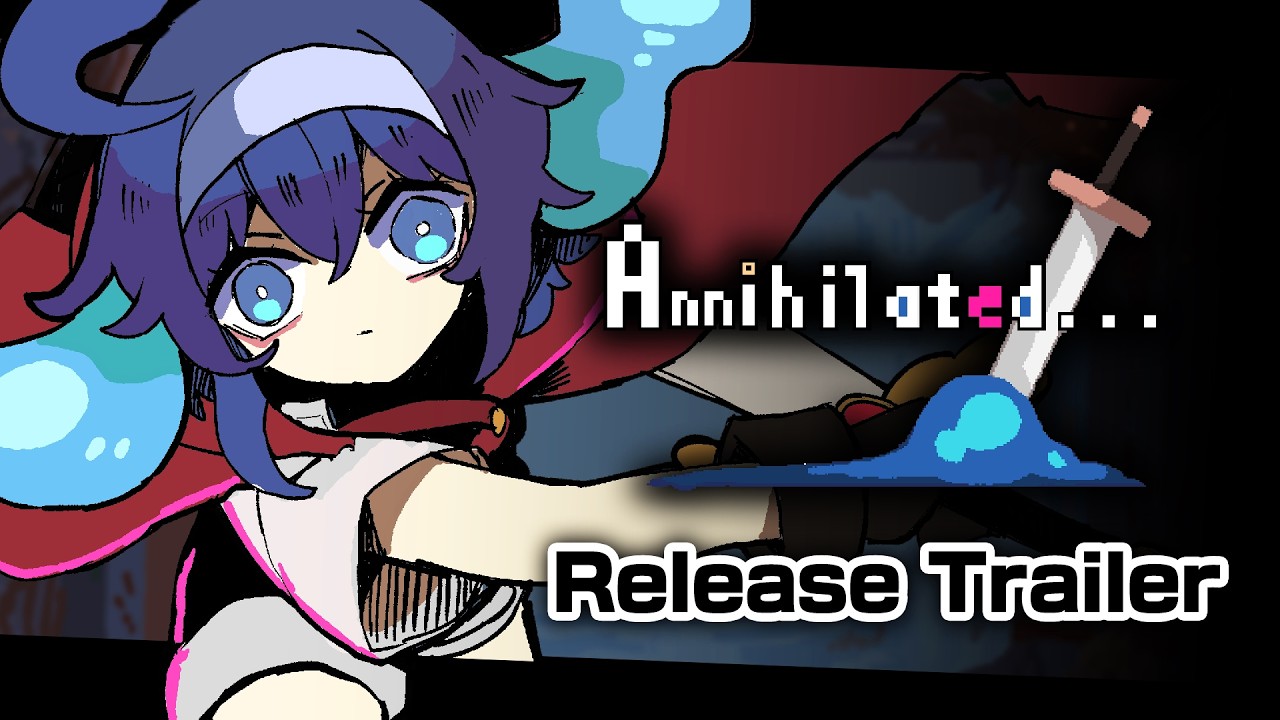
Bloodied and grotesque fantasy imagery includes impalement, a sword driven through a character’s head, and demonic psychological-horror themes. These disturbing scenes and intense themes are better suited to older teens.

Bottom Line

Broken heroes, branching stories, and clever weapon-breaking battles make Annihilated memorable. Its rough English translation, wordy dialogue, and occasionally repetitive combat are harder to overlook.

Best for players drawn to character-driven RPGs, branching visual-novel stories, and strange dark fantasy, especially those who like forgiving progression and inventive card battles.

Not ideal for players seeking punishing roguelites, deep deckbuilding synergies, or free-form dungeon exploration. Readers who need polished English dialogue or easily readable combat interfaces may also struggle.

Verdict

Annihilated is most rewarding when its broken companions reveal what they lost and when a weapon’s final swing becomes the start of your next strategy. Four character routes, meaningful endings, an evocative hand-drawn style, and a lively soundtrack give this unusual RPG strong personality. Timing-based attacks can be exciting, while a probability-based alternative and forgiving floor checkpoints let story-minded players advance without mastering every reflex challenge. The tradeoffs matter: English dialogue and card descriptions often read awkwardly, busy battles can be difficult to follow, and too many encounters can be solved by repeatedly using the strongest card. Some critics find the storytelling itself bloated or emotionally flat, even as others praise its depth. It is a promising fit for fans of darker, character-driven RPGs, but less satisfying as a deeply strategic or punishing roguelite.

Feature Scorecards

Summary

71 reviewed features
  • Very positive 4.5-5.0
    20 (28%)
  • Positive 3.5-4.4
    16 (23%)
  • Neutral 2.5-3.4
    13 (18%)
  • Negative 1.5-2.4
    18 (25%)
  • Very negative below 1.5
    4 (6%)

Pros highlights

  • 4.5
    23 reviews low consensus
    character route variety: 4.5, 23 reviews, low consensus
    Choosing a different hero changes conversations, abilities, and significant story moments, providing a reason to return. Shared bosses and repeated dungeon sequences mean the routes are not equally fresh.
  • 4.3
    23 reviews moderate consensus
    combat system: 4.3, 23 reviews, moderate consensus
    Cards represent breakable equipment rather than a conventional deck, and the timing mechanic makes turns active. The novelty impresses many, although some find the best tactic too obvious after a few hours.
  • 4.2
    23 reviews low consensus
    narrative quality: 4.2, 23 reviews, low consensus
    Four troubled heroes and separate escape stories give the dark fantasy premise its strongest pull. Enthusiastic reactions to the emotional payoffs coexist with complaints that the mystery becomes opaque or repetitive.
  • 4.9
    22 reviews strong consensus
    weapon breaking and final-use bonuses: 4.9, 22 reviews, strong consensus
    Weapons become strongest as they shatter, rewarding carefully timed final blows instead of hoarding gear. This unusual risk-reward loop is among the most consistently praised ideas.
  • 4.4
    22 reviews low consensus
    innovation: 4.4, 22 reviews, low consensus
    Breaking the equipment you rely on and blending that loop with branching fantasy stories strikes many as genuinely original. Detractors think the many genres never quite cohere.
  • 4.8
    21 reviews strong consensus
    equipment durability: 4.8, 21 reviews, strong consensus
    Limited uses become an opportunity rather than a nuisance: breaking equipment triggers extra effects and pays for new supplies. Players often enjoy adapting as their best weapons disappear.

Cons highlights

  • 1.9
    19 reviews moderate consensus
    localization support: 1.9, 19 reviews, moderate consensus
    The English translation is a persistent weak spot, with literal phrasing, grammatical errors, and sometimes confusing item text. A few find it understandable or faintly charming, but many want a thorough editing pass.
  • 3.4
    18 reviews low consensus
    strategic depth: 3.4, 18 reviews, low consensus
    Break timing, attack windows, and companion traits can create clever decisions. Critics counter that repeated strong-weapon attacks or random outcomes frequently overshadow deeper planning.
  • 3.1
    15 reviews low consensus
    writing quality: 3.1, 15 reviews, low consensus
    The characters’ internal conflicts and unusual perspectives can be touching and thoughtful. Overexplained monologues, uneven route writing, and an awkward English script often blunt the impact.
  • 2.2
    13 reviews low consensus
    dialogue quality: 2.2, 13 reviews, low consensus
    Thoughtful character exchanges sometimes become repetitive monologues that restate an emotion long after it is clear. Some routes generate better chemistry than others.
  • 2.4
    11 reviews low consensus
    Build variety and synergy: 2.4, 11 reviews, low consensus
    Companion differences and consumable cards offer occasional synergies, but carefully assembled builds rarely seem essential. Several critics miss the complex combo-making of specialist deckbuilders.
  • 3.0
    10 reviews low consensus
    random encounter design: 3.0, 10 reviews, low consensus
    Stat-dependent roulette events can be funny or suspenseful, but sudden deaths and unclear odds frustrate others. The limited variety becomes more obvious on repeat routes.

Use Cases

Best for

  • 4.5
    15 reviews low consensus
    Story-focused RPG players: 4.5, 15 reviews, low consensus
    Players who enjoy detailed character arcs and varied endings have plenty to uncover, with gentle checkpoints keeping the story accessible. The substantial reading and uneven translation are important drawbacks.
  • 3.5
    8 reviews low consensus
    Visual novel and FMV fans: 3.5, 8 reviews, low consensus
    Branching character conversations and alternate endings are a substantial draw for visual-novel enthusiasts. Lengthy, repetitive lines and poor English editing may make this less rewarding than more polished narrative games.
  • 5.0
    2 reviews limited evidence
    Grimdark fans: 5.0, 2 reviews, limited evidence
    A cursed rescue mission, psychological suffering, and cute-to-gruesome contrast give fans of grim fantasy material to enjoy. The tone also mixes in absurd humor and some surprisingly hopeful outcomes.

Not ideal for

  • Controller play
    1.0
    2 reviews limited evidence
    Controller play: 1.0, 2 reviews, limited evidence
    Controller inputs can trigger unexpected menus or make cards hard to select. At least one critic strongly prefers mouse and keyboard as a result.
  • Exploration enthusiasts
    2.0
    1 review
    Exploration enthusiasts: 2.0, 1 review
    Those who prefer free maze navigation may be disappointed by fixed branching nodes. Exploration largely involves deciding which encounter or resource to pursue next.

Compared With Category Average

Compared with other Video Games, this product is above average in equipment durability, crash stability, save system reliability, near average in combat system, replay value, below average in core gameplay loop, Build variety and synergy, sound design.

Comparison summary

65 compared features
  • Above average 0.4+ pts higher
    22 (34%)
  • Same as average within 0.3 pts
    9 (14%)
  • Below average 0.4+ pts lower
    34 (52%)

Largest category differences

Attribute This product Category average Difference
core gameplay loop 1.4 3.9 -2.5
Build variety and synergy 2.4 4.4 -2.0
sound design 2.0 4.1 -2.1
equipment durability 4.8 3.1 +1.7
user interface design 1.3 3.3 -2.0
crash stability 5.0 3.2 +1.8
save system reliability 4.7 3.0 +1.7
localization support 1.9 3.3 -1.3

Consider This Instead

If you want better grind level

Choose Phantom Blade Zero. It scores 4.9 vs 1.3 for grind level, with a 4.1 overall score.

Compare

If you want better core gameplay loop

Choose Final Fantasy Resonance. It scores 5.0 vs 1.4 for core gameplay loop, with a 4.2 overall score.

Compare

Compared in Reviews

Products reviewers directly compared with this model, grouped into quick takeaways.

  • Similar: run map structures The reviewer notes that its node structure is not unique to roguelites.
  • Similar: run-based route structure Both games use a familiar roguelite-style structure.

Slay the Spire (2019)

  • Similar: deckbuilder progression Annihilated adds a twist to the familiar deckbuilder formula.
  • Better: card buildcraft The critic misses the card combinations found in Slay the Spire.
  • Similar: branching dungeon paths The map-based choice of combat and event nodes follows a familiar pattern.

Undertale (2015)

  • Similar: dark and unusual RPG atmosphere Fans of Undertale’s unusual tone may enjoy Annihilated’s grim mystery.
  • Similar: timing mechanics Timed button presses are compared with Undertale.
  • Similar: timed combat input Attacking with a moving-cursor timing check evokes Undertale.

FAQ

What kind of game is Annihilated?

It is a story-focused, turn-based roguelite RPG with card-based equipment and visual-novel-style dialogue. Each run follows one of four damaged heroes through a branching dungeon.

Do your story choices change the ending?

Yes. Companion selection and decisions during encounters shape relationships and can lead to different endings, though some bosses and sections repeat across routes.

What makes the combat unusual?

Weapons have limited uses and are especially powerful as they break. Landing a Fatal Strike can steal an enemy weapon, rewarding you for spending rather than hoarding equipment.

Can I play without timed button presses?

Yes. The game offers a probability-based battle option instead of precision timing, which suits players who would rather focus on the story and resource decisions.

How punishing is death?

Death generally restarts you at the beginning of your current floor, and rest-point saves can prevent major setbacks. Some players enjoy this generosity; others want tougher roguelite consequences.

Is the English translation good?

It is frequently criticized for typos, literal phrasing, and unclear item descriptions. The story remains understandable for many, but the editing issues are particularly noticeable in such a text-heavy game.

Is it worth replaying all four routes?

The routes offer different companions, story revelations, and endings, which many find rewarding. Repeated combat, lengthy reading, and limited ending tracking make full completion less appealing to others.

Sample Expert Reviews We Analyzed

These are a few of the reviews included in our analysis.

Video Reviews

Article Reviews

tech-gaming.com

Annihilated makes its troubled heroes worth caring about, and deliberately breaking your best equipment gives combat a satisfying twist...

Review score
4.2

Top Video Games to Consider

#1 Well Dweller
4.7

Best for fluid traversal, rewarding exploration, striking art, and forgiving quality-of-life features. Skip it if you want deep combat, radical genre innovation, or consistently demanding bosses.

Pros: difficulty balance, boss design

Cons: innovation, sandbox freedom

#2 Hades II
4.5

Best for superb combat, inventive builds, and richly voiced characters. Skip it if repeated runs, resource gathering, or visually busy battles outweigh the appeal of steady progress.

Pros: overall quality, combat system

Cons: pacing, grind level

#3 Valheim
4.5

Good if you want a beautiful, demanding survival sandbox built around exploration, building, progression, and memorable co-op. Skip it if long resource runs, harsh death recovery, and deliberate pacing sound...

Pros: town-building system, exploration quality

Cons: grind level, fast travel convenience

#4 Clair Obscur: Expedition 33
4.5

Choose Clair Obscur if you want a story-rich RPG with thrilling timed combat, gorgeous art, and standout music. Skip it if poor maps, tight parry timing, or occasional bugs and...

Pros: narrative quality, combat system

Cons: map and navigation design, menu usability