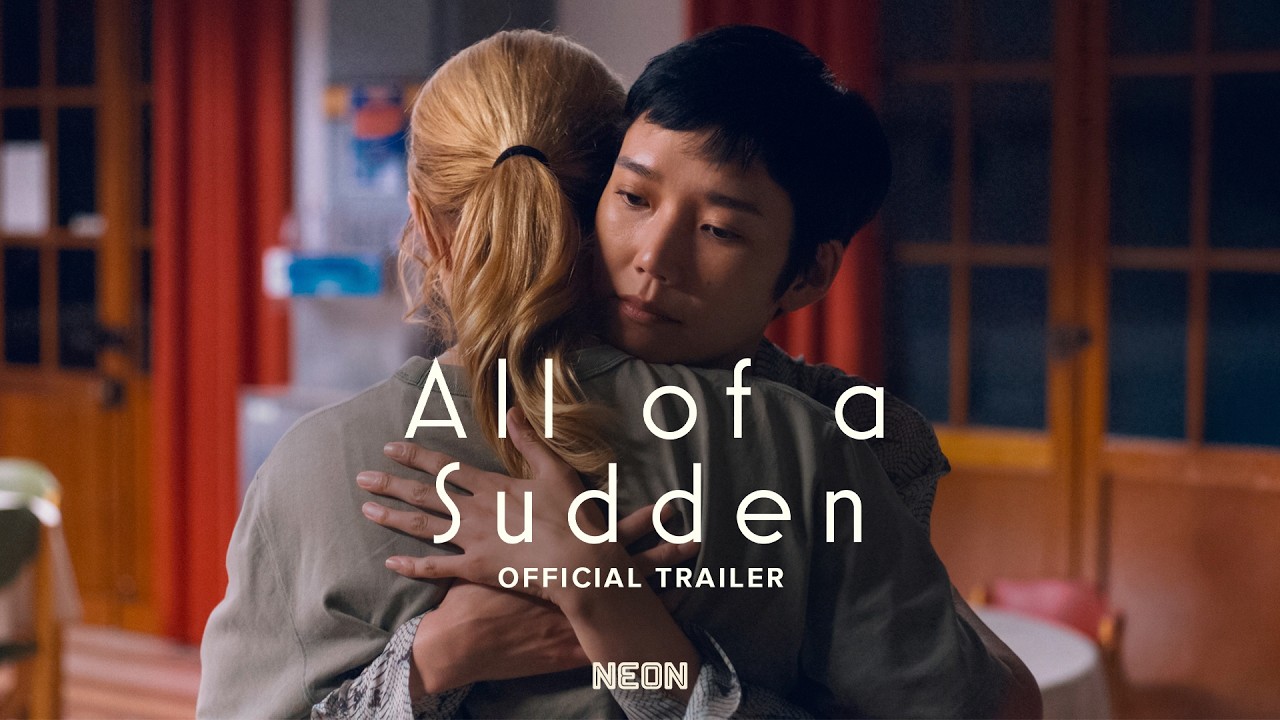
Two exceptional leads make this quiet exploration of friendship, dignity and mortality deeply affecting. Its extended philosophical conversations and three-hour-plus runtime require patience, and some viewers find the optimism overly idealized.
Patient viewers, fans of Hamaguchi’s conversational cinema, and those seeking thoughtful discussion of dignity and care. People with experience of aging relatives may find the nursing-home scenes especially moving.
Not for
Viewers who prefer brisk storytelling or struggle with extended philosophical discussions may find the film demanding. Those sensitive to terminal illness may find the sustained uncertainty upsetting.
Verdict
All of a Sudden is an unusually compassionate drama that finds cinematic power in conversation, ordinary gestures and the dignity of people who need care. Virginie Efira and Tao Okamoto make the central friendship feel intimate and alive, while the understated cinematography and patient direction allow its emotional force to accumulate gradually. The film also tackles the tensions between human-centered care and financial efficiency, most explicitly in a much-discussed whiteboard lecture about capitalism. That intellectual ambition is both a strength and a potential obstacle: some viewers find the dialogue spellbinding, while others find it didactic or overwritten. The three-hour-plus runtime is similarly divisive, and the optimistic final act can seem too neat. For viewers willing to embrace its leisurely rhythm, however, the combination of emotional tenderness and philosophical depth makes it a rewarding experience.
Content guidance
Scorata recommended age13+
Smoking is depicted, and the drama deals with terminal cancer, dementia, physical decline and death. The emotionally demanding subject matter is better suited to teens and older viewers.
The profound, nonsexual friendship between Marie-Lou and Mari is the emotional center. Most find it beautifully convincing, though a few feel it is overwritten or idealized.
At more than three hours, the film demands a substantial time commitment. Many find its length essential to the emotional payoff; others feel it could be shortened.
The film gradually builds to powerful catharsis through small gestures, conversation and compassion. Not everyone connects with its quiet emotional register.
The measured pace gives ideas and relationships room to develop, building toward an affecting payoff. Some stretches ramble, and even appreciative viewers sometimes wish for tighter editing.
Hamaguchi earns widespread praise for turning prolonged conversations and everyday gestures into emotionally resonant cinema. His deliberate approach can occasionally feel pedagogical, overextended or too idealistic.
Efira anchors the drama with warmth, understated exhaustion and vulnerability. Her fluency in Japanese and chemistry with her co-lead are especially impressive.
Okamoto brings serene intelligence, sensitivity and emotional restraint to a woman confronting mortality. Her exchanges with Efira make the central bond compelling.
Compared with other Movies, this product is above average in dialogue quality, accent authenticity, story quality, near average in Multilingual storytelling, realism, below average in class commentary, political perspective balance, professional life portrayal.
Comparison summary
58 compared features
Above average0.4+ pts higher
44(76%)
Same as averagewithin 0.3 pts
11(19%)
Below average0.4+ pts lower
3(5%)
Largest category differences
Attribute
This product
Category average
Difference
class commentary
2.0
3.8
-1.8
dialogue quality
4.5
3.1
+1.5
accent authenticity
5.0
3.3
+1.7
story quality
5.0
3.3
+1.7
message quality
4.9
3.7
+1.2
writing quality
4.4
3.0
+1.4
theme depth
4.9
3.7
+1.3
memorability
5.0
3.4
+1.6
Consider This Instead
If you want better class commentary
Choose Possible Love. It scores 4.8 vs 2.0 for class commentary, with a 4.7 overall score.
SimilarAlso follows an artist devoting their remaining time to creative work.
Drive My Car (2021)
SimilarAlso builds toward a powerful, unexpected emotional payoff.
WorseFeatures strong dialogue without making conversation itself the central subject.
SimilarAlso felt excessively long.
Evil Does Not Exist (2023)
WorseExplores related social and environmental questions with less depth.
BetterMore convincingly refuses to let goodness overcome every obstacle.
ComparedHas a more ambiguous and less reassuring outlook on compassion.
FAQ
Is the long runtime worthwhile?
Many critics find that the gradual buildup is essential to the emotional payoff, but others would have preferred a shorter film.
How are the lead performances?
Virginie Efira and Tao Okamoto receive exceptional praise for their restrained performances, natural chemistry and multilingual conversations.
Is this a romance?
The central relationship has a deep intimacy and sometimes romantic overtones, but is primarily portrayed as a profound friendship.
Is the film heavily dialogue-driven?
Yes. Long conversations explore healthcare, capitalism, philosophy and mortality, including an extended whiteboard explanation that viewers may find either engrossing or didactic.
How does it depict dementia and elder care?
It emphasizes patients’ dignity, individual histories and human connection, while exploring financial and staffing pressures. Some critics question how fully it explores the nurses’ opposing perspectives.
What is the official U.S. rating?
PG-13 for smoking. The film also addresses terminal illness, cognitive decline and mortality.
Sample Expert Reviews We Analyzed
These are a few of the reviews included in our analysis.
A deeply human coming-of-age drama carried by remarkable performances and an honest portrayal of grief. Its gentle optimism moves most viewers, though some find the final stretch hurried or overly...
Billie Jean King’s magnetic first-person storytelling makes this an exhilarating portrait of athletic courage and social change. The filmmaking follows a familiar documentary structure, and her full tennis résumé gets...
Choose this inventive, unsettling documentary for fearless questioning, dark humor, and unpredictable storytelling. Skip it if you want a short, straightforward exposé with definitive answers.
A singular voice, powerful piano playing and intimate film photography make this concert absorbing for receptive listeners. Its uninterrupted, often similar-sounding songs and lack of background context are an acquired...