Scorata scores summarize analyzed review evidence on a 1–5 scale; they are not laboratory measurements or a simple average of customer star ratings. Feature scores summarize the reviews covering that feature. The overall score averages feature scores within each review, then combines review averages. When both expert and customer evidence are available, those two groups receive equal weight. Products can have different review coverage, so small score gaps do not establish a winner.
Recommendations prioritize important features for the category, with a score of at least 3.5, a gap of at least 0.25 points and at least two supporting reviews per product. Features with widely varying scores or broad connectivity contexts are excluded from recommendations. These safeguards do not establish statistical significance.
Quick verdict
What each product is best for
The available evidence supports the recommendation below, but does not establish an overall winner. Check the remaining features against your priorities.
Choose Teenage Sex and Death at Camp Miasma for originality and rewatch value.
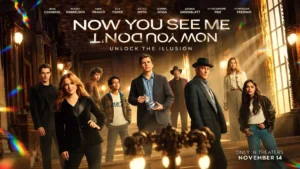
There is not enough comparable review evidence to recommend Now You See Me: Now You Don’t over the other product.
Why these recommendations?
Teenage Sex and Death at Camp Miasma
Where It Has the Edge
originality is 4.9 vs 2.0. Even skeptical viewers tend to acknowledge how unusual the movie is. Its fusion of slasher homage, romance, queer...
rewatch value is 4.9 vs 2.3. Its dense references, layered imagery and deliberately unstable reality inspire repeated-viewing interest, with several viewers wanting to revisit...
visual style is 4.9 vs 4.1. Candy colors, matte-painted landscapes, stylized gore and dreamlike compositions form the strongest area of agreement. Even negative reactions...
Now You See Me: Now You Don’t
Where It Has the Edge
No clear scored advantage over the other product.
Teenage Sex and Death at Camp Miasma4.4 overall score
Now You See Me: Now You Don’t3.1 overall score
Compare features
Scores are out of 5. Missing scores mean missing review evidence, not a missing feature.
Scored on both products
Other features
Cultural representation
Teenage Sex and Death at Camp Miasma
5.0
The queer and trans perspective is treated as a meaningful part of the film’s emotional and genre framework, with its representation praised for creating recognition and connection.
Now You See Me: Now You Don’t
1.5
The South African characterization draws sharp criticism, particularly for an accent viewed as broad and culturally unconvincing. That choice makes the villain’s presentation distracting rather than immersive.
Originality
Teenage Sex and Death at Camp Miasma
4.9
Even skeptical viewers tend to acknowledge how unusual the movie is. Its fusion of slasher homage, romance, queer self-examination and surreal meta-cinema feels fresh and unmistakably personal.
Now You See Me: Now You Don’t
2.0
The sequel is widely criticized for recycling franchise beats, legacy-sequel formulas, and familiar blockbuster references. Its newer cast and settings provide some freshness, but few reviewers see the overall construction as genuinely original.
Suspense
Teenage Sex and Death at Camp Miasma
5.0
Tension often comes from anticipation and inevitability rather than traditional jump scares, with the film keeping some viewers on edge even as it undercuts dread with humor.
Now You See Me: Now You Don’t
2.8
The ensemble’s camaraderie can add tension to the risks, but the weakest reactions find the final heist neither tense nor cathartic. Suspense depends heavily on whether the viewer buys the trick mechanics.
Message quality
Teenage Sex and Death at Camp Miasma
4.6
Its ideas about desire, shame, fandom and loving problematic art resonate strongly when the emotional through-line clicks. Detractors find some of the messaging heavy-handed, muddled or overexplained.
Now You See Me: Now You Don’t
2.4
The anti-corruption and wealth-redistribution theme feels timely and satisfying to some reviewers. Others see the politics as shallow, preachy, or commercially packaged, making the message one of the movie’s more divisive elements.
Dialogue quality
Teenage Sex and Death at Camp Miasma
4.2
The dialogue can be intimate, funny and unusually candid about desire, but some lines and thematic explanations feel overly declarative or tacked on.
Now You See Me: Now You Don’t
2.1
Exposition, clichés, and self-conscious quips are frequent complaints, with several reviewers calling the dialogue clunky or outright terrible. The brighter side is the cast’s banter, which can still pop when the script gets out of the way.
Emotional impact
Teenage Sex and Death at Camp Miasma
4.8
Beneath the camp and gore, the film often lands as heartfelt, vulnerable and moving, particularly in its treatment of shame, desire and self-acceptance. A few find it less affecting than Schoenbrun’s earlier work.
Now You See Me: Now You Don’t
2.7
Reunion nostalgia and a few grounded beats work for sympathetic viewers, but many critics find the attempted heart and dramatic reveals too thin to resonate. The emotional response is notably weaker than the ensemble’s comic energy.
Drama quality
Teenage Sex and Death at Camp Miasma
4.5
The psychosexual drama is dark, delirious and emotionally charged, using the blurred line between reality and fiction to intensify the central relationship.
Now You See Me: Now You Don’t
2.5
The movie’s more dramatic moments struggle to land when the script asks shallowly drawn characters to carry emotional weight. The tonal pivot away from breezy caper energy can expose that lack of depth.
Character development
Teenage Sex and Death at Camp Miasma
4.3
Kris’s movement from guarded self-consciousness toward sexual and emotional liberation lands powerfully for many, though some find secondary characters thin or caricatured.
Now You See Me: Now You Don’t
2.3
Character depth is a recurring weakness: the enlarged cast leaves many Horsemen thin, rushed, or reduced to familiar types. A few positive takes find more warmth and cohesion in the group than before.
Score quality
Teenage Sex and Death at Camp Miasma
4.9
Alex G’s score is repeatedly praised for its dreamy, inspired mood and its ability to keep the surreal slasher world buoyant.
Now You See Me: Now You Don’t
3.0
Brian Tyler’s music splits opinion: one review praises a rousing score that lifts key scenes, while others call the musical stings blunt and overbearing. The score clearly pushes hard for excitement.
Realism
Teenage Sex and Death at Camp Miasma
3.8
The movie intentionally favors dream logic, painted spaces and emotional truth over literal realism. That abstraction is enchanting for some and distancing for others.
Now You See Me: Now You Don’t
2.0
Believability is the movie’s most consistent technical complaint: tricks often resemble superpowers and depend on impossible preparation or technology. A few reviewers think this entry is more grounded than its predecessors, but that is clearly the minority view.
CGI quality
Teenage Sex and Death at Camp Miasma
3.9
The intentionally unreal digital blood works for some as part of the film’s fever-dream aesthetic, while others notice the computer-generated gore and prefer the practical work.
Now You See Me: Now You Don’t
2.1
The digital work is one of the biggest sticking points: many critics say CGI makes the magic feel weightless, fake, or less impressive. A few still find the presentation slick, and one reviewer thought the CGI itself looked good.
Practical effects quality
Teenage Sex and Death at Camp Miasma
3.3
The practical blood work and tactile effects can be fun and convincing, but the mix with digital gore leaves some wishing the film had leaned more heavily on practical techniques.
Now You See Me: Now You Don’t
5.0
When the movie favors physical illusion work, reviewers respond enthusiastically. The practical tricks and spatial set pieces make the magic feel more tactile and convincing than the CGI-heavy alternatives.
Pacing
Teenage Sex and Death at Camp Miasma
2.4
The pacing is one of the recurring weaknesses, with complaints about long-winded passages, redundancy and a meandering later stretch. The strongest set pieces still move with considerable energy.
Now You See Me: Now You Don’t
4.0
Most reviewers find the movie energetic and quick, which helps the caper stay buoyant. That speed can become a liability when major reveals, character beats, and trick explanations fly past before they have time to land.
Plot originality
Teenage Sex and Death at Camp Miasma
2.5
One assessment finds the movie so absorbed in homage and reference that it struggles to stand fully on its own story despite its creative flourishes.
Now You See Me: Now You Don’t
1.0
The climactic structure is criticized for closely repeating a trick already used in the previous film. That recycling makes the finale feel more like franchise repetition than a new narrative idea.
Screenplay quality
Teenage Sex and Death at Camp Miasma
3.1
The script earns praise for ambitious ideas, wit and emotional candor, but its density can become heavy-handed or self-indulgent. The balance between thesis and story is a major dividing line.
Now You See Me: Now You Don’t
1.8
The screenplay is one of the broadest sources of criticism, with complaints about rushed structure, exposition, weak twists, and contrived logic. A minority appreciates how efficiently it handles a large amount of setup.
Humor
Teenage Sex and Death at Camp Miasma
4.5
The campy gore, industry satire and oddball sexual comedy produce frequent laughs for many viewers. The humor is also a taste filter, with some finding it cringey, forced or ineffective.
Now You See Me: Now You Don’t
3.4
The comedy is uneven but often useful: cast banter, camp villainy, and a few returning characters land well for some critics. Others find the generational jokes tired, the quips forced, or the camp simply unfunny.
Genre satisfaction
Teenage Sex and Death at Camp Miasma
4.5
As a meta-slasher, it earns strong praise for loving the genre without simply mocking it, but it deliberately deprioritizes sustained fear and conventional slasher structure.
Now You See Me: Now You Don’t
3.4
The magic-heist formula remains the movie’s main selling point, but reactions range from franchise-best fun to accusations that the series has become anti-magic. Viewers who accept the ridiculous premise are far more likely to enjoy the blend.
Cinematography
Teenage Sex and Death at Camp Miasma
5.0
Saturated color, tactile lighting, unusual framing and playful camera techniques make the cinematography a standout. The dreamlike camp imagery is repeatedly described as striking and immersive.
Now You See Me: Now You Don’t
4.0
The photography gets a mixed but generally favorable response: one critic calls it stylishly shot, while another finds the new movie flatter than the earlier entries. Its best visuals come when framing supports the film’s illusion spaces.
Plot clarity
Teenage Sex and Death at Camp Miasma
2.6
Dream logic and shifting layers of fiction make the story intentionally slippery, but confusion is a repeated complaint. Viewers comfortable with ambiguity fare much better than those wanting a cleanly resolved plot.
Now You See Me: Now You Don’t
1.8
Logic and clarity are major weak points. Reviewers repeatedly describe the plot as convoluted, hole-ridden, overstuffed, or dependent on explanations that do not survive scrutiny.
Product placement
Teenage Sex and Death at Camp Miasma
2.0
One assessment finds the conspicuous candy, fast-food and cereal branding distracting enough to briefly pull attention away from the movie.
Now You See Me: Now You Don’t
1.3
Brand exposure is called out as conspicuous enough to break immersion, including tourism-style imagery and a prominent canned-drink beat. The commercial feel becomes part of the criticism rather than background detail.
Theme depth
Teenage Sex and Death at Camp Miasma
5.0
The film’s deepest strength is its layered exploration of desire, shame, identity, fandom and the complicated pleasure of loving flawed art. Even mixed reactions often engage seriously with those ideas.
Now You See Me: Now You Don’t
4.3
The film gets some credit for connecting its caper to wealth inequality and intergenerational mentorship. Those themes give the spectacle a little more purpose without turning the movie into a deep character study.
Tonal consistency
Teenage Sex and Death at Camp Miasma
4.0
The blend of tenderness, camp, gore, satire and dream logic is exhilarating when it clicks, but the violent tonal shifts can also feel unstable or jarring.
Now You See Me: Now You Don’t
4.7
The movie’s best reviews praise how comfortably it mixes comedy, suspense, awe, and self-aware absurdity. That light touch helps the film survive plot logic that would be harder to accept in a more serious tone.
Directing quality
Teenage Sex and Death at Camp Miasma
4.6
Jane Schoenbrun’s direction is widely admired for its distinctive visual imagination, tonal nerve and personal point of view. The main reservation is that the same freedom can become self-indulgent or narratively unruly.
Now You See Me: Now You Don’t
4.1
Ruben Fleischer is generally credited with brisk energy, visual flair, and a useful self-awareness about the franchise’s silliness. Less favorable takes find the style merely serviceable or limited by low-rent material.
Editing quality
Teenage Sex and Death at Camp Miasma
5.0
Sharp cuts and inventive transitions give the slasher material extra punch, with the burn-through transition and rapid visual rhythm singled out as especially effective.
Now You See Me: Now You Don’t
4.5
A long, seemingly unbroken magic-bonding sequence stands out for its slick flow from one performer to the next. The editing turns a simple group showcase into one of the movie’s most polished pieces of showmanship.
Action sequences
Teenage Sex and Death at Camp Miasma
4.6
The flamboyant massacre and one-take killing spree are frequent highlights, praised for choreography, editing and sheer slasher exuberance. A few viewers are less engaged by the gore-heavy set pieces.
Now You See Me: Now You Don’t
4.2
Set pieces are a consistent bright spot, especially the illusion-house fights, chase material, parkour, and heist escapes. A minority find some action confusing or dull, but most reactions favor the movie when it is moving.
Chemistry between characters
Teenage Sex and Death at Camp Miasma
4.9
Hannah Einbinder and Gillian Anderson’s charged, tender chemistry is one of the most consistent strengths, giving the central relationship warmth even when the story turns surreal.
Now You See Me: Now You Don’t
4.5
The cast’s banter and camaraderie are among the clearest strengths, with old and new Horsemen often clicking surprisingly well. Even mixed reviews frequently say the ensemble chemistry carries weak plotting.
Runtime
Teenage Sex and Death at Camp Miasma
2.3
The length draws some criticism because the film can feel long-winded or padded after its main ideas have landed, particularly around the epilogue and later digressions.
Now You See Me: Now You Don’t
2.0
The movie often feels longer than its material warrants, especially to critics frustrated by repeated exposition or crowded subplots. Even some who enjoy the spectacle suggest the nearly two-hour experience could be leaner.
Special effects quality
Teenage Sex and Death at Camp Miasma
5.0
The combination of practical and digital effects is praised for serving the film’s deliberately exaggerated slasher aesthetic rather than chasing realism.
Now You See Me: Now You Don’t
4.8
The strongest effects praise comes from large visual set pieces and the mix of cinematic illusion with physical trickery. That positive response coexists with separate complaints that CGI can make individual tricks feel less credible.
Story quality
Teenage Sex and Death at Camp Miasma
2.8
The story can be heartfelt, sharp and thematically rich, but it is also one of the main sources of division. Some see a brilliant emotional arc; others see references and surrealism overwhelming a coherent narrative.
Now You See Me: Now You Don’t
2.6
The central diamond-heist premise works for some as simple popcorn storytelling, but many reviewers find the story thin, incoherent, or secondary to the tricks. It succeeds most when treated as a vehicle for ensemble fun.
Ending satisfaction
Teenage Sex and Death at Camp Miasma
2.8
The ending is sharply divisive: some find the final plunge into fantasy immersive and liberating, while others see padding, confusion or a late collapse in narrative coherence.
Now You See Me: Now You Don’t
2.8
The finale is highly divisive. Some reviewers enjoy its final flourish and sequel setup, while many others call the reveal forced, creaky, overcomplicated, or the worst part of the movie.
Ownership and support
Rewatch value
Teenage Sex and Death at Camp Miasma
4.9
Its dense references, layered imagery and deliberately unstable reality inspire repeated-viewing interest, with several viewers wanting to revisit it immediately or unpack more on a second pass.
Now You See Me: Now You Don’t
2.3
Several reviewers expect the movie to fade quickly from memory once the spectacle ends. Its lightness can be pleasant in the moment, but it does not inspire much confidence in lasting replay value.
Value for money
Teenage Sex and Death at Camp Miasma
3.7
Value reactions are polarized: enthusiastic viewers call individual scenes worth the price of admission, while a strongly negative take says the experience is not worth paying for.
Now You See Me: Now You Don’t
2.8
The theatrical value proposition is mixed: one reviewer recommends waiting for streaming, while another jokes that the movie takes your money but remains fun enough not to resent it. The experience is easier to justify for committed fans.
Entertainment value
Teenage Sex and Death at Camp Miasma
4.5
Most reactions emphasize how funny, strange and wildly entertaining the movie can be, especially for viewers on its wavelength. A small minority find the experience irritating or exhausting instead.
Now You See Me: Now You Don’t
3.7
Even with sharply divided critical reactions, the movie is often described as fun, breezy, or enjoyably dumb. Its detractors find it exhausting or hollow, but the ensemble and set pieces give it a stronger entertainment floor than its logic suggests.
Performance
Soundtrack quality
Teenage Sex and Death at Camp Miasma
4.8
Needle drops, covers and Alex G’s music are major pleasures, often described as inspired or perfectly chosen. A few choices are considered overly obvious or on-the-nose.
Now You See Me: Now You Don’t
3.0
The reaction is lighthearted rather than severe, but one viewer flags the absence of an obvious diamond-themed song as a missed musical opportunity. The soundtrack is otherwise not a major discussion point.
Acting performance
Teenage Sex and Death at Camp Miasma
4.9
The ensemble is broadly praised as fearless and well matched to the film’s heightened tone. Even mixed assessments tend to single out the acting as a strength.
Now You See Me: Now You Don’t
3.7
The ensemble is often credited with keeping the caper lively, with several reviewers saying the cast’s evident enjoyment sells the nonsense. The harshest reactions see some veterans as checked out or trapped by weak material.
Lead performance
Teenage Sex and Death at Camp Miasma
5.0
The two leads are the clearest consensus strength: Hannah Einbinder brings nervous vulnerability and comic precision, while Gillian Anderson supplies magnetic, playful glamour.
Now You See Me: Now You Don’t
4.4
Jesse Eisenberg’s Atlas is usually seen as a strong center for the movie, with reviewers praising his more commanding, grounded arrogance. Even skeptical takes tend to find him watchable when the script gives him room.
Supporting cast performance
Teenage Sex and Death at Camp Miasma
4.4
The supporting ensemble supplies memorable comic and horror-flavored cameos, though several assessments note that many smaller roles are intentionally thin or one-note.
Now You See Me: Now You Don’t
4.0
The younger trio is frequently a highlight, with several reviewers praising their energy and screen presence. The main reservations are underwritten roles and material that sometimes leaves newcomers or returning players little room to register.
Comfort and build
Costume design
Teenage Sex and Death at Camp Miasma
5.0
Little Death’s vent-headed silhouette is an especially memorable design, and the film’s stylized wardrobe helps sell its handmade, heightened slasher world.
Now You See Me: Now You Don’t
3.5
Rosamund Pike’s extravagant wardrobe earns standout praise, while J. Daniel Atlas’s hair and styling draw mockery from another reviewer. The result is memorable design with very uneven reactions by character.
Visual style
Teenage Sex and Death at Camp Miasma
4.9
Candy colors, matte-painted landscapes, stylized gore and dreamlike compositions form the strongest area of agreement. Even negative reactions often concede that the film looks distinctive and beautiful.
Now You See Me: Now You Don’t
4.1
The movie is widely seen as slick, glossy, and stylish, with strong illusion-house imagery and big-screen polish. Some critics call that same look chintzy, sanitized, or flatter than the earlier films.
Production design
Teenage Sex and Death at Camp Miasma
5.0
Painted backdrops, fake franchise memorabilia, camp sets and tactile props create an unusually rich artificial world. The handmade look is repeatedly celebrated as part of the movie’s identity.
Now You See Me: Now You Don’t
4.5
The illusion-house material is a standout, with mirrored spaces, forced perspective, rotating corridors, and other puzzle-room designs repeatedly earning praise. Even negative reviews often find this environment visually playful.
World-building
Teenage Sex and Death at Camp Miasma
5.0
The fake Camp Miasma franchise feels unusually complete thanks to its opening montage, props, sequels, lore and period textures. That invented horror history is repeatedly cited as one of the movie’s most convincing achievements.
Now You See Me: Now You Don’t
5.0
One especially positive take says the Horsemen’s world finally feels like it has real weight and consequence. That added cohesion makes the franchise mythology feel less disposable than before.
Controls and connectivity
Audience appeal
Teenage Sex and Death at Camp Miasma
4.1
This is a strongly taste-dependent movie: slasher devotees, queer-horror fans and adventurous cinephiles often embrace it, while viewers wanting conventional scares or straightforward storytelling can bounce off hard.
Now You See Me: Now You Don’t
3.6
Longtime fans are the safest bet, though several reviewers think newcomers can enjoy the movie without deep franchise knowledge. The attempt to court a younger audience works for some and feels calculated to others.
Evidence available for one product
Other features
Franchise continuity
Teenage Sex and Death at Camp MiasmaNo score yet
Now You See Me: Now You Don’t
4.5
The sequel gets credit for remembering prior relationships and explaining the status of legacy characters rather than simply erasing them. That continuity helps the reunion feel more deliberate.
Friendship portrayal
Teenage Sex and Death at Camp MiasmaNo score yet
Now You See Me: Now You Don’t
5.0
The Horsemen’s bickering is backed by a convincing sense of trust and camaraderie. Their friendship gives the spectacle a warmer center when the plotting gets chaotic.
Magic and illusion execution
Teenage Sex and Death at Camp MiasmaNo score yet
Now You See Me: Now You Don’t
2.8
The actual magic is the most polarized element. Practical tricks, one-shot showmanship, and explained heists can delight, while CGI-heavy or impossible illusions are repeatedly dismissed as superhero powers rather than convincing sleight of hand.
Makeup quality
Teenage Sex and Death at Camp MiasmaNo score yet
Now You See Me: Now You Don’t
2.0
Atlas’s hair styling is mocked for making the supposedly cool magician look conspicuously middle-aged. The grooming choice becomes a distraction rather than character enhancement.
Mystery quality
Teenage Sex and Death at Camp MiasmaNo score yet
Now You See Me: Now You Don’t
4.1
The movie can still spring clever reveals and effective gotcha moments, and several reviewers enjoyed being fooled. Others spot the biggest twist early, so the mystery works best when the viewer embraces the ride rather than scrutinizing it.
Romance quality
Teenage Sex and Death at Camp Miasma
4.7
The Kris-Billy relationship is widely praised as tender, strange and genuinely sexy, with the actors’ chemistry helping the romance survive the film’s most abstract turns.
Now You See Me: Now You Don’tNo score yet
Scares
Teenage Sex and Death at Camp Miasma
1.5
This is consistently described as a very low-scare horror film. The kills and gore are usually played as camp, memory or comedy rather than sustained dread, which will disappoint viewers seeking real fear.
Now You See Me: Now You Don’tNo score yet
Sexual content level
Teenage Sex and Death at Camp Miasma
4.5
The film’s frank, horny treatment of sexuality is often praised as joyful, liberating and central to its themes rather than merely provocative. A few viewers find the execution too much or still not satisfying on its own terms.
Now You See Me: Now You Don’tNo score yet
Violence level
Teenage Sex and Death at Camp Miasma
4.7
The bloodshed is extravagant, stylized and often comic rather than punishing, which many slasher fans enjoy. A dissenting view finds the violent payoff too limited for the film’s provocative setup.
Now You See Me: Now You Don’tNo score yet
Performance
Historical accuracy
Teenage Sex and Death at Camp MiasmaNo score yet
Now You See Me: Now You Don’t
1.0
The movie’s use of magician Jasper Maskelyne and wartime lore is criticized for leaning on claims that have been widely debunked. That history-themed material weakens credibility for viewers who know the background.
Marketing accuracy
Teenage Sex and Death at Camp MiasmaNo score yet
Now You See Me: Now You Don’t
1.5
The trailer is criticized for giving away too much of the opening illusion and undercutting its intrigue. Going in without that preview is presented as a better way to experience the hook.
Comfort and build
Sound design
Teenage Sex and Death at Camp Miasma
5.0
The heightened, direct sound work is singled out for making otherwise comic or exaggerated moments feel physically unnerving.
Best for pristine archival footage, immersive sound, and a surprisingly tense look at Disneyland’s construction. Skip it if you want a comprehensive, deeply critical history; several reviewers found the 78–79-minute...
Best for an intimate, inventive archival portrait with strong emotional and cultural impact. Skip it if substantial nudity or an occasionally wandering biographical structure will frustrate you.
Pros: chemistry between characters, emotional impact
Best for an audacious, text-driven conspiracy thriller with gorgeous 16mm atmosphere and mounting dread. Skip it if long stretches of reading, deliberate repetition, and an intentionally austere narrative sound more...
Best for slow-burn suspense, iconic synth music, and shadow-soaked filmmaking that still feels influential. Skip it if you need fast pacing, polished sound, consistently natural dialogue, or modern gore-heavy kills.
Pros: chemistry between characters, directing quality