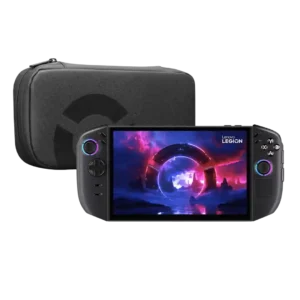
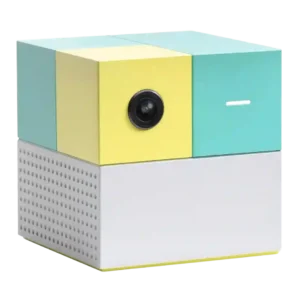
Lenovo Legion Go 2
Where It Has the Edge
- frame rate performance is 4.1 vs 1.5. Frame rates are strong at 800p and often smooth at 1200p with tuned settings, while VRR hides smaller...

Scorata scores summarize analyzed review evidence on a 1–5 scale; they are not laboratory measurements or a simple average of customer star ratings. Feature scores summarize the reviews covering that feature. The overall score averages feature scores within each review, then combines review averages. When both expert and customer evidence are available, those two groups receive equal weight. Products can have different review coverage, so small score gaps do not establish a winner.
Recommendations prioritize important features for the category, with a score of at least 3.5, a gap of at least 0.25 points and at least two supporting reviews per product. Features with widely varying scores or broad connectivity contexts are excluded from recommendations. These safeguards do not establish statistical significance.
Quick verdict
The available evidence supports the recommendation below, but does not establish an overall winner. Check the remaining features against your priorities.
Choose Lenovo Legion Go 2 for frame rate performance.
There is not enough comparable review evidence to recommend Nex Playground over the other product.
No clear scored advantage over the other product.
Scores are out of 5. Missing scores mean missing review evidence, not a missing feature.
The Z2 Extreme configuration handles modern AAA games impressively for a handheld, especially with sensible settings and upscaling. Gains over well-tuned last-generation competitors are real but often modest.
Motion tracking is usually responsive and impressively accurate, including with multiple players, and several reviewers report little or no lag. The main caveats are occasional lost tracking, spectator confusion, lighting sensitivity, and a few reports of perceptible lag.
Games can look notably sharper and more detailed than on lower-powered handhelds, particularly when the hardware is paired with the vivid OLED panel.
Visuals are intentionally simple and often described as mobile-, Wii-, or throwback-quality rather than modern-console caliber. Some family-focused reviewers think that simplicity fits the experience, while more traditional gaming outlets criticize the lack of polish.
Frame rates are strong at 800p and often smooth at 1200p with tuned settings, while VRR hides smaller dips well. Demanding games may still need upscaling, lower presets, or frame generation.
Frame-rate performance is a weak spot in the more technically critical reviews. Some games show noticeable dips or poor optimization, especially during busier scenes.
Initial setup can take substantial time because of Windows updates, launcher sign-ins, tweaks, and game downloads before the device feels ready.
Setup is one of the strongest consensus positives: most reviewers describe a straightforward HDMI, power, Wi-Fi, and account process that takes only a few minutes. A few mention password entry, terms, or downloads adding minor friction, but the overall experience is notably simple.
The screen, versatility, and high-end performance are compelling, but the price is the most consistent complaint. Cheaper handhelds and gaming laptops often deliver better performance-per-dollar.
Value depends heavily on how often the household uses active family play. Many family-focused reviewers call Nex worthwhile or cheaper than mainstream consoles, while skeptical gaming outlets argue that shallow content plus Play Pass makes the total cost hard to justify.
The large display and flexible kickstand are useful, but the two-pound body is among the heaviest handhelds available. Extended handheld play can tire hands and wrists.
The console’s tiny, light cube shape is repeatedly praised. Reviewers like that it takes little TV-stand space and can be packed for hotels, relatives’ homes, school use, or family gatherings.
The dark, vented design has a bold gaming look that feels distinctive and purposeful, though its bulky form is visually imposing.
Reviewers consistently like the tiny cube’s friendly appearance, calling it cute, beautiful, understated, and even Apple-like. Its soft colors and compact footprint make it easier to leave visible under a TV than many game consoles.
The sturdy kickstand, secure controller rails, and refined chassis feel premium and thoughtfully constructed. Internal service access is less polished than the exterior.
The small cube is generally described as well made, with robust accessories and a surprisingly premium feel. Build complaints are rare in the supplied reviews.
One terabyte fills quickly with modern AAA games and feels stingy at this price, making the larger storage configurations more attractive.
The 64GB storage is considered adequate because the games are relatively small. Direct evaluation of storage is limited, but the available assessment is positive.
Startup is quick, with the system launching in only a few seconds.
Several reviewers appreciate the lack of lengthy installs and quick access to play, but others report initial downloads or occasional game loading taking longer than expected. Load-time impressions are positive overall, with scattered friction.
Full Windows access opens a huge library across Steam, GOG, Xbox, and other PC platforms. That breadth is a major advantage for buyers who already own many PC games.
The library is the most divided part of the experience. Families praise the variety, licensed characters, fitness options, monthly additions, and easy party games, while critics and some long-term owners find many titles shallow, repetitive, uneven, or unable to hold interest over time.
Detachable controllers, deep remapping, a touchpad, rear buttons, and FPS mouse mode make the system unusually versatile. The mouse mode is divisive and controller removal can be fiddly.
The remote works well for basic menu and game selection, and one reviewer likes how it lets parents choose content before handing play over. Another wishes the system could use gestures for more navigation instead of requiring the remote.
Hall-effect sticks, responsive buttons, and the revised D-pad generally feel durable and precise. A few reviewers wanted firmer stick tension or more tactile buttons.
The small remote is generally simple and responsive enough for children to use, but its slim shape also makes it easy to misplace. Overall it is a functional navigation tool rather than a major part of gameplay.
The unusually large screen makes small text and dense PC game interfaces easier to read, which can reduce squinting and improve usability.
Controller-free play makes Nex unusually approachable for young children and people who do not use conventional gamepads. Several reviewers also praise upper-body-only options and wheelchair-friendly play, though some very young children still need help with certain games.
Fast multiplayer matches can run smoothly at high frame rates, with strong performance after software updates.
Group play is frequently described as the system’s sweet spot, creating laughter, family connection, collaboration, and energetic competition. Tracking mix-ups and room constraints can intrude, but the social experience is overwhelmingly praised.
Legion Space and its quick settings panel are much improved, responsive, and useful for tuning performance and controls. Windows 11 still introduces setup friction, pop-ups, small touch targets, and inconsistent handheld behavior.
Most reviewers find the interface clean, colorful, and simple enough for children to navigate independently. A smaller group reports clunky menus, shifting categories, unclear start flows, or insufficient prompts that can confuse younger players.
Several reviewers encountered sleep, wake, controller-recognition, freezing, or reboot problems. These issues appear software-sensitive, but they undermine the console-like experience.
Cloud gaming worked smoothly in the cited test, with positive control feel and no obvious problems.
Local multiplayer is one of Nex Playground’s clearest strengths. Reviewers repeatedly praise two-to-four-player sessions, the lack of extra controllers, and the way simultaneous body tracking makes family and party play easy to start.
Play Pass divides reviewers sharply. Supporters consider the annual price reasonable for a growing all-access library, while critics dislike another recurring bill, the expensive shorter plan, the inability to buy most games individually, and the risk that interest fades before a renewal pays off.
The dominant strength is physical play: reviewers repeatedly describe children and adults standing, jumping, sweating, burning energy, and getting light workouts instead of sitting with a controller. One long-term owner notes that constant movement can eventually become tiring enough to reduce interest.
Original Legion Go controllers and compatible accessories continue to work with the second-generation hardware, easing upgrades for existing owners.
Packaging is repeatedly praised for being organized, attractive, and premium-feeling. The presentation reinforces the console’s simple family-product positioning.
Cooling is generally effective, with low GPU temperatures and comfortable grip areas even under load. Better tuning can also reduce unnecessary fan speed.
The fingerprint reader can speed up Windows login, but its placement and sensitivity occasionally make unlocking or putting the device to sleep frustrating.
Hot exhaust is directed away from the controls, keeping the areas held by the player comfortable during demanding sessions.
Wi-Fi, Ethernet, Bluetooth, and connected accessories worked reliably in the tested setups, with no meaningful drops or connection issues reported.
Nex works best with a clear area in front of the TV. Furniture, tight rooms, and spectators in the camera view can force rearranging the room and may interfere with tracking, especially during multiplayer.
Gaming endurance typically falls around two to four hours depending on settings, with much longer runtimes in lighter workloads. Results vary sharply by power mode, brightness, operating system, and game.
PS5 streaming is possible, but using the built-in controls may require a third-party app; otherwise a DualSense controller is needed.
The SSD is replaceable, yet reaching it may require removing the battery, fan, adhesive, or recessed screws. Most users will find upgrades harder than on competing handhelds.
Several parents report that replacing passive screen use with Nex reduced fights, overstimulation, or shutdown meltdowns and made screen time feel more constructive. One owner had the opposite experience and says turn-off meltdowns and anger persisted despite the added movement.
Storage can be expanded, but reviewers note that practical upgrade options are less convenient than they should be.
The speakers are generally loud and clearer than the first generation, but opinions vary on bass, directionality, and how well they compete with fan noise. Headphones remain preferable for demanding games.
The 8.8-inch OLED is the clear standout, with rich color, deep blacks, sharp detail, and smooth VRR motion. Its glossy surface can reflect light, but reviewers still rank it among the best handheld displays.
Fan behavior varies widely by mode and software tuning: balanced profiles can be quiet, while performance modes may become clearly audible or overpower the speakers.
Rounded grips are more comfortable than the original, but the wide, heavy chassis still favors larger hands. Smaller-handed users and long-session players may need the kickstand and detached controls.
The kickstand and large screen make the device useful for streaming shows and other entertainment when it is not being used for games.
Parents strongly value the closed, kid-focused environment, including the lack of strangers, mature content, ads, and in-app purchases, plus the camera cover and privacy design. One owner criticizes the lack of separate child accounts and age-based restrictions.
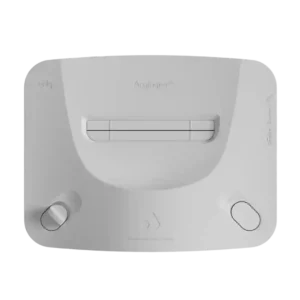
Choose it if you own N64 cartridges and want the most polished, low-lag way to play them on a 4K TV. Skip it if you want cheap emulation, broad flash-cart/controller...
Pros: display quality, performance
Cons: availability
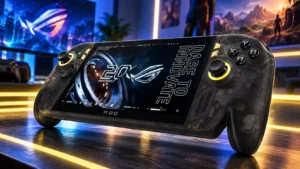
The vivid OLED screen and superb grip comfort make this a compelling premium Windows handheld. Its high price buys refinement rather than a major performance leap, and Windows still needs...
Pros: display quality, controller ergonomics
Cons: value for money, ease of use
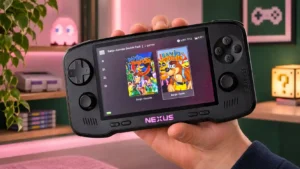
Evercade Nexus brings licensed physical classics to life with its bright screen, twin sticks, and excellent native ports. Slow booting, no suspend or TV output, and reported screen-assembly problems are...
Pros: controller features, display quality
Cons: TV output connectivity, Suspend and resume
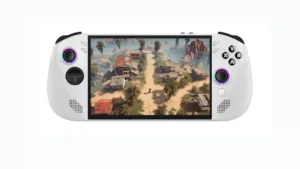
Choose the SteamOS version for a comfortable, console-like handheld with a sharp 120Hz screen and strong performance. Skip it if you prioritize long battery life, quiet fans, or effortless access...
Pros: display quality, user interface
Cons: controller features, battery life