If you want better size and portability
Choose Nintendo Switch 2. It scores 4.2 vs 2.3 for size and portability, with a 3.7 overall score.

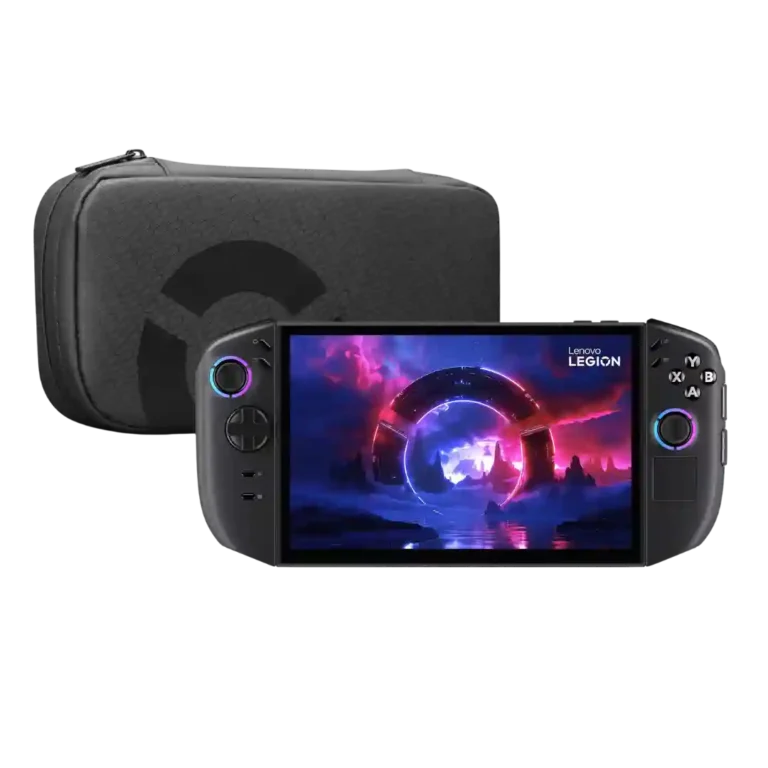
Choose it for the best-in-class OLED, versatile controls, and strong AAA performance. Skip it if value, low weight, quiet operation, or a polished console-like experience matters more than premium hardware.
Enthusiasts who want a large premium OLED, full Windows game access, and flexible handheld, tabletop, and docked play will benefit most.
Budget-focused buyers, frequent travelers who prioritize low weight and long battery life, or anyone wanting a simple console-like interface should skip it.
The Legion Go 2 is an ambitious premium handheld whose 8.8-inch OLED, sturdy kickstand, detachable controls, and Z2 Extreme performance create a uniquely flexible gaming PC. Reviewers consistently praise the screen and generally find demanding games smooth with sensible settings, especially at lower resolutions or with upscaling. The tradeoffs are substantial: it is heavy, fan behavior varies, gaming battery life is usually limited to a few hours, and Windows still causes setup friction and occasional reliability problems. Most importantly, its price approaches capable gaming laptops and far cheaper handheld rivals. It makes the strongest case for enthusiasts who specifically want a large OLED Windows handheld and will use its modular controls; mainstream buyers can get most of the experience for much less.
Compared with other Video Game Console, this product is above average in game library quality, heat management, graphical performance, near average in user interface, performance, below average in ease of setup, size and portability, value for money.
| Attribute | This product | Category average | Difference |
|---|---|---|---|
| ease of setup | 2.0 | 4.5 | -2.5 |
| size and portability | 2.3 | 4.2 | -2.0 |
| value for money | 1.9 | 3.6 | -1.6 |
| reliability | 1.5 | 3.1 | -1.6 |
| game library quality | 5.0 | 3.7 | +1.3 |
| heat management | 5.0 | 3.7 | +1.3 |
| graphical performance | 5.0 | 3.8 | +1.2 |
| storage capacity | 2.0 | 3.2 | -1.2 |
Choose Nintendo Switch 2. It scores 4.2 vs 2.3 for size and portability, with a 3.7 overall score.
Choose Lenovo Legion Go S. It scores 4.0 vs 1.9 for value for money, with a 3.9 overall score.
Choose Analogue 3D. It scores 4.3 vs 1.5 for reliability, with a 4.4 overall score.
Choose Atari 2600+ Pac-Man Edition. It scores 4.6 vs 2.0 for ease of setup, with a 3.7 overall score.
Products reviewers directly compared with this model, grouped into quick takeaways.
It is easiest to justify for enthusiasts who specifically want the large OLED screen, detachable controls, and Windows flexibility. Value-focused buyers can get similar gaming performance from cheaper handhelds.
Reviewers consistently call the 8.8-inch OLED the product's best feature, praising its color, contrast, size, 144Hz refresh rate, and VRR. Glare and reflections are its main drawbacks.
Yes, especially with the Z2 Extreme configuration. Most demanding games run well with sensible presets, upscaling, or lower resolutions, though the performance lead over strong last-generation handhelds is not always large.
Most gaming results fall around two to four hours, depending heavily on the title, power mode, brightness, resolution, and frame-rate cap. Lighter workloads can last much longer.
The rounded controllers are more comfortable than the original, but the roughly two-pound chassis can tire hands and wrists. The kickstand and detachable controllers help during longer sessions.
Legion Space and quick settings are useful, but Windows still brings small touch targets, updates, launcher sign-ins, pop-ups, and occasional sleep or controller issues. The experience is less seamless than SteamOS.
These are a few of the reviews included in our analysis.



Legion Go 2 So let's get the basic details out of the way first. The Z2 Extreme version retails for MSRP $1349 but a base Z2 (not extreme...
The Lenovo Legion Go 2 is a capable Windows gaming handheld with a lovely OLED screen, potent internals and some clever extras.
Lenovo Legion Go 2 review: specifications, build and design, performance and software, battery life, display and price.
We break down the Legion Go 2's OLED screen, AMD Ryzen Z2 chip, and premium build to help you decide if it's worth the investment for...
I know that I probably have smaller hands than the “average” gamer. My hands are the perfect size to fit into a Pringles tube, or to hold the...
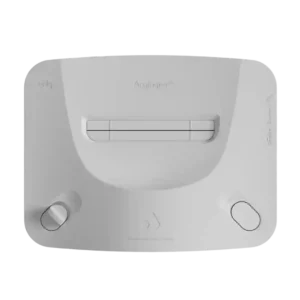
Choose it if you own N64 cartridges and want the most polished, low-lag way to play them on a 4K TV. Skip it if you want cheap emulation, broad flash-cart/controller...
Pros: display quality, performance
Cons: availability
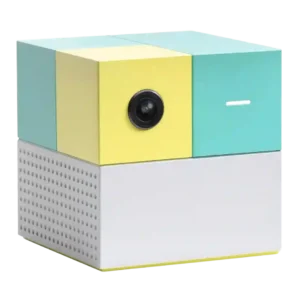
Best for easy, controller-free family play that gets kids moving. Skip it if you want deep games, cutting-edge graphics, or dislike paying for Play Pass.
Pros: game library quality, value for money
Cons: subscription service value, graphical performance
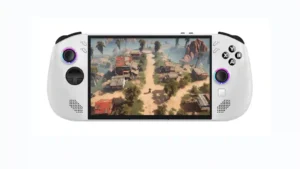
Choose the SteamOS version for a comfortable, console-like handheld with a sharp 120Hz screen and strong performance. Skip it if you prioritize long battery life, quiet fans, or effortless access...
Pros: display quality, user interface
Cons: controller features, battery life
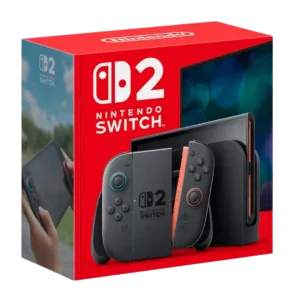
Choose Switch 2 for a sharper, faster, more social Switch with stronger Joy-Cons and broad backward compatibility. Skip it if short battery life, expensive storage, thin launch exclusives, or the...
Pros: value for money, controller features
Cons: power efficiency, user interface