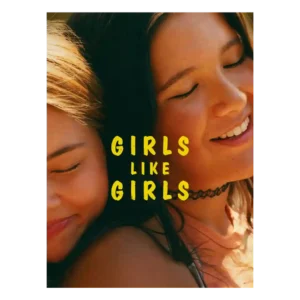
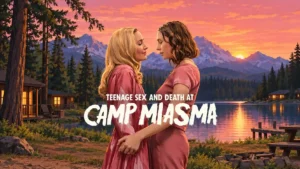
Girls Like Girls
Where It Has the Edge
- violence level is 5.0 vs 4.7. The decision to remove the original music video’s homophobic assault is seen as a thoughtful improvement that keeps...

Scorata scores summarize analyzed review evidence on a 1–5 scale; they are not laboratory measurements or a simple average of customer star ratings. Feature scores summarize the reviews covering that feature. The overall score averages feature scores within each review, then combines review averages. When both expert and customer evidence are available, those two groups receive equal weight. Products can have different review coverage, so small score gaps do not establish a winner.
Recommendations prioritize important features for the category, with a score of at least 3.5, a gap of at least 0.25 points and at least two supporting reviews per product. Features with widely varying scores or broad connectivity contexts are excluded from recommendations. These safeguards do not establish statistical significance.
Quick verdict
The review evidence points to a tradeoff: violence level versus originality and costume design. Choose according to which strengths matter more to you; the overall score alone does not settle that choice.
Choose Girls Like Girls for violence level.
Choose Teenage Sex and Death at Camp Miasma for originality and costume design.
Scores are out of 5. Missing scores mean missing review evidence, not a missing feature.
AIM exchanges and romantic uncertainty create localized tension, but the larger conflict is often too abstract or underdeveloped to sustain strong suspense.
Tension often comes from anticipation and inevitability rather than traditional jump scares, with the film keeping some viewers on edge even as it undercuts dread with humor.
The story is simple and easy to follow, centering Coley’s growth more than the fate of the romance.
Dream logic and shifting layers of fiction make the story intentionally slippery, but confusion is a repeated complaint. Viewers comfortable with ambiguity fare much better than those wanting a cleanly resolved plot.
The editing can effectively capture glances, memory, and emotional shifts, but rapid cuts and montage-heavy passages sometimes rush key developments or blur the passage of time.
Sharp cuts and inventive transitions give the slasher material extra punch, with the burn-through transition and rapid visual rhythm singled out as especially effective.
The film follows a recognizable summer-romance and coming-of-age structure, with few major surprises or unconventional turns.
One assessment finds the movie so absorbed in homage and reference that it struggles to stand fully on its own story despite its creative flourishes.
The dialogue ranges from natural, awkward teenage speech to lines described as stiff, cringey, or overly YA-styled. The quiet visual storytelling often works better than the spoken exchanges.
The dialogue can be intimate, funny and unusually candid about desire, but some lines and thematic explanations feel overly declarative or tacked on.
Coley receives a clear grief-and-self-acceptance arc, while Sonya and several side characters often feel less fully explored. The imbalance leaves parts of the relationship emotionally convincing but narratively underwritten.
Kris’s movement from guarded self-consciousness toward sexual and emotional liberation lands powerfully for many, though some find secondary characters thin or caricatured.
The wistful, intimate mood remains remarkably steady, avoiding both excessive melodrama and sugary sentimentality.
The blend of tenderness, camp, gore, satire and dream logic is exhilarating when it clicks, but the violent tonal shifts can also feel unstable or jarring.
The final resolution is divisive because the main cut to black can feel abrupt, while the post-credits scene supplies the romantic closure many viewers wanted. Staying through the credits materially improves the payoff.
The ending is sharply divisive: some find the final plunge into fantasy immersive and liberating, while others see padding, confusion or a late collapse in narrative coherence.
The story is emotionally sincere and easy to connect with, especially through Coley’s grief and self-worth arc. Its main limitation is a familiar, sometimes underdeveloped narrative framework.
The story can be heartfelt, sharp and thematically rich, but it is also one of the main sources of division. Some see a brilliant emotional arc; others see references and surrealism overwhelming a coherent narrative.
Sunlit exteriors, intimate close-ups, and a hazy summer palette create a dreamy sense of longing. The look is widely admired, though some found the soft-focus style too uniform for heavier scenes.
Saturated color, tactile lighting, unusual framing and playful camera techniques make the cinematography a standout. The dreamlike camp imagery is repeatedly described as striking and immersive.
The deliberate, slow-burn rhythm works for viewers who enjoy lingering mood and emotional detail. Others find the montages, dead air, and rushed late developments an uneven combination.
The pacing is one of the recurring weaknesses, with complaints about long-winded passages, redundancy and a meandering later stretch. The strongest set pieces still move with considerable energy.
The moody score and era-aware musical cues deepen the film’s wistful tone and emotional beats without overwhelming the story.
Alex G’s score is repeatedly praised for its dreamy, inspired mood and its ability to keep the surreal slasher world buoyant.
Hayley Kiyoko shows a strong eye for intimacy, mood, and emotional detail in her feature debut. Reactions split over whether the music-video sensibility fully sustains a feature-length narrative.
Jane Schoenbrun’s direction is widely admired for its distinctive visual imagination, tonal nerve and personal point of view. The main reservation is that the same freedom can become self-indulgent or narratively unruly.
At roughly 95 minutes, the film can paradoxically feel both stretched in its quieter passages and too compressed in its dramatic transitions.
The length draws some criticism because the film can feel long-winded or padded after its main ideas have landed, particularly around the epilogue and later digressions.
The restrained approach to physical intimacy is viewed as appropriate and refreshingly non-exploitative.
The film’s frank, horny treatment of sexuality is often praised as joyful, liberating and central to its themes rather than merely provocative. A few viewers find the execution too much or still not satisfying on its own terms.
Playful moments and awkward teenage behavior provide welcome relief from the grief and romantic turmoil.
The campy gore, industry satire and oddball sexual comedy produce frequent laughs for many viewers. The humor is also a taste filter, with some finding it cringey, forced or ineffective.
The film meaningfully connects queer self-acceptance, grief, parental wounds, and the need to choose healthier love. Its emotional themes are deeper than its simple plot suggests.
The film’s deepest strength is its layered exploration of desire, shame, identity, fandom and the complicated pleasure of loving flawed art. Even mixed reactions often engage seriously with those ideas.
The film’s strongest moments make first love, grief, rejection, and self-acceptance feel immediate and raw. Even mixed reactions often acknowledge that the central emotions land.
Beneath the camp and gore, the film often lands as heartfelt, vulnerable and moving, particularly in its treatment of shame, desire and self-acceptance. A few find it less affecting than Schoenbrun’s earlier work.
The decision to remove the original music video’s homophobic assault is seen as a thoughtful improvement that keeps the focus on emotional growth rather than physical trauma.
The bloodshed is extravagant, stylized and often comic rather than punishing, which many slasher fans enjoy. A dissenting view finds the violent payoff too limited for the film’s provocative setup.
The central romance is tender, volatile, and emotionally recognizable, with strong moments of yearning and intimacy. Some viewers wanted more dialogue, development, or chemistry before the heartbreak intensified.
The Kris-Billy relationship is widely praised as tender, strange and genuinely sexy, with the actors’ chemistry helping the romance survive the film’s most abstract turns.
The leads’ chemistry is usually the film’s strongest pull, especially in quiet looks, touches, and private moments. A minority found the spark too muted to justify the relationship’s pain.
Hannah Einbinder and Gillian Anderson’s charged, tender chemistry is one of the most consistent strengths, giving the central relationship warmth even when the story turns surreal.
The film treats queer teenage love as ordinary, specific, and worthy of a wide theatrical canvas. Its unapologetically sapphic focus is a major strength for viewers who rarely saw themselves centered in coming-of-age stories.
The queer and trans perspective is treated as a meaningful part of the film’s emotional and genre framework, with its representation praised for creating recognition and connection.
The awkward glances, mixed signals, and queer uncertainty often feel authentic and lived-in. A few stylized or scripted moments undercut that naturalism.
The movie intentionally favors dream logic, painted spaces and emotional truth over literal realism. That abstraction is enchanting for some and distancing for others.
The film’s clearest message is that self-acceptance and healthy love begin with believing you are worthy of both. Its queer representation is framed through ordinary human longing rather than spectacle.
Its ideas about desire, shame, fandom and loving problematic art resonate strongly when the emotional through-line clicks. Detractors find some of the messaging heavy-handed, muddled or overexplained.
As a queer coming-of-age romance, it delivers tenderness, yearning, heartbreak, and self-discovery even when it follows familiar genre beats.
As a meta-slasher, it earns strong praise for loving the genre without simply mocking it, but it deliberately deprioritizes sustained fear and conventional slasher structure.
The screenplay has genuine sensitivity and several strong emotional ideas, but it often relies on familiar structure, thin side characters, and abbreviated development.
The script earns praise for ambitious ideas, wit and emotional candor, but its density can become heavy-handed or self-indulgent. The balance between thesis and story is a major dividing line.
The supporting cast has warm individual moments, but thinly written roles limit their impact and leave the film heavily dependent on the leads.
The supporting ensemble supplies memorable comic and horror-flavored cameos, though several assessments note that many smaller roles are intentionally thin or one-note.
The two leads carry the film with expressive, emotionally grounded work, and even harsher reactions usually separate their performances from the script’s weaknesses. Supporting performances draw more mixed responses.
The ensemble is broadly praised as fearless and well matched to the film’s heightened tone. Even mixed assessments tend to single out the acting as a strength.
Period needle drops and queer artists give the soundtrack strong nostalgic and emotional appeal. The music feels carefully chosen rather than used as a greatest-hits showcase.
Needle drops, covers and Alex G’s music are major pleasures, often described as inspired or perfectly chosen. A few choices are considered overly obvious or on-the-nose.
Maya da Costa gives the film its emotional center with restrained body language, wounded intensity, and a believable progression from guarded grief to self-possession.
The two leads are the clearest consensus strength: Hannah Einbinder brings nervous vulnerability and comic precision, while Gillian Anderson supplies magnetic, playful glamour.
The warm, colorful, close-up-heavy style creates a strong dreamlike identity. Some viewers find the nostalgic orange haze heavy-handed or insufficiently varied.
Candy colors, matte-painted landscapes, stylized gore and dreamlike compositions form the strongest area of agreement. Even negative reactions often concede that the film looks distinctive and beautiful.
Ambient outdoor sound and intimate sonic detail can be immersive, though one reaction criticized the music mix for becoming too loud.
The heightened, direct sound work is singled out for making otherwise comic or exaggerated moments feel physically unnerving.
Mid-2000s fashion details such as platform flip-flops and period styling reinforce the setting without feeling like costume-party shorthand.
Little Death’s vent-headed silhouette is an especially memorable design, and the film’s stylized wardrobe helps sell its handmade, heightened slasher world.
The small-town spaces, early internet culture, and mid-2000s objects create a convincing social world shaped by isolation, nostalgia, and closeted desire.
The fake Camp Miasma franchise feels unusually complete thanks to its opening montage, props, sequels, lore and period textures. That invented horror history is repeatedly cited as one of the movie’s most convincing achievements.
AIM windows, Sidekicks, iPods, CDs, bedrooms, and small-town hangouts make 2006 feel lived-in and emotionally specific. The period detail is one of the most consistently praised elements.
Painted backdrops, fake franchise memorabilia, camp sets and tactile props create an unusually rich artificial world. The handmade look is repeatedly celebrated as part of the movie’s identity.
Its warm atmosphere, emotional leads, and Pride-season appeal make it an enjoyable watch despite familiar plotting.
Most reactions emphasize how funny, strange and wildly entertaining the movie can be, especially for viewers on its wavelength. A small minority find the experience irritating or exhausting instead.
Its emotional warmth and representation inspired at least one strong desire to watch it again, especially among viewers connected to the original song and video.
Its dense references, layered imagery and deliberately unstable reality inspire repeated-viewing interest, with several viewers wanting to revisit it immediately or unpack more on a second pass.
The film connects most strongly with queer viewers, nostalgic millennials, and anyone who remembers the intensity of first love. Some viewers outside its core fan base may find the story too thin or inward-looking.
This is a strongly taste-dependent movie: slasher devotees, queer-horror fans and adventurous cinephiles often embrace it, while viewers wanting conventional scares or straightforward storytelling can bounce off hard.
The flamboyant massacre and one-take killing spree are frequent highlights, praised for choreography, editing and sheer slasher exuberance. A few viewers are less engaged by the gore-heavy set pieces.
The intentionally unreal digital blood works for some as part of the film’s fever-dream aesthetic, while others notice the computer-generated gore and prefer the practical work.
The psychosexual drama is dark, delirious and emotionally charged, using the blurred line between reality and fiction to intensify the central relationship.
The adaptation preserves the music video’s visual DNA, emotional core, and fan callbacks while condensing or changing several book elements. The removal of the original assault is widely welcomed.
The practical blood work and tactile effects can be fun and convincing, but the mix with digital gore leaves some wishing the film had leaned more heavily on practical techniques.
One assessment finds the conspicuous candy, fast-food and cereal branding distracting enough to briefly pull attention away from the movie.
This is consistently described as a very low-scare horror film. The kills and gore are usually played as camp, memory or comedy rather than sustained dread, which will disappoint viewers seeking real fear.
The combination of practical and digital effects is praised for serving the film’s deliberately exaggerated slasher aesthetic rather than chasing realism.
Age-appropriate casting helps the teenage emotions and awkwardness feel believable rather than overly polished.
Critical reactions lean positive but not unanimous, with praise for the performances and emotional sincerity balanced by complaints about thin plotting and uneven pacing.
Value reactions are polarized: enthusiastic viewers call individual scenes worth the price of admission, while a strongly negative take says the experience is not worth paying for.

A deeply human coming-of-age drama carried by remarkable performances and an honest portrayal of grief. Its gentle optimism moves most viewers, though some find the final stretch hurried or overly...
Pros: Grief portrayal, acting performance
Cons: pacing

Billie Jean King’s magnetic first-person storytelling makes this an exhilarating portrait of athletic courage and social change. The filmmaking follows a familiar documentary structure, and her full tennis résumé gets...
Pros: entertainment value, Biographical coverage
Cons: Narrative structure

Choose this inventive, unsettling documentary for fearless questioning, dark humor, and unpredictable storytelling. Skip it if you want a short, straightforward exposé with definitive answers.
Pros: originality, humor

A singular voice, powerful piano playing and intimate film photography make this concert absorbing for receptive listeners. Its uninterrupted, often similar-sounding songs and lack of background context are an acquired...
Pros: directing quality, cinematography
Cons: pacing, Song variety