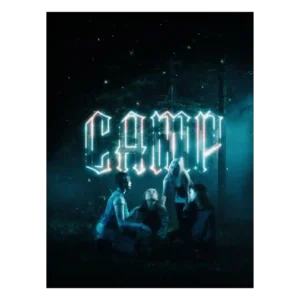
Camp
Where It Has the Edge
No clear scored advantage over the other product.

Scorata scores summarize analyzed review evidence on a 1–5 scale; they are not laboratory measurements or a simple average of customer star ratings. Feature scores summarize the reviews covering that feature. The overall score averages feature scores within each review, then combines review averages. When both expert and customer evidence are available, those two groups receive equal weight. Products can have different review coverage, so small score gaps do not establish a winner.
Recommendations prioritize important features for the category, with a score of at least 3.5, a gap of at least 0.25 points and at least two supporting reviews per product. Features with widely varying scores or broad connectivity contexts are excluded from recommendations. These safeguards do not establish statistical significance.
Quick verdict
The available evidence supports the recommendation below, but does not establish an overall winner. Check the remaining features against your priorities.
There is not enough comparable review evidence to recommend Camp over the other product.
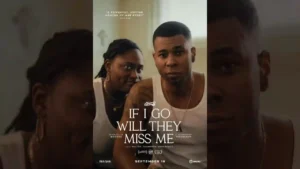
Choose If I Go Will They Miss Me for ending satisfaction and entertainment value.
No clear scored advantage over the other product.
Scores are out of 5. Missing scores mean missing review evidence, not a missing feature.
Handcrafted animated flourishes deepen the film’s dream logic and make its supernatural moments feel distinctive. They are generally seen as purposeful rather than decorative.
The animated notebook sketches draw one sharp complaint, with the effect described as chintzy and disruptive beside the film’s stronger formal choices.
This is an unconventional witchy coming-of-age drama rather than a slasher or jump-scare vehicle. It satisfies viewers open to compassionate, ambiguous horror but may disappoint those expecting a traditional camp fright film.
One strongly negative assessment finds the coming-of-age fable disappointing because familiar beats and over-explanation replace the freshness promised by its premise.
The ending is intentionally unresolved and will be a major dividing point. Some appreciate its refusal of reassurance, while others find the missing payoff, dropped threads, and troubling implications frustrating.
The unresolved, hopeful conclusion is mostly admired for refusing a falsely tidy resolution and embracing life’s incompleteness. One critic still feels the ending stumbles slightly and moves away from the film’s strongest element.
The cast’s easy rapport gives the coven a believable sense of intimacy and belonging. Emily and Clara’s connection is especially warm and magnetic.
Big Ant and Lozita’s relationship feels believable, but its familiarity keeps the dynamic from feeling especially fresh.
The deliberately lo-fi dialogue divides opinion. Some accept its monotone awkwardness as part of the dream state, while others find it clunky, airless, and emotionally flat.
Responses split sharply: one critic praises the dialogue as rich and believable, while another calls it stilted and harmful to the film’s poetic flow.
The film works as a melancholic tragedy about guilt, grief, and damaged healing rather than a conventional camp thriller. Its emotional rot is more central than plot mechanics.
The strongest responses find the family drama moving, graceful, and emotionally substantial, with the coming-of-age material landing as more than a simple father-son conflict.
Analog memory fragments and abrupt transitions place the viewer inside Emily’s unstable headspace. The approach can be disorienting, but it gives past trauma a strong visual presence.
The editing earns specific praise for nimbly moving into the past, letting memory and present-day disappointment illuminate each other.
Reality, dreams, memory, and witchcraft blur by design, leaving major questions unanswered. That ambiguity can be seductive, but it also makes the plot feel incoherent or nearly illegible to some viewers.
The film often favors dreamy, lyrical logic over literal explanation. That can be absorbing, but it also leaves parts of the story easier to feel than to explain and potentially difficult for viewers seeking a straightforward narrative.
Emily’s emotional progression and the counselors’ shared damage can be compelling, but several side characters and relationships disappear before they are fully developed. The character-driven material is strongest when the film stays close to its central group.
The family is often praised for empathy, interiority, and lived-in contradictions, especially around Big Ant and Lozita. A few critics find the central relationships too schematic or insufficiently developed within the feature’s structure.
Avalon Fast’s direction is bold, personal, and visually assured, with a clear willingness to reject conventional structure. The rawness can become disjointed, but the creative control and singular voice are widely apparent.
Walter Thompson-Hernández’s direction is widely admired for visual confidence, empathy, and community intimacy. The main dissent is that his feature can feel derivative, overly aestheticized, or intermittently distancing.
The story avoids predictable coven conflicts and standard horror escalation, favoring acceptance, guilt, and collective power. Its unconventional structure is fresh even when it feels incomplete.
The film earns credit for avoiding a standard three-act structure, yet some of its father-son beats are viewed as predictable, familiar, or close to cookie-cutter Sundance storytelling.
The film’s grief, guilt, and hunger for absolution land with unusual tenderness and intensity. Its strongest moments make healing feel both comforting and potentially dangerous.
At its best, the film is tender, involving, and capable of tearful emotional peaks. The biggest negative view argues that repetitive, over-explained storytelling weakens the poignancy the material should have.
Emily and Clara’s attraction remains understated, but their chemistry gives the relationship a vivid glow. The romance functions more as a route to belonging and self-recognition than a conventional love story.
The parents’ early courtship is described as organic, adding tenderness and history to a marriage that is much more strained in the present.
The film’s queer, female-centered perspective feels lived-in rather than tokenized. Its focus on community, girlhood, and self-invention gives the horror a broad emotional reach.
Watts is portrayed with warmth, specificity, and dignity rather than as a shorthand for poverty or danger. The film’s affection for Black and multi-racial community life is one of its strongest points of agreement.
The screenplay contains potent ideas about guilt, faith, and female community, but it often abandons setups and underdevelops motivations. Its intuitive power is stronger than its structural discipline.
The script is the film’s most divisive craft element: some see strong writerly instincts, while others find it obvious, underwritten, repetitive, or too eager to explain emotion. The feature expansion adds useful family dynamics but can lose subtlety.
The fuzzy, reverb-heavy score is a major part of the enchanted atmosphere. It shifts between gentle drift and devouring noise to mirror Emily’s unstable emotional state.
Malcolm Parson’s soulful, wistful piano writing is praised for binding the film’s disparate images and ideas together without overpowering them.
At 111 minutes, the film pushes its sparse narrative close to the breaking point. Even positive reactions often suggest that trimming 10 to 15 minutes would strengthen the experience.
The 90-minute length is criticized for leaving character perspectives and emotional specificity underdeveloped rather than feeling efficiently concise.
The fragmented story ultimately forms a strong message about guilt, belonging, and the possibility of healing outside familiar moral systems. Its meaning is powerful, though never delivered neatly.
The film’s belief in imagination, dignity, and the worth of people too often flattened by outside narratives lands powerfully for most critics. The dissenting view finds the message too explicitly dictated rather than organically felt.
The supernatural framework is balanced by recognizable interactions, awkward speech, and believable camp friendships. The social behavior often feels more grounded than the plot around it.
The strongest realism comes from the film’s honest, non-condescending view of family and neighborhood life. Even with surreal flourishes, critics often feel the people and environment remain grounded and emotionally credible.
The dreamy, melancholy atmosphere is sustained with strong visual and musical control. A few viewers experience the abrupt dialogue and character shifts as tonal whiplash rather than purposeful instability.
The realism-fantasy balance works beautifully for some critics, but others find the Greek, aviation, and surreal motifs insufficiently integrated. The film can feel cohesive emotionally even when its metaphors pull in different directions.
Soft focus, colored fog, analog textures, handheld movement, and glowing woodland imagery create the film’s most consistently admired strength. The photography makes even ordinary daylight feel enchanted and unstable.
The imagery is a major highlight: warm neighborhood portraits, expressive compositions, shadow, and indelible tableaux repeatedly carry emotion that the dialogue does not. The visual approach is among the film’s most consistently praised elements.
The central story of damaged healing is tender and unusual, but the narrative can feel like a collection of ideas rather than a fully resolved arc. Viewers who accept mood as the organizing principle tend to respond far more positively.
The father-son and family story earns substantial praise for tenderness, grace, and emotional complexity, but not unanimous support. Its looser construction and repetitive beats lead some critics to call it unfocused, schematic, or underwritten.
The film thoughtfully connects grief, female sexuality, faith, guilt, and chosen family. Its moral refusal to label healing as purely good or evil gives the material unusual depth.
The film finds rich material in fatherhood, masculinity, imagination, systemic pressure, community, and the desire to be seen. Most critics find these ideas resonant, though the harshest critique says the film sacrifices subtlety for cheapened catharsis.
The meditative pace supports the dreamlike atmosphere, but it is the most repeated drawback. Long silences and meandering transitions frequently make the film feel overextended.
The vignette structure can feel nimble and lyrical, but recurring complaints describe the feature as repetitive, amorphous, meandering, or too willing to let its plot drift.
The ensemble often feels intimate and natural, with several critics praising its persuasive, unforced quality. A smaller group found the supporting performances flat, forced, or overly stylized.
The ensemble is one of the film’s clearest strengths, with repeated praise for emotionally present, authentic work. Even the more mixed critiques tend to separate performance quality from their frustrations with the writing.
Alice Wordsworth and Cherry Moore are especially effective at giving the coven warmth and personality. The broader ensemble’s naturalism helps the group feel like a lived-in community.
Myles Bullock is singled out as scene-stealing, while the nonprofessional ensemble is praised for natural screen presence and fully inhabited characters.
Zola Grimmer gives a remarkably controlled debut, conveying sorrow, guarded hope, and longing through restrained speech and expressive reactions. Even harsher assessments of the ensemble tend to single her out positively.
The central performances are repeatedly singled out as exceptional, especially Danielle Brooks and J. Alphonse Nicholson. Their emotional detail often compensates for complaints about exposition or familiar story beats.
The synth-heavy and shoegaze-inflected music deepens the surreal haze. Its rough, emotionally exposed closing texture leaves a particularly strong aftereffect.
The music is praised for a lovely, resonant mix that ranges across styles without losing the film’s wistful mood. Its eclectic choices are attention-grabbing but generally treated as a strength.
The experience is hypnotic and transfixing for receptive viewers, but it is rarely fun in a conventional sense. Its slow, mournful drift can feel either absorbing or soporific.
The film’s performances and visual beauty keep many critics engaged and even swept up despite its loose structure. Its appeal comes more from atmosphere, feeling, and imagery than conventional narrative momentum.
This is best suited to viewers who enjoy queer arthouse horror, ambiguity, and slow, mood-led storytelling. Its thin plot and refusal to explain itself will alienate viewers seeking a conventional genre ride.
The film’s open-hearted tone can be inviting, but its lyrical, avant-garde approach may make it harder for some viewers to settle into its rhythm.
Abrupt static and abrasive sonic interruptions unsettle the otherwise hypnotic opening. The contrast helps signal that the film’s softness carries hidden danger.
The recurring aircraft roar is used as more than background noise, turning an oppressive part of the neighborhood soundscape into a sign of possibility through Lil Ant’s perspective.
The handmade visual language is the film’s clearest triumph, blending Super 8 grain, colored fog, animation, ritual tableaux, and glowing natural light. It is consistently described as gorgeous, hypnotic, and otherworldly.
The poetic visual language is a defining strength, full of striking compositions, surreal flourishes, warm portraits, and memorable community imagery. The main criticism is that repeated motifs and borrowed lyrical techniques sometimes dilute their impact.
The camp’s Christian façade, secret coven culture, and enchanted woodland imagery create a distinctive microcosm. The world feels larger and more alluring than the modest budget suggests.
Nickerson Gardens and the surrounding Watts community feel lived-in, loving, and socially textured rather than merely used as backdrop. The neighborhood itself becomes a vivid emotional environment for Lil Ant’s imagination and family life.
Big Ant’s wardrobe is used thematically, with clothing choices tracking whether he is leaning toward tenderness, darkness, or the visual memory of incarceration.
Expanding the short gives Lozita and the family more room, but one critic feels the feature loses some of the original’s freer, less narrative-bound quality.
Lozita is allowed moments of humor alongside her firmness, giving the family portrait a little welcome lightness without turning the film into a comedy.
The film favors unease, ritual imagery, and emotional dread over jump scares or a body-count structure. Its horror is soft-edged but capable of leaving a lingering chill.
Tension comes from uncertainty, whispered danger, and the possibility that acceptance has a cost. The slow-burn dread is effective without relying on conventional shocks.
The layered imagery and uncertain reality invite repeat viewing. A second look may clarify motifs and connections that are easy to miss during the film’s sleepy first pass.

Choose this inventive, unsettling documentary for fearless questioning, dark humor, and unpredictable storytelling. Skip it if you want a short, straightforward exposé with definitive answers.
Pros: originality, humor

Best for a hypnotic, bookish mystery with tactile visuals and cerebral chills. Skip it if reading-heavy, attention-demanding storytelling sounds more exhausting than exciting.
Pros: Atmosphere, cinematography
Cons: audience appeal

Best for an intimate, searching documentary that rewards focused attention and invites discussion. Skip it when devastating grief, addiction footage, and unresolved family tensions would be too much.
Pros: emotional impact, theme depth

Best for patient suspense, an unforgettable score, and an unsettling masked killer. Skip it for very young children or if you want to avoid intense scares; its restrained kills also...
Pros: directing quality, score quality
Cons: message quality