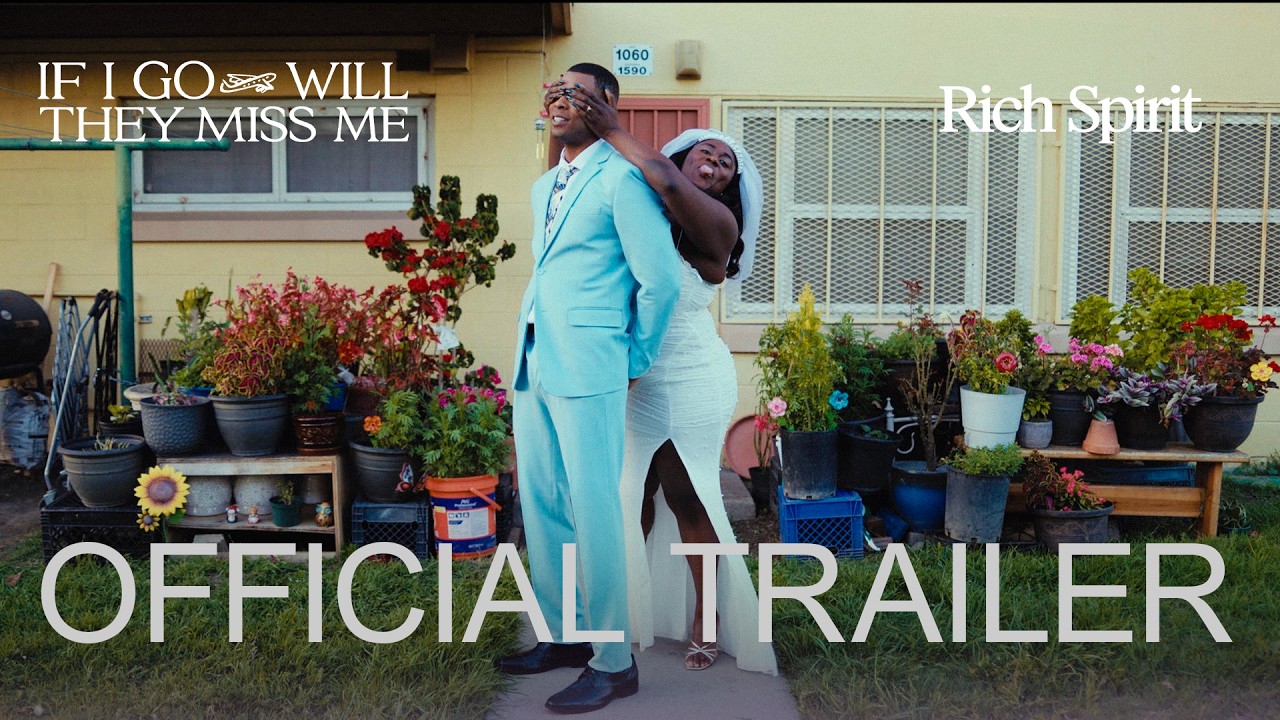
If I Go Will They Miss Me Movie Review

Brand: Rich Spirit
Released: September 11, 2026
Updated: 4 days ago
4.2
Overall review score
154
Review insights
37
Scored features
10
Expert reviews

Bottom Line

Choose it for striking imagery, compassionate community detail, and exceptional central performances. Skip it if you prefer tightly plotted drama or have little patience for lyrical repetition and deliberately loose storytelling.

Best for

Best for viewers who respond to visually driven, character-centered coming-of-age dramas and who value atmosphere, community texture, and emotional performance over conventional plot mechanics.

Not for

Less suited to viewers who want tight plotting, subtle exposition, or a strictly grounded style; the recurring symbolism and vignette structure can feel repetitive or meandering.

Verdict

If I Go Will They Miss Me is strongest when it trusts faces, places, and quiet gestures. Critics repeatedly praise its performances, warm portrayal of Watts, expressive cinematography, and the way Greek myth and flight imagery turn a difficult father-son story into something tender and imaginative. Danielle Brooks and J. Alphonse Nicholson draw especially strong notices, while Bodhi Dell gives the film an affecting child’s-eye center. The tradeoff is the writing: several critics find the feature repetitive, schematic, overly explanatory, or too indebted to earlier lyrical Black cinema. Its motifs do not always cohere, and the plot can meander. Even so, the visual confidence, emotional generosity, and refusal to reduce its community to hardship leave a largely positive impression.

Feature Scorecards

Summary

37 reviewed features
  • Very positive 4.5-5.0
    13 (35%)
  • Positive 3.5-4.4
    15 (41%)
  • Neutral 2.5-3.4
    6 (16%)
  • Negative 1.5-2.4
    3 (8%)

Pros

  • 4.9
    8 reviews strong consensus
    cultural representation: 4.9, 8 reviews, strong consensus
    Watts is portrayed with warmth, specificity, and dignity rather than as a shorthand for poverty or danger. The film’s affection for Black and multi-racial community life is one of its strongest points of agreement.
  • 4.9
    8 reviews strong consensus
    lead performance: 4.9, 8 reviews, strong consensus
    The central performances are repeatedly singled out as exceptional, especially Danielle Brooks and J. Alphonse Nicholson. Their emotional detail often compensates for complaints about exposition or familiar story beats.
  • 4.9
    7 reviews strong consensus
    cinematography: 4.9, 7 reviews, strong consensus
    The imagery is a major highlight: warm neighborhood portraits, expressive compositions, shadow, and indelible tableaux repeatedly carry emotion that the dialogue does not. The visual approach is among the film’s most consistently praised elements.
  • 4.8
    8 reviews strong consensus
    acting performance: 4.8, 8 reviews, strong consensus
    The ensemble is one of the film’s clearest strengths, with repeated praise for emotionally present, authentic work. Even the more mixed critiques tend to separate performance quality from their frustrations with the writing.
  • 4.9
    5 reviews strong consensus
    world-building: 4.9, 5 reviews, strong consensus
    Nickerson Gardens and the surrounding Watts community feel lived-in, loving, and socially textured rather than merely used as backdrop. The neighborhood itself becomes a vivid emotional environment for Lil Ant’s imagination and family life.
  • 4.4
    10 reviews moderate consensus
    theme depth: 4.4, 10 reviews, moderate consensus
    The film finds rich material in fatherhood, masculinity, imagination, systemic pressure, community, and the desire to be seen. Most critics find these ideas resonant, though the harshest critique says the film sacrifices subtlety for cheapened catharsis.

Cons

  • 1.5
    1 review
    animation quality: 1.5, 1 review
    The animated notebook sketches draw one sharp complaint, with the effect described as chintzy and disruptive beside the film’s stronger formal choices.
  • 2.6
    4 reviews strong consensus
    pacing: 2.6, 4 reviews, strong consensus
    The vignette structure can feel nimble and lyrical, but recurring complaints describe the feature as repetitive, amorphous, meandering, or too willing to let its plot drift.
  • 2.6
    4 reviews strong consensus
    screenplay quality: 2.6, 4 reviews, strong consensus
    The script is the film’s most divisive craft element: some see strong writerly instincts, while others find it obvious, underwritten, repetitive, or too eager to explain emotion. The feature expansion adds useful family dynamics but can lose subtlety.
  • 2.0
    1 review
    genre satisfaction: 2.0, 1 review
    One strongly negative assessment finds the coming-of-age fable disappointing because familiar beats and over-explanation replace the freshness promised by its premise.
  • 2.0
    1 review
    runtime: 2.0, 1 review
    The 90-minute length is criticized for leaving character perspectives and emotional specificity underdeveloped rather than feeling efficiently concise.
  • 2.5
    2 reviews limited evidence
    plot originality: 2.5, 2 reviews, limited evidence
    The film earns credit for avoiding a standard three-act structure, yet some of its father-son beats are viewed as predictable, familiar, or close to cookie-cutter Sundance storytelling.

Cast & Creators

  • Lozita
    4.8
    8 reviews strong consensus
    Danielle Brooks: 4.8, 8 reviews, strong consensus
    Brooks is the most consistently celebrated performer, bringing warmth, exhaustion, force, and quiet hurt to Lozita. Several critics treat her as the film’s emotional center and wish the movie gave her even more space.
  • Cinematographer
    5.0
    4 reviews strong consensus
    Michael Fernandez: 5.0, 4 reviews, strong consensus
    Fernandez’s cinematography is repeatedly praised for warm neighborhood intimacy, expressive perspective, and indelible community images. His camera finds beauty without reducing Watts to hardship.
  • Director
    4.2
    10 reviews low consensus
    Walter Thompson-Hernández: 4.2, 10 reviews, low consensus
    His direction is praised for lyrical imagery, empathy, community intimacy, and a confident blend of realism with fantasy. The main reservations are that the feature can feel derivative, over-explained, or more enamored of its motifs than its story.
  • Big Ant
    4.4
    5 reviews moderate consensus
    J. Alphonse Nicholson: 4.4, 5 reviews, moderate consensus
    Nicholson’s Big Ant is widely praised as poignant, spectacular, and devastatingly complicated, with his face and body language revealing the sensitive person beneath the hardened exterior. One critique specifically dislikes the affected voiceover.
  • Composer
    4.8
    2 reviews limited evidence
    Malcolm Parson: 4.8, 2 reviews, limited evidence
    Parson’s piano score is praised as soulful, wistful, and jazzy, helping connect the film’s otherwise disparate images and ideas.
  • JJ
    4.8
    2 reviews limited evidence
    Myles Bullock: 4.8, 2 reviews, limited evidence
    Bullock’s JJ stands out as a charming, scene-stealing presence who also functions as a moral counterweight to Big Ant.

Compared With Category Average

Compared with other Movies, this product is above average in drama quality, editing quality, cultural representation, near average in visual style, tonal consistency, below average in animation quality, genre satisfaction, faithfulness to source material.

Comparison summary

37 compared features
  • Above average 0.4+ pts higher
    23 (62%)
  • Same as average within 0.3 pts
    8 (22%)
  • Below average 0.4+ pts lower
    6 (16%)

Largest category differences

Attribute This product Category average Difference
animation quality 1.5 3.6 -2.1
genre satisfaction 2.0 3.9 -1.9
drama quality 5.0 3.4 +1.6
editing quality 5.0 3.3 +1.7
cultural representation 4.9 3.5 +1.4
realism 4.7 3.3 +1.4
world-building 4.9 3.6 +1.3
character development 3.9 3.1 +0.9

Consider This Instead

If you want better chemistry between characters

Choose Honeyjoon. It scores 4.6 vs 3.5 for chemistry between characters, with a 4.2 overall score.

Compare

If you want better faithfulness to source material

Choose Heartstopper Forever. It scores 4.8 vs 3.0 for faithfulness to source material, with a 4.1 overall score.

Compare

If you want better plot clarity

Choose Girls Like Girls. It scores 5.0 vs 3.3 for plot clarity, with a 4.0 overall score.

Compare

Compared in Reviews

Products reviewers directly compared with this model, grouped into quick takeaways.

Beasts of the Southern Wild

  • Similar: revisionist folklore and fantasy imagery The film’s mythic family visions are compared with the revisionist folklore style of Beasts of the Southern Wild.

Boyz n the Hood

  • Similar: recurring neighborhood aircraft sound The persistent jet roar is compared with the helicopter hum in Boyz n the Hood, but given a more hopeful meaning.

Killer of Sheep

  • Compared: rooftop imagery and Black neighborhood filmmaking tradition The rooftop sequence is framed as a deliberate remix of Killer of Sheep.

FAQ

Is If I Go Will They Miss Me more visual than plot-driven?

Yes. Its storytelling leans heavily on composition, montage, recurring imagery, and lyrical vignettes, which many critics admire even as some find the plot loose or schematic.

How strong are the performances?

Performance is one of the clearest strengths. Danielle Brooks and J. Alphonse Nicholson receive especially strong praise, while Bodhi Dell and the wider ensemble are also credited with making the family feel emotionally present.

How does the film portray Watts?

The neighborhood is shown with warmth, specificity, and dignity. Critics repeatedly praise the film for avoiding exploitative poverty framing and finding beauty, joy, and community life alongside hardship.

Do the fantasy and Greek-myth elements work?

Often, but not for everyone. Some critics love the blend of realism, flight imagery, and mythology, while others think the motifs become repetitive or fail to merge into one cohesive framework.

Is the music a major part of the experience?

Yes. Malcolm Parson’s piano score is praised as soulful and connective, while the soundtrack—especially Jon Batiste’s “This Bitter Earth” cover—is treated as a notable emotional strength.

Does the ending tie everything up?

No. The ending remains hopeful but deliberately unresolved; most comments on it appreciate that lack of neat closure, though one critic feels the finale stumbles slightly.

Sample Expert Reviews We Analyzed

These are a few of the reviews included in our analysis.

nextbestpicture.com

THE GOOD - Immortalizes the community of Watts through the film’s sensitive family portrait. Simultaneously, it playfully renders the...

Review score
2.5

Top Movies to Consider

#1 Disneyland Handcrafted
4.8

Best for pristine archival footage, immersive sound, and a surprisingly tense look at Disneyland’s construction. Skip it if you want a comprehensive, deeply critical history; several reviewers found the 78–79-minute...

Pros: plot clarity, realism

Cons: plot originality, runtime
#2 Barbara Forever
4.8

Best for an intimate, inventive archival portrait with strong emotional and cultural impact. Skip it if substantial nudity or an occasionally wandering biographical structure will frustrate you.

Pros: chemistry between characters, emotional impact

Cons: runtime, plot clarity
#3 Chronovisor
4.8

Best for an audacious, text-driven conspiracy thriller with gorgeous 16mm atmosphere and mounting dread. Skip it if long stretches of reading, deliberate repetition, and an intentionally austere narrative sound more...

Pros: story quality, plot clarity

Cons: chemistry between characters, sound design

#4 Remake
4.8

Best for a profound, formally inventive meditation on grief, memory, and the ethics of filming family. Skip it if intensely personal addiction material, a 114-minute runtime, or occasional repetition will...

Pros: plot originality, ending satisfaction

Cons: runtime, pacing