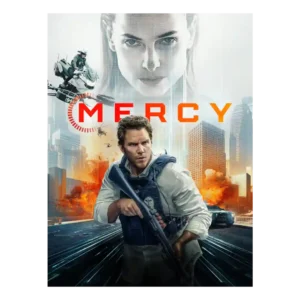
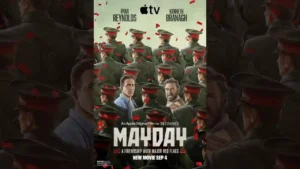
Mercy
Where It Has the Edge
No clear scored advantage over the other product.

Scorata scores summarize analyzed review evidence on a 1–5 scale; they are not laboratory measurements or a simple average of customer star ratings. Feature scores summarize the reviews covering that feature. The overall score averages feature scores within each review, then combines review averages. When both expert and customer evidence are available, those two groups receive equal weight. Products can have different review coverage, so small score gaps do not establish a winner.
Recommendations prioritize important features for the category, with a score of at least 3.5, a gap of at least 0.25 points and at least two supporting reviews per product. Features with widely varying scores or broad connectivity contexts are excluded from recommendations. These safeguards do not establish statistical significance.
Quick verdict
The available evidence supports the recommendation below, but does not establish an overall winner. Check the remaining features against your priorities.
There is not enough comparable review evidence to recommend Mercy over the other product.
Choose Mayday for cinematography and humor.
No clear scored advantage over the other product.
Scores are out of 5. Missing scores mean missing review evidence, not a missing feature.
The camerawork draws mostly negative reactions, with complaints about murky images, shaky footage, and frenetic movement. The surveillance-heavy approach can feel more exhausting than cinematic.
The camerawork is widely praised as fluid, inventive, and unusually cinematic for streaming, especially in fights, aerial scenes, long takes, and moving POV shots.
The only direct comment on representation is negative, arguing that a near-future Los Angeles should have included more Hispanic people.
The film earns praise for humanizing Soviet citizens and complicating simple U.S.-versus-Russia binaries, though some critics still find parts of its cultural framing simplified.
The final act is the most repeated complaint. Many viewers say the film loses control with piled-on twists, implausible action, and a muddled resolution, though a smaller group enjoyed the late twist or chaotic finish.
The ending receives praise for landing on a gracious thematic note about service and recognition rather than just spectacle.
Editing is sharply split: the real-time flow and information delivery can feel tight and clear, but rapid cuts and constant screen switching become frenetic for other viewers. The strongest praise goes to the clock-driven momentum.
Action editing is praised for seamlessly blending performers, stunt doubles, and set-piece momentum without losing clarity.
The movie struggles to hold a consistent tone, particularly when the contained courtroom mystery turns into an outsized action spectacle. Reviewers often describe the shift as awkward, silly, or at odds with the earlier tension.
Most reviewers think comedy, action, and emotion are blended smoothly, while detractors point to abrupt transitions, an identity crisis, or over-the-top third-act silliness.
As a lightweight sci-fi mystery or streaming thriller, the movie can be enjoyable and tense. Reviewers looking for a smarter, more rigorous genre film are much less satisfied.
As a throwback buddy action-comedy, the film strongly satisfies its target audience with banter, chases, fights, heart, and nostalgic genre energy.
Character writing is often described as thin, clichéd, or emotionally underdeveloped, with Chris Raven especially difficult for some viewers to invest in. Judge Maddox is frequently seen as the most developed or interesting character.
Nikolai and Troy get meaningful growth and a believable friendship, but some critics find Troy or the supporting family arcs thin, rushed, or underdeveloped.
Dialogue is a weak point, with complaints about corny lines, heavy exposition, and an ending line that does not land. Even milder reactions suggest the script needed sharper wording.
The central banter is often praised as funny and lively, but one strongly negative review finds the dialogue forgettable.
Writing is one of the clearest weaknesses across the set, with repeated complaints about formula, contrivances, exposition, and weak logic. A few reviewers still found the script entertaining enough to sustain the mystery.
The screenplay earns praise for smart genre writing and balanced character beats, but detractors call it safe, by-the-numbers, or even half-baked.
One viewer liked the mystery and courtroom-drama foundation, suggesting the film is most effective before the later action overwhelms that simpler dramatic setup.
The more serious moments are praised for subtlety, giving the action-comedy enough dramatic weight without overwhelming its lighter tone.
Timur Bekmambetov’s screenlife experience is visible in the film’s energetic presentation, and some reviewers praise his ability to keep the format moving. Others see the same direction as haphazard, overdone, or unable to control the story’s excesses.
Goldstein and Daley are widely praised for energetic, confident staging and smart tonal control, though one dissenting review sees the storytelling as undercooked.
Emotional engagement varies widely. Some viewers became invested in the outcome, but others found Chris too unlikeable or the character work too thin to care about his fate.
Many reviewers are surprised by the film’s warmth, friendship, and family material, although a few find the sentimentality underdeveloped or unearned.
The film raises timely questions about AI, privacy, surveillance, justice, and human judgment, but many reviewers say it only skims the surface. A smaller group appreciates the moral discussion and finds the AI material thought-provoking.
The political and humanist ideas add welcome substance, but reviewers disagree on whether they feel thoughtful and resonant or merely surface-level.
The AI-and-surveillance message is highly divisive. Some viewers found the ideas timely or meaningful, but many reviewers thought the film contradicted itself, softened its critique of AI, or failed to say anything coherent about justice and privacy.
The humanist message about propaganda, patriotism, and seeing people beyond national stereotypes is often praised, though some critics consider it simplistic or obvious.
CGI is a recurring weak spot, especially in the chase material. Even reviewers who tolerated the effects tended to describe them as obvious, excessive, or below the polish expected from a theatrical sci-fi release.
Digital effects draw mixed reactions: most shots are convincing or good enough, but a few green-screen and cartoonish moments noticeably break immersion.
The action is limited for much of the film, then surges into a chase-heavy finale. Several viewers enjoyed the late explosions and vehicle chase, while others found the climax ridiculous, disconnected, or too dependent on effects.
The action is one of the clearest consensus wins, with fluid fights, inventive chases, strong aerial work, and several set pieces ranked among the year’s best.
The ticking clock gives the movie generally brisk momentum, and many viewers appreciate how quickly it moves once the investigation starts. Complaints focus on exposition up front, rushed reveals, or a finale that outstays its welcome.
Most reviews praise the brisk momentum and constant forward motion, though a few find the opening awkward or the overall film somewhat too long.
Chris Pratt and Rebecca Ferguson’s screen dynamic works well for some viewers, who liked the contrast between panic and icy control. Others found their interaction awkward or constrained by the film’s screen-bound setup.
Reynolds and Branagh’s odd-couple chemistry is repeatedly called the heart of the film, carrying the comedy, emotional beats, and long stretches of the story.
The near-future premise feels plausible to a few viewers, but many reject the legal system, AI behavior, investigation speed, and finale logistics as hard to believe. Suspension of disbelief is a major requirement.
Aerial work and some locations look highly convincing, but realism is inconsistent; one reviewer rejects the period world and character behavior as fundamentally unbelievable.
The score gets mixed notices: some viewers found it effective or immersive, while others criticized the heightened music or main theme as distracting and derivative.
The original score makes little impression in the one review that addresses it, which remembers the licensed songs but not the score.
Plot logic is one of the film’s weakest areas. Reviewers repeatedly point to contrivances, shifting rules, unexplained conveniences, and deductions that do not hold together, even when the investigation itself remains easy to follow moment to moment.
One reviewer finds the plot increasingly confusing and frustrating when its logic is examined closely, despite the otherwise straightforward escape setup.
Humor often comes from camp or unintended absurdity rather than deliberate comedy. Some viewers enjoyed laughing with or at the movie, while others found the humor weak.
The comedy usually lands through Branagh’s deadpan work, visual gags, and lead banter, but Reynolds fatigue and some broad third-act silliness divide reviewers.
The central setup attracts plenty of interest, but reactions to the story’s execution are sharply divided. Viewers who enjoy a fast whodunit often stay engaged, while critics cite predictability, plot holes, and an overcomplicated final stretch.
The central escape-and-friendship story is engaging for most reviewers, but detractors find it basic, thin, or unable to capitalize fully on its strong premise.
Suspense is one of the film’s most reliable strengths. The real-time countdown and investigation keep many viewers tense or curious even when they dislike the logic, though a minority find the outcome too predictable to create real pressure.
The pursuit structure creates credible tension and an enjoyable cat-and-mouse momentum, especially as the heroes race toward asylum and safety.
Profanity is a clear drawback for viewers sensitive to language. Multiple comments single out the amount of swearing as excessive or unnecessary for the experience.
Profanity and coarse language are flagged as meaningful content concerns, particularly for families and sensitive viewers.
A family-focused review cautions that profanity and intense violence make this a difficult pick for many households despite the PG-13 positioning.
The buddy-adventure tone is accessible, but violence, profanity, and mature content lead family-focused reviewers to advise against it for kids or sensitive viewers.
The violence is judged intense enough to be a family-viewing concern, with descriptions of burning victims, vehicle impacts, and bloody crime-scene imagery.
The film contains abundant fights, gunfire, injuries, and bloody action; family-focused reviewers see that level as a meaningful drawback for younger or sensitive viewers.
Effects quality is split by sequence and viewer. Some praise the immersive futuristic presentation and action spectacle, while others single out the climactic chase for poor craftsmanship or visible artificiality.
Effects are generally considered polished and impressive, though a few conspicuous CGI moments undermine the illusion.
The roughly 100-minute runtime works well for viewers who like a compact thriller, especially with the real-time countdown. Others feel the chair-bound concept and repeated digital searching cannot sustain the full length.
The nearly two-hour length works for some because of strong momentum, but several reviewers think the movie drags or would be better closer to 90 minutes.
The mystery is widely viewed as derivative and predictable, with frequent comparisons to Minority Report and other screenlife thrillers. Even positive viewers rarely praise the core whodunit as new.
The buddy-road-movie structure is repeatedly described as familiar, predictable, and derivative even when reviewers enjoy how individual scenes are executed.
The critical reception is described as harsh, with even a more positive reviewer noting that the film was savaged by low scores. Its straightforward thriller pleasures appear more likely to land with forgiving viewers than prestige-minded critics.
The broad critical response is described as positive, and the reviewer citing the aggregate agrees that critics largely got the favorable verdict right.
The film appears better suited to casual streaming viewers and fans of high-concept AI thrillers than to broad theatrical audiences. Some viewers eagerly recommended it, while others thought its appeal would fade quickly.
Reviewers see strong appeal for fans of buddy comedies, throwback action, and Ryan Reynolds’ style, with several calling it a potential theatrical crowd-pleaser.
One family-focused assessment warns that the profanity and intense violence push the movie beyond what many families may consider comfortable viewing.
The movie’s bloody violence, coarse language, and mature material make it better suited to teens and adults than younger children.
Production design receives mixed reactions: some viewers see cheap-looking sets and presentation, while one customer found the sets very good. The stripped-down digital courtroom is more functional than lavish.
High production values and period atmosphere impress many reviewers, though one critic finds the sets too pristine and artificial to feel believable.
The digital screenlife aesthetic is highly divisive: some find the floating interfaces, 3D depth, and crime-scene reconstruction immersive and inventive, while others experience the same presentation as cluttered, ugly, or overstimulating.
Reviewers admire the cinematic scale, kinetic camera placement, and distinctive action imagery, although some dislike the overly clean digital sheen.
The 2029 Los Angeles setting has intriguing surveillance and crime-control ideas, but reviewers often find the world thin, inconsistent, or underexplained. Some still credit the screenlife approach with creating a surprisingly broad sense of place.
The Cold War setting can feel convincing through locations and period detail, but one harsh review says the world never feels believable as 1980s Soviet Russia.
The ensemble draws a divided response: many viewers found the performances convincing or strong, while harsher critics called them uneven or overplayed. Rebecca Ferguson is the most consistently praised performer, with Chris Pratt drawing a wider range of reactions.
Performances are a major strength, especially Branagh’s comic-action turn. Reynolds earns praise when restrained, though several critics find his familiar persona limiting.
Chris Pratt’s performance is polarizing: supporters find him committed, desperate, and convincing under pressure, while detractors think the chair-bound role exposes stiffness or limited dramatic range.
Branagh is the consistent standout and often scene-stealer. Reynolds is more divisive, praised when subdued but criticized when he falls back on his usual wisecracking persona.
Supporting performances receive more praise than criticism overall, especially Chris Sullivan and the Reis-Sullivan-Rogers group. Still, at least one harsh review considers the supporting cast underused and weak.
Supporting actors are generally liked, especially Bakalova and Dorociński, but several reviews complain that Bakalova, Morse, and their subplots are underused.
Entertainment value is the biggest divide between critics and audiences: many customers found the movie fun, engaging, or surprisingly good, while numerous critics considered it disposable, dull, or not worth watching. It plays best for viewers willing to overlook logic problems.
Most reviewers find Mayday highly entertaining, funny, and easy to enjoy, with only a small minority calling it forgettable or disappointing.
Most comments frame the film as a one-and-done watch or something easy to forget, though a smaller group enjoyed it enough to revisit. Its disposable-thriller quality limits repeat appeal for skeptics.
Rewatch interest is split: some see an easy repeat-watch comfort movie, while others expect to forget it quickly or never revisit it.
Value depends heavily on viewing context. Several reviewers recommend waiting for streaming or home viewing rather than paying premium theater or IMAX prices, while satisfied customers still consider the movie worth their time.
As part of an existing streaming subscription, the movie is often seen as worthwhile entertainment, though one critic says it is not worth subscribing solely to watch.
One review specifically praises Reynolds’ crisp Navy look, helping sell the Top Gun-style pilot persona.
Sound is a notable strength in the limited comments that address it. Viewers describe the surround presentation as immersive and the sound design as effective without becoming distracting.
Period authenticity is mixed: some reviewers feel the setting convincingly evokes 1987, while others say the dialogue, visuals, or atmosphere never fully feel like the era.
The Springsteen-heavy ’80s soundtrack is repeatedly praised for fitting the story, period setting, and themes without feeling like empty nostalgia.
Practical stunt work and hand-to-hand sequences are praised for adding physicality, clarity, and old-school action appeal.
One content-focused review approves of the complete absence of sex or nudity.

Choose this inventive, unsettling documentary for fearless questioning, dark humor, and unpredictable storytelling. Skip it if you want a short, straightforward exposé with definitive answers.
Pros: originality, humor

Best for a hypnotic, bookish mystery with tactile visuals and cerebral chills. Skip it if reading-heavy, attention-demanding storytelling sounds more exhausting than exciting.
Pros: Atmosphere, cinematography
Cons: audience appeal

Best for an intimate, searching documentary that rewards focused attention and invites discussion. Skip it when devastating grief, addiction footage, and unresolved family tensions would be too much.
Pros: emotional impact, theme depth

Best for patient suspense, an unforgettable score, and an unsettling masked killer. Skip it for very young children or if you want to avoid intense scares; its restrained kills also...
Pros: directing quality, score quality
Cons: message quality