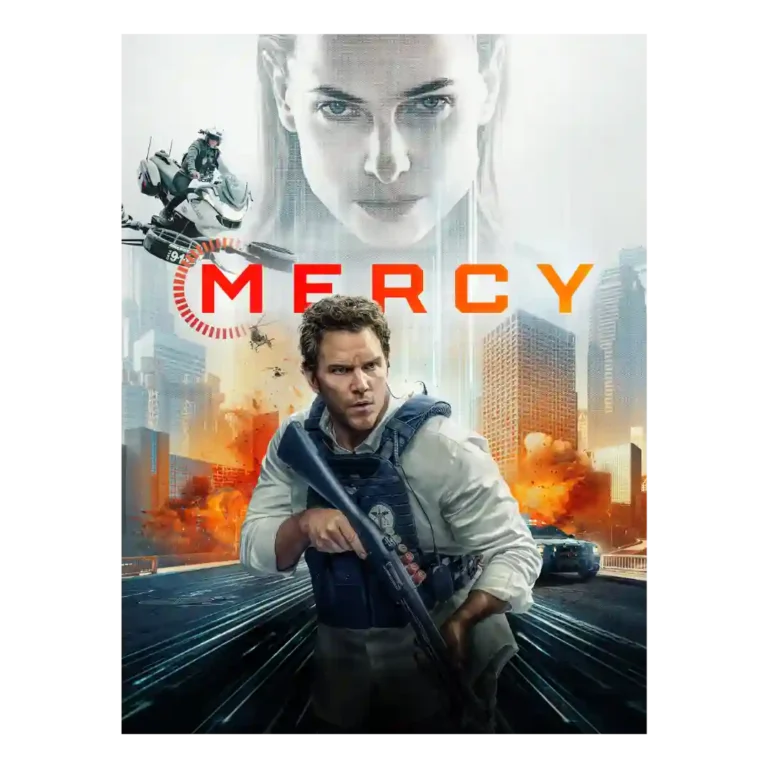
Choose it for a brisk, screen-driven AI mystery, ticking-clock tension, and Rebecca Ferguson’s icy judge. Skip it if contrived logic, a divisive surveillance message, and an overblown third act will sink the fun.
Best for
Best for viewers who enjoy fast whodunits, screenlife storytelling, AI-themed thrillers, and a ticking-clock structure—and who do not mind suspending disbelief for the plot mechanics.
Not for
Skip it if you want rigorous near-future logic, deep exploration of AI ethics, a restrained ending, or family viewing without strong profanity and intense violence.
Verdict
Mercy works best as a fast, disposable sci-fi mystery rather than the serious AI cautionary tale its premise suggests. Many viewers enjoy the real-time countdown, screenlife presentation, suspense, and late action, while Rebecca Ferguson is the most consistent acting standout and Chris Pratt draws more divided reactions. The tradeoff is the writing: reviewers repeatedly flag predictable plotting, shifting rules, thin character work, and a final act that piles on implausible twists and spectacle. Its surveillance and AI-justice themes spark discussion, but many critics think the movie never develops a clear position. For viewers willing to suspend disbelief, the brisk pace can make it an easy streaming watch; logic-focused sci-fi fans are far more likely to come away frustrated.
entertainment value: 3.6, 124 reviews, low consensus
Entertainment value is the biggest divide between critics and audiences: many customers found the movie fun, engaging, or surprisingly good, while numerous critics considered it disposable, dull, or not worth watching. It plays best for viewers willing to overlook logic problems.
Suspense is one of the film’s most reliable strengths. The real-time countdown and investigation keep many viewers tense or curious even when they dislike the logic, though a minority find the outcome too predictable to create real pressure.
The ticking clock gives the movie generally brisk momentum, and many viewers appreciate how quickly it moves once the investigation starts. Complaints focus on exposition up front, rushed reveals, or a finale that outstays its welcome.
The action is limited for much of the film, then surges into a chase-heavy finale. Several viewers enjoyed the late explosions and vehicle chase, while others found the climax ridiculous, disconnected, or too dependent on effects.
The ensemble draws a divided response: many viewers found the performances convincing or strong, while harsher critics called them uneven or overplayed. Rebecca Ferguson is the most consistently praised performer, with Chris Pratt drawing a wider range of reactions.
The film appears better suited to casual streaming viewers and fans of high-concept AI thrillers than to broad theatrical audiences. Some viewers eagerly recommended it, while others thought its appeal would fade quickly.
The AI-and-surveillance message is highly divisive. Some viewers found the ideas timely or meaningful, but many reviewers thought the film contradicted itself, softened its critique of AI, or failed to say anything coherent about justice and privacy.
The central setup attracts plenty of interest, but reactions to the story’s execution are sharply divided. Viewers who enjoy a fast whodunit often stay engaged, while critics cite predictability, plot holes, and an overcomplicated final stretch.
Chris Pratt’s performance is polarizing: supporters find him committed, desperate, and convincing under pressure, while detractors think the chair-bound role exposes stiffness or limited dramatic range.
The film raises timely questions about AI, privacy, surveillance, justice, and human judgment, but many reviewers say it only skims the surface. A smaller group appreciates the moral discussion and finds the AI material thought-provoking.
The final act is the most repeated complaint. Many viewers say the film loses control with piled-on twists, implausible action, and a muddled resolution, though a smaller group enjoyed the late twist or chaotic finish.
The digital screenlife aesthetic is highly divisive: some find the floating interfaces, 3D depth, and crime-scene reconstruction immersive and inventive, while others experience the same presentation as cluttered, ugly, or overstimulating.
Rebecca Ferguson is the clearest acting bright spot, repeatedly praised for giving Judge Maddox an icy, authoritative presence with subtle hints of humanity. A few reviewers think the AI characterization becomes too human or limits what she can do.
Kali Reis is generally well received, with praise for her screen presence and action credibility. Reviewers also note that the role itself is not especially nuanced.
Chris Sullivan receives positive notices as a reliable supporting presence, with reviewers crediting him for adding weight and emotion even when the surrounding material is thin.
Chris Pratt splits opinion sharply in the lead role. Supporters praise his panic, desperation, and commitment, while critics say the mostly seated performance turns stiff, bland, or overly strained.
Compared with other Movies, this product is above average in pacing, sound design, runtime, near average in action sequence quality, story quality, below average in cinematography, cultural representation, tonal consistency.
Comparison summary
44 compared features
Above average0.4+ pts higher
3(7%)
Same as averagewithin 0.3 pts
8(18%)
Below average0.4+ pts lower
33(75%)
Largest category differences
Attribute
This product
Category average
Difference
cinematography
1.8
4.2
-2.3
cultural representation
1.5
3.5
-2.0
tonal consistency
1.5
3.2
-1.7
production design
2.5
4.3
-1.8
theme depth
2.3
3.7
-1.3
ending satisfaction
1.9
3.2
-1.3
world-building
2.2
3.8
-1.5
plot originality
1.5
2.9
-1.4
Consider This Instead
If you want better lead performance
Choose The Furious. It scores 4.8 vs 3.1 for lead performance, with a 4.0 overall score.
Products reviewers directly compared with this model, grouped into quick takeaways.
Minority Report
Similar: mystery structureMercy’s predictable mystery is likened to Minority Report via a jokey comparison.
Better: themes and entertainmentMercy is criticized for lacking Minority Report’s bite and entertainment.
Alternative: viewing pairingMercy is recommended as a double bill with Minority Report.
War of the Worlds
Similar: format and executionMercy is said to resemble War of the Worlds closely.
Worse: overall qualityMercy is considered more competent than War of the Worlds, though less memorably bad.
Worse: overall qualityThe reviewers say Mercy is better than War of the Worlds.
Cops
Similar: style and structureMercy’s rapid multimedia investigation is likened to Cops.
FAQ
Is Mercy worth watching?
It is a mixed recommendation. Many viewers found it tense and fun as a streaming-style thriller, while critics often disliked the logic, writing, and ending.
Is Mercy similar to Minority Report?
Yes. Multiple reviewers directly compare the premise to Minority Report, often calling Mercy more derivative, though some think the screenlife format gives it a distinct spin.
How are the performances?
Rebecca Ferguson is the most consistently praised cast member. Chris Pratt is much more divisive, with some viewers buying his desperation and others finding the chair-bound performance stiff or limited.
Does the screenlife format work?
Reactions are split. Some viewers find the digital interfaces, surveillance footage, and 3D presentation immersive, while others describe them as cluttered, exhausting, or visually ugly.
Is the mystery predictable?
Many reviewers say yes, citing an obvious culprit, familiar red herrings, and contrived reveals. Others still found the countdown and investigation suspenseful enough to stay engaged.
Is it family friendly?
One family-focused review flags substantial profanity and intense violence, including bloody imagery and dangerous vehicle action, as reasons many families may want to skip it.
Sample Expert Reviews We Analyzed
These are a few of the reviews included in our analysis.
Choose this inventive, unsettling documentary for fearless questioning, dark humor, and unpredictable storytelling. Skip it if you want a short, straightforward exposé with definitive answers.
Best for a hypnotic, bookish mystery with tactile visuals and cerebral chills. Skip it if reading-heavy, attention-demanding storytelling sounds more exhausting than exciting.
Best for an intimate, searching documentary that rewards focused attention and invites discussion. Skip it when devastating grief, addiction footage, and unresolved family tensions would be too much.
Best for patient suspense, an unforgettable score, and an unsettling masked killer. Skip it for very young children or if you want to avoid intense scares; its restrained kills also...