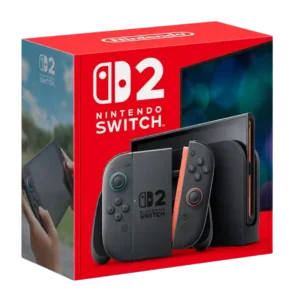
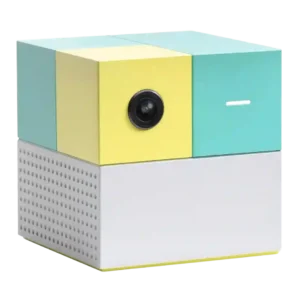
Nintendo Switch 2
Where It Has the Edge
- frame rate performance is 4.6 vs 1.5. Frame rate performance is one of the clearest wins, with several reviewers citing 60fps improvements, fewer hiccups, and...

Scorata scores summarize analyzed review evidence on a 1–5 scale; they are not laboratory measurements or a simple average of customer star ratings. Feature scores summarize the reviews covering that feature. The overall score averages feature scores within each review, then combines review averages. When both expert and customer evidence are available, those two groups receive equal weight. Products can have different review coverage, so small score gaps do not establish a winner.
Recommendations prioritize important features for the category, with a score of at least 3.5, a gap of at least 0.25 points and at least two supporting reviews per product. Features with widely varying scores or broad connectivity contexts are excluded from recommendations. These safeguards do not establish statistical significance.
Quick verdict
The review evidence points to a tradeoff: frame rate performance versus multiplayer experience and ease of setup. Choose according to which strengths matter more to you; the overall score alone does not settle that choice.
Choose Nintendo Switch 2 for frame rate performance.
Choose Nex Playground for multiplayer experience and ease of setup.
Scores are out of 5. Missing scores mean missing review evidence, not a missing feature.
Reviewers consistently describe Switch 2 as a major power upgrade, with smoother gameplay and enough headroom for larger ports, though not a full PS5-class leap.
Motion tracking is usually responsive and impressively accurate, including with multiple players, and several reviewers report little or no lag. The main caveats are occasional lost tracking, spectator confusion, lighting sensitivity, and a few reports of perceptible lag.
Frame rate performance is one of the clearest wins, with several reviewers citing 60fps improvements, fewer hiccups, and smoother motion.
Frame-rate performance is a weak spot in the more technically critical reviews. Some games show noticeable dips or poor optimization, especially during busier scenes.
Visual performance is widely praised for sharper handheld output, stronger third-party ports, and richer detail, with some caveats against high-end consoles or OLED contrast.
Visuals are intentionally simple and often described as mobile-, Wii-, or throwback-quality rather than modern-console caliber. Some family-focused reviewers think that simplicity fits the experience, while more traditional gaming outlets criticize the lack of polish.
Accessibility improves with settings such as text, contrast, mono audio, text-to-speech, and button mapping, but the evidence still calls it limited.
Controller-free play makes Nex unusually approachable for young children and people who do not use conventional gamepads. Several reviewers also praise upper-body-only options and wheelchair-friendly play, though some very young children still need help with certain games.
Internal storage gets mixed marks: 256GB is better than before, but reviewers repeatedly say it fills quickly with larger Switch 2 games.
The 64GB storage is considered adequate because the games are relatively small. Direct evaluation of storage is limited, but the available assessment is positive.
Multiplayer impressions are positive around GameChat, screen sharing, and 24-player Mario Kart, though execution is sometimes chaotic or uneven.
Group play is frequently described as the system’s sweet spot, creating laughter, family connection, collaboration, and energetic competition. Tracking mix-ups and room constraints can intrude, but the social experience is overwhelmingly praised.
Load times are viewed positively where discussed, with reviewers noting faster loads and snappier response from the upgraded storage and hardware.
Several reviewers appreciate the lack of lengthy installs and quick access to play, but others report initial downloads or occasional game loading taking longer than expected. Load-time impressions are positive overall, with scattered friction.
Controller features receive strong praise for mouse mode, HD Rumble 2, improved haptics, and expanded control options, even when support is still emerging.
The remote works well for basic menu and game selection, and one reviewer likes how it lets parents choose content before handing play over. Another wishes the system could use gestures for more navigation instead of requiring the remote.
Controller quality is a standout improvement, especially the magnetic Joy-Con connection, stronger feel, haptics, and reduced wobble.
The small remote is generally simple and responsive enough for children to use, but its slim shape also makes it easy to misplace. Overall it is a functional navigation tool rather than a major part of gameplay.
The library is strong because of backward compatibility and early ports, but reviewers also note the native Switch 2 lineup is still relatively thin.
The library is the most divided part of the experience. Families praise the variety, licensed characters, fitness options, monthly additions, and easy party games, while critics and some long-term owners find many titles shallow, repetitive, uneven, or unable to hold interest over time.
Setup and transfer are praised as straightforward or painless, especially for moving user accounts and save data from an older Switch.
Setup is one of the strongest consensus positives: most reviewers describe a straightforward HDMI, power, Wi-Fi, and account process that takes only a few minutes. A few mention password entry, terms, or downloads adding minor friction, but the overall experience is notably simple.
Local multiplayer support is praised in limited evidence, especially for couch play and convenient detachable Joy-Con use.
Local multiplayer is one of Nex Playground’s clearest strengths. Reviewers repeatedly praise two-to-four-player sessions, the lack of extra controllers, and the way simultaneous body tracking makes family and party play easy to start.
Value is highly mixed: reviewers admire the upgrade and long-term appeal, but repeatedly flag console price, game costs, accessories, and storage as painful.
Value depends heavily on how often the household uses active family play. Many family-focused reviewers call Nex worthwhile or cheaper than mainstream consoles, while skeptical gaming outlets argue that shallow content plus Play Pass makes the total cost hard to justify.
Subscription value is generally positive in the limited evidence, with reviewers calling Nintendo Switch Online reasonably priced for online play and classic libraries.
Play Pass divides reviewers sharply. Supporters consider the annual price reasonable for a growing all-access library, while critics dislike another recurring bill, the expensive shorter plan, the inability to buy most games individually, and the risk that interest fades before a renewal pays off.
Build quality is mostly praised as premium, sturdy, and improved, with isolated concerns about the kickstand feeling flimsy.
The small cube is generally described as well made, with robust accessories and a surprisingly premium feel. Build complaints are rare in the supplied reviews.
Portability remains strong despite the larger body, with reviewers saying it is comfortable, slim, or ergonomically improved for handheld use.
The console’s tiny, light cube shape is repeatedly praised. Reviewers like that it takes little TV-stand space and can be packed for hotels, relatives’ homes, school use, or family gatherings.
Design and aesthetics are praised as more mature, premium, and refined, even if some miss the more playful original Switch look.
Reviewers consistently like the tiny cube’s friendly appearance, calling it cute, beautiful, understated, and even Apple-like. Its soft colors and compact footprint make it easier to leave visible under a TV than many game consoles.
The UI is familiar, simple, and faster, but some reviewers dislike its blandness, lack of folders, and limited customization.
Most reviewers find the interface clean, colorful, and simple enough for children to navigate independently. A smaller group reports clunky menus, shifting categories, unclear start flows, or insufficient prompts that can confuse younger players.
Reliability concerns focus mainly on controller drift and lack of Hall effect sticks, leaving reviewers cautious despite otherwise improved hardware.
The dominant strength is physical play: reviewers repeatedly describe children and adults standing, jumping, sweating, burning energy, and getting light workouts instead of sitting with a controller. One long-term owner notes that constant movement can eventually become tiring enough to reduce interest.
Backward compatibility is a major strength, with reviewers praising broad Switch 1 support, improved older games, and easier access to existing libraries.
Packaging is repeatedly praised for being organized, attractive, and premium-feeling. The presentation reinforces the console’s simple family-product positioning.
Cooling efficiency has limited but positive evidence, with the dock’s fan not seeming strained during the reviewer’s testing.
The eShop and digital experience are noticeably faster and cleaner than Switch 1, though reviewers still criticize missing cart and download-management features.
Exclusive-game sentiment is mixed: Mario Kart World and future Nintendo releases create excitement, but several reviewers wanted more major exclusives at launch.
Heat management is mixed: reviewers expect the fan to help, but some report substantial dock heat or noticeable warmth after docked play.
Network stability is uneven, with positive wired/download comments in one review but serious complaints about disconnects, slow downloads, and weaker Wi-Fi comparisons elsewhere.
Online service quality is promising but mixed: GameChat is often praised, while limitations, Discord comparisons, and Nintendo-style restrictions remain concerns.
Nex works best with a clear area in front of the TV. Furniture, tight rooms, and spectators in the camera view can force rearranging the room and may interfere with tracking, especially during multiplayer.
Power efficiency is the biggest recurring drawback, with most reviewers criticizing battery life despite one or two more forgiving impressions.
Remote play-style GameShare is seen as useful and functional, but reviewers also call it limited by supported games and streaming overlays.
Repairability receives limited negative evidence, with one reviewer describing the console as rugged but difficult to repair.
Several parents report that replacing passive screen use with Nex reduced fights, overstimulation, or shutdown meltdowns and made screen time feel more constructive. One owner had the opposite experience and says turn-off meltdowns and anger persisted despite the added movement.
Storage expansion is useful but criticized because microSD Express cards are more expensive, harder to find, or limited compared with older formats.
Controller ergonomics are better overall because of larger Joy-Cons, but long sessions and mouse mode still create comfort complaints for some reviewers.
Noise is generally handled well, with reviewers saying fans were not distracting, although one noted a small high-pitched whine in quiet moments.
Parents strongly value the closed, kid-focused environment, including the lack of strangers, mature content, ads, and in-app purchases, plus the camera cover and privacy design. One owner criticizes the lack of separate child accounts and age-based restrictions.
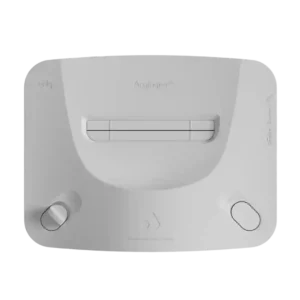
Choose it if you own N64 cartridges and want the most polished, low-lag way to play them on a 4K TV. Skip it if you want cheap emulation, broad flash-cart/controller...
Pros: display quality, performance
Cons: availability
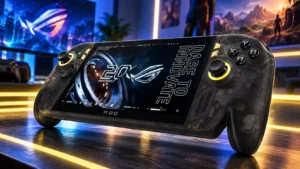
The vivid OLED screen and superb grip comfort make this a compelling premium Windows handheld. Its high price buys refinement rather than a major performance leap, and Windows still needs...
Pros: display quality, controller ergonomics
Cons: value for money, ease of use
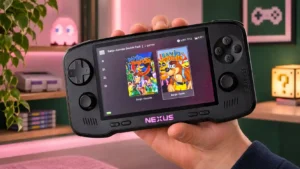
Evercade Nexus brings licensed physical classics to life with its bright screen, twin sticks, and excellent native ports. Slow booting, no suspend or TV output, and reported screen-assembly problems are...
Pros: controller features, display quality
Cons: TV output connectivity, Suspend and resume
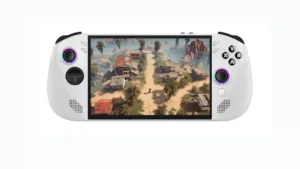
Choose the SteamOS version for a comfortable, console-like handheld with a sharp 120Hz screen and strong performance. Skip it if you prioritize long battery life, quiet fans, or effortless access...
Pros: display quality, user interface
Cons: controller features, battery life