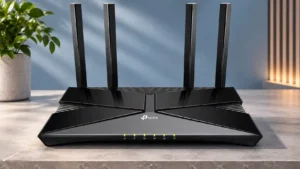
Compare TP-Link Archer AX55 vs TP-Link Archer AX10

TP-Link Archer AX55

TP-Link Archer AX55

Overall score 4.0 / 5

Based on 20 scored reviews

vs
TP-Link Archer AX10

TP-Link Archer AX10

Overall score 3.7 / 5

Based on 15 scored reviews

How we score

Scorata scores summarize analyzed review evidence on a 1–5 scale; they are not laboratory measurements or a simple average of customer star ratings. Feature scores summarize the reviews covering that feature. The overall score averages feature scores within each review, then combines review averages. When both expert and customer evidence are available, those two groups receive equal weight. Products can have different review coverage, so small score gaps do not establish a winner.

Recommendations prioritize important features for the category, with a score of at least 3.5, a gap of at least 0.25 points and at least two supporting reviews per product. Features with widely varying scores or broad connectivity contexts are excluded from recommendations. These safeguards do not establish statistical significance.

Quick verdict

What each product is best for

The review evidence points to a tradeoff: USB storage sharing and USB port support versus ease of use and firmware update process. Choose according to which strengths matter more to you; the overall score alone does not settle that choice.

Choose TP-Link Archer AX55 for USB storage sharing and USB port support.

Choose TP-Link Archer AX10 for ease of use and firmware update process.

Why these recommendations?

TP-Link Archer AX55

Where It Has the Edge

  • USB storage sharing is 4.5 vs 2.1. USB file sharing is surprisingly capable for an affordable router, though it is not a dedicated NAS replacement.
  • USB port support is 4.4 vs 2.2. USB 3.0 adds useful storage and media-sharing options uncommon on some similarly priced routers.
  • threat protection is 4.3 vs 2.3. HomeShield offers useful malware and network threat defenses, with the full toolset dependent on the plan.

TP-Link Archer AX10

Where It Has the Edge

  • ease of use is 4.9 vs 4.5. The straightforward interfaces and simple setup make everyday management approachable.
  • firmware update process is 4.0 vs 3.0. Firmware updates can be applied during setup or through the management interfaces without much difficulty.
  • size and footprint is 4.8 vs 3.9. The slim, compact case fits easily into tight household spaces.
TP-Link Archer AX55 4.0 overall score
TP-Link Archer AX10 3.7 overall score

Compare features

Scores are out of 5. Missing scores mean missing review evidence, not a missing feature.

Scored on both products

Other features

Ease of use
TP-Link Archer AX55
4.5

Straightforward setup and generally intuitive controls make the router accessible to ordinary users.

TP-Link Archer AX10
4.9

The straightforward interfaces and simple setup make everyday management approachable.

USB storage sharing
TP-Link Archer AX55
4.5

USB file sharing is surprisingly capable for an affordable router, though it is not a dedicated NAS replacement.

TP-Link Archer AX10
2.1

USB-attached storage cannot be shared through the router, limiting built-in file-server functionality.

Band steering
TP-Link Archer AX55
2.0

Smart Connect may leave capable devices on the slower 2.4 GHz band; separating the bands can help.

TP-Link Archer AX10
4.0

Smart Connect and automatic band allocation simplify choosing a suitable wireless band.

Threat protection
TP-Link Archer AX55
4.3

HomeShield offers useful malware and network threat defenses, with the full toolset dependent on the plan.

TP-Link Archer AX10
2.3

Whole-network antivirus and advanced malware protection are missing compared with better-equipped routers.

Traffic prioritization
TP-Link Archer AX55
4.6

Prioritizing important traffic helps protect simultaneous work, streaming and other demanding connections.

TP-Link Archer AX10
2.7

Traffic prioritization is available by client rather than by application, limiting flexibility.

Congestion handling
TP-Link Archer AX55
5.0

Loaded-network testing showed a major advantage over older Wi-Fi 5 equipment.

TP-Link Archer AX10
3.1

Wi-Fi 6 scheduling can reduce contention, but limited channels and no DFS make congested wireless environments challenging.

Firmware stability
TP-Link Archer AX55
4.5

The firmware is described as stable and user-friendly.

TP-Link Archer AX10
2.8

Occasional firmware hiccups and changes to MU-MIMO settings have caused frustration.

Latency consistency
TP-Link Archer AX55
4.3

Jitter is adequate for ordinary use and exceptionally low in one open-space range test.

TP-Link Archer AX10
2.5

Wireless latency fluctuates more than on some competing routers, making wired connections preferable for latency-sensitive tasks.

Packaging quality and presentation
TP-Link Archer AX55
3.3

Packaging protects the router adequately, but antenna wrapping can be frustrating to remove and the presentation is basic.

TP-Link Archer AX10
5.0

The protective cardboard frame and organized accessory compartments keep the contents secure.

Subscription requirements
TP-Link Archer AX55
3.0

Basic tools are available without payment, but advanced security and parental features can significantly increase ownership costs.

TP-Link Archer AX10
4.5

Basic website and app filtering can be used without a paid subscription.

Activity reports
TP-Link Archer AX55
3.3

Detailed activity reports are valuable for parents, although access to advanced reporting can depend on the subscription.

TP-Link Archer AX10
2.0

Advanced reporting is limited, so households seeking detailed activity insights may need more capable controls.

Quality of service
TP-Link Archer AX55
4.1

QoS is useful for prioritizing devices, but app-only configuration frustrates some users and accounts differ on paid access.

TP-Link Archer AX10
2.9

QoS offers basic device priority, but lacks finer application-level options and may require manual bandwidth entry.

Security features
TP-Link Archer AX55
3.5

Security tools are useful, but basic protection is less comprehensive than some rivals and advanced features can cost extra.

TP-Link Archer AX10
2.4

Security is a notable compromise: basic protection is available, but advanced malware safeguards and WPA3 support vary.

Antenna adjustability
TP-Link Archer AX55
4.5

Adjustable antennas offer useful flexibility for directing coverage toward the rooms where Wi-Fi is needed.

TP-Link Archer AX10
3.5

The antennas can be positioned and hold their angle, but cannot be replaced with stronger ones.

Channel selection
TP-Link Archer AX55
3.5

Channel recommendations are useful, but selecting or forcing a desired wide channel may be difficult.

TP-Link Archer AX10
2.5

The available 5 GHz channels are restricted, limiting options for avoiding interference and optimizing performance.

Device prioritization
TP-Link Archer AX55
4.6

Device priority settings help protect work traffic and other important connections.

TP-Link Archer AX10
3.6

Individual devices can be prioritized, but application-specific controls are limited or absent.

Firmware update process
TP-Link Archer AX55
3.0

Firmware updates need to match the exact regional hardware revision, making version checks important.

TP-Link Archer AX10
4.0

Firmware updates can be applied during setup or through the management interfaces without much difficulty.

Mesh coverage
TP-Link Archer AX55
5.0

Adding a compatible extender can dramatically improve speeds in a formerly weak bedroom.

TP-Link Archer AX10
4.0

Compatible mesh extenders offer a way to improve coverage when a single router is insufficient.

Printer sharing
TP-Link Archer AX55
1.0

USB printer control is unavailable, a frustrating limitation for buyers hoping to share a printer.

TP-Link Archer AX10
2.0

A USB printer cannot be attached directly for network sharing.

Long-range speed
TP-Link Archer AX55
3.5

Speeds fall with distance, sometimes sharply in far bedrooms; other tests found usable throughput even at substantial distances.

TP-Link Archer AX10
2.6

Long-distance results vary substantially: some tests retained respectable throughput, while others found distant-room performance very poor.

Wall penetration
TP-Link Archer AX55
4.1

Through-wall performance is often quite good, but thick walls and longer paths can significantly reduce throughput.

TP-Link Archer AX10
3.3

A single wall can still allow good 5 GHz speeds, but dense materials and additional walls limit reach.

Floor-to-floor coverage
TP-Link Archer AX55
3.7

Some homes maintain strong speeds across floors, while others experience pronounced downstairs slowdowns.

TP-Link Archer AX10
4.5

One apartment installation maintained a usable signal even two stories below the router.

Settings organization
TP-Link Archer AX55
4.2

Settings are generally organized logically, although some mobile options are buried in deeper menus.

TP-Link Archer AX10
5.0

Basic and advanced options are clearly organized, so common settings are easy to find.

Latency
TP-Link Archer AX55
4.4

Responsiveness is generally good for calls and gaming, with some tests finding exceptionally low ping.

TP-Link Archer AX10
3.6

Latency is adequate for ordinary browsing and gaming in many setups, but demanding concurrent wireless VR can become unusable.

Device capacity
TP-Link Archer AX55
4.5

Dozens of devices can connect successfully, making capacity a useful strength for ordinary households.

TP-Link Archer AX10
3.9

The router can handle a typical collection of home devices, but is not intended for exceptionally device-heavy networks.

Range
TP-Link Archer AX55
4.2

Range is impressive for an inexpensive standalone router, but distant rooms and challenging layouts can expose its limits.

TP-Link Archer AX10
3.6

Range is generally adequate for modest homes, but reports vary from good coverage to very poor long-distance reception.

Expandability
TP-Link Archer AX55
4.3

Adding compatible access points allows the network to grow without replacing the main router.

TP-Link Archer AX10
3.7

Compatible extenders can expand coverage, but firmware availability, proprietary mesh support and missing repeater mode limit flexibility.

Heat management
TP-Link Archer AX55
4.8

Ventilation and heatsinks generally keep the router cool even under sustained traffic, though some users report warmth at peak usage.

TP-Link Archer AX10
4.3

Ventilation is reasonably generous, and one comparison found the AX10 ran cooler than its pricier sibling.

Power consumption
TP-Link Archer AX55
5.0

Measured power consumption is low, making continuous operation inexpensive in the cited test.

TP-Link Archer AX10
4.5

Low power draw makes the router practical for always-on home networking.

Power efficiency
TP-Link Archer AX55
5.0

Low measured power draw helps keep running costs modest.

TP-Link Archer AX10
4.5

Low energy consumption is useful for a router that stays on continuously.

Whole-home coverage
TP-Link Archer AX55
4.2

A single unit can cover many typical homes, although very large houses may retain dead spots.

TP-Link Archer AX10
3.8

Central placement can cover a modest house effectively; larger layouts and adjacent rooms may require an extender.

Usage schedules
TP-Link Archer AX55
4.0

Scheduling and time limits are useful, but some expanded scheduling options sit behind paid plans.

TP-Link Archer AX10
3.6

Scheduling is useful for basic access restrictions, though the depth of daily time limits differs across accounts.

Outdoor coverage
TP-Link Archer AX55
4.2

Outdoor reach can be surprisingly good, although garden speeds may drop and results depend on obstacles.

TP-Link Archer AX10
4.5

One apartment user maintained connectivity outdoors on the street two floors below the router.

Network stability
TP-Link Archer AX55
4.6

Stable performance over weeks of use and demanding traffic is a recurring strength.

TP-Link Archer AX10
4.3

The router passed a three-day stress test without problems, and ordinary household connections are often stable.

LAN port speed
TP-Link Archer AX55
5.0

Gigabit wired connections achieved excellent speeds in testing, close to the maximum broadband speed.

TP-Link Archer AX10
4.7

Gigabit Ethernet performs well and is suitable for broadband connections within its speed ceiling.

Beamforming effectiveness
TP-Link Archer AX55
4.5

Beamforming and external antennas are credited with reaching areas that older equipment missed.

TP-Link Archer AX10
4.3

Beamforming directs signal toward active devices and helps improve usable coverage.

Link aggregation
TP-Link Archer AX55
2.3

Users cannot aggregate Ethernet ports for higher link speeds.

TP-Link Archer AX10
2.5

Link aggregation is missing, a compromise for users who need higher wired bandwidth.

Mid-range speed
TP-Link Archer AX55
3.8

Mid-distance results vary considerably: some tests found excellent 35-foot performance, while others found a pronounced slowdown farther away.

TP-Link Archer AX10
4.0

Throughput remains useful in nearby rooms or at around 30 feet, although it falls below same-room speeds.

Ethernet port count
TP-Link Archer AX55
4.3

Four gigabit LAN ports provide useful room for wired devices without an external switch.

TP-Link Archer AX10
4.5

Four gigabit LAN ports provide useful wired flexibility, with convenient spacing.

Close-range speed
TP-Link Archer AX55
4.5

Same-room throughput can approach gigabit speeds, though close-range 2.4 GHz results are less impressive in some tests.

TP-Link Archer AX10
4.3

Short-range Wi-Fi 6 tests reached roughly 730–841 Mbps in several tests, competitive with more expensive models.

Configuration flexibility
TP-Link Archer AX55
4.1

Advanced browser options and app controls provide good configurability, though some rivals offer deeper settings and certain features are app-only.

TP-Link Archer AX10
4.3

Standard wireless, DNS and network settings are flexible and accessible, while more specialized controls remain limited.

Dead-zone elimination
TP-Link Archer AX55
4.2

The router can eliminate weak spots left by older equipment, and compatible extenders can help where a single unit falls short.

TP-Link Archer AX10
4.0

Beamforming helps reduce dead spots, although it cannot overcome every obstruction.

Network monitoring
TP-Link Archer AX55
4.4

Network maps and connected-device overviews make it easy to see what is happening on the network.

TP-Link Archer AX10
4.5

The app provides a convenient way to view network status and connected clients.

Connected-device management
TP-Link Archer AX55
4.5

Managing and blocking clients is straightforward, with useful app controls.

TP-Link Archer AX10
4.5

Connected devices can be monitored easily through Tether.

Guest network
TP-Link Archer AX55
4.3

A guest network is useful for providing internet access without sharing the main household password.

TP-Link Archer AX10
4.3

Guest access is conveniently enabled and managed separately from the main network.

ISP compatibility
TP-Link Archer AX55
4.5

The router was described as compatible with several Malaysian fiber providers; requirements depend on the actual ISP.

TP-Link Archer AX10
4.5

An IPv6 broadband connection worked well in one test.

Status light control
TP-Link Archer AX55
4.5

LED scheduling is useful for turning off distracting status lights at night.

TP-Link Archer AX10
4.5

Status LEDs can be scheduled to turn off at night.

Ownership and support

Customer support
TP-Link Archer AX55
5.0

Online tutorials, a thorough manual and live or email assistance offer useful support options.

TP-Link Archer AX10
1.0

A lengthy support interaction over missing MU-MIMO controls was especially frustrating and involved conflicting answers.

WPA3 support
TP-Link Archer AX55
4.5

WPA3 is valued for stronger password protection on compatible devices.

TP-Link Archer AX10
2.2

WPA3 availability is inconsistent across tested units and versions; verify the exact hardware revision before relying on it.

USB port support
TP-Link Archer AX55
4.4

USB 3.0 adds useful storage and media-sharing options uncommon on some similarly priced routers.

TP-Link Archer AX10
2.2

The lack of USB is a repeated drawback, especially for attached printers, drives or media servers.

160 MHz support
TP-Link Archer AX55
4.3

160 MHz channels are a useful speed advantage when compatible clients and available channels allow them.

TP-Link Archer AX10
2.6

There is no 160 MHz mode, which limits peak wireless speeds but matters less for ordinary broadband plans.

Channel width support
TP-Link Archer AX55
3.5

Wider channels can raise local speeds substantially, but client support and channel availability affect results.

TP-Link Archer AX10
2.5

Limited channel width reduces peak throughput potential, although gigabit Ethernet already imposes a ceiling.

VPN server support
TP-Link Archer AX55
4.0

VPN server support is useful, although a dedicated travel rival offers more flexibility.

TP-Link Archer AX10
5.0

The built-in VPN server is a welcome extra on a budget router.

Upgrade value
TP-Link Archer AX55
4.7

Upgrading from older equipment can improve stability, cooling and performance under simultaneous traffic.

TP-Link Archer AX10
3.8

The AX10 offers good upgrade value for buyers who want faster Wi-Fi, although the benefit depends on existing equipment and plan speed.

Connection reliability
TP-Link Archer AX55
4.7

Connections generally stay reliable across simultaneous streams and ordinary household devices.

TP-Link Archer AX10
4.2

Several experiences point to dependable everyday connections, although some devices may need to be closer to connect initially.

Wall-mounting support
TP-Link Archer AX55
4.3

Built-in mounting slots make wall placement convenient.

TP-Link Archer AX10
4.8

Screw slots make wall or ceiling mounting convenient on the units that were evaluated.

Multi-gig Ethernet support
TP-Link Archer AX55
2.1

The absence of multi-gigabit Ethernet is a clear limitation for faster internet and local wired networking.

TP-Link Archer AX10
2.5

Multi-gigabit Ethernet is absent, preventing the router from fully exploiting faster-than-gigabit connections.

Value for money
TP-Link Archer AX55
4.5

Strong everyday speed, useful controls and inexpensive hardware make this a compelling value, provided premium subscriptions or higher-speed ports are unnecessary.

TP-Link Archer AX10
4.8

Affordability is a major strength, with solid everyday performance for considerably less than many better-equipped routers.

Installation process
TP-Link Archer AX55
4.7

Installation typically takes only minutes, with guided setup keeping the process manageable.

TP-Link Archer AX10
4.9

Installation is generally quick and uncomplicated.

Setup ease
TP-Link Archer AX55
4.7

Setup is consistently praised for being quick and approachable, even when small connection or button mishaps occur.

TP-Link Archer AX10
4.7

Setup is consistently straightforward, whether performed through the Tether app or a browser.

Performance

Content filtering
TP-Link Archer AX55
4.6

Content filtering offers flexible website categories and customizable blocking rules.

TP-Link Archer AX10
2.9

Website and keyword blocking provide elementary filtering; sophisticated age-based categories are not consistently available.

2.4 GHz performance
TP-Link Archer AX55
4.0

The 2.4 GHz band excelled in one comparison, though another found it could use more speed.

TP-Link Archer AX10
2.6

The 2.4 GHz band is a recurring weak point, with mediocre throughput compared with faster alternatives.

Upload performance
TP-Link Archer AX55
4.3

Local uploads are fast, with results depending on the client and internet plan.

TP-Link Archer AX10
5.0

A wired test delivered the full 300 Mbps upload speed of the broadband connection.

Performance under load
TP-Link Archer AX55
4.7

Concurrent streaming and large transfers generally run smoothly even under substantial network load.

TP-Link Archer AX10
4.2

Ordinary concurrent streaming and gaming can run smoothly, but heavier simultaneous demands such as dual wireless VR are more challenging.

Multi-device performance
TP-Link Archer AX55
4.7

The router handles numerous connected devices and simultaneous streaming or work tasks well for its class.

TP-Link Archer AX10
4.2

Multiple everyday clients usually work well, although two simultaneous VR headsets caused severe problems in one account.

Download performance
TP-Link Archer AX55
4.5

Downloads remain strong across typical rooms, and some installations can make full use of their broadband connection.

TP-Link Archer AX10
4.0

The wired connection delivered the full 600 Mbps download speed in one test, but premium routers offer more wireless read throughput.

5 GHz performance
TP-Link Archer AX55
4.1

The 5 GHz band generally delivers fast, dependable throughput, particularly when clients connect directly to it.

TP-Link Archer AX10
4.4

The 5 GHz band is a standout, achieving strong near-router speeds and often competing with pricier models.

Advertised speed accuracy
TP-Link Archer AX55
2.7

The AX3000 figure is an aggregate theoretical radio rating, not a promised single-device internet speed.

TP-Link Archer AX10
3.0

The AX1500 label describes combined theoretical bandwidth rather than guaranteed device or internet speed; real-world results can be substantially lower.

Wireless performance
TP-Link Archer AX55
4.5

Wireless performance is solid for everyday home networking and competitive at this price, although premium models can be faster.

TP-Link Archer AX10
4.3

Good 5 GHz throughput makes this a capable budget wireless router, although the slower 2.4 GHz band and distance-related drop-offs limit its versatility.

Wired device performance
TP-Link Archer AX55
5.0

Wired testing showed speeds close to the full gigabit internet plan.

TP-Link Archer AX10
4.9

Wired connections are a strength, delivering full plan speeds and dependable Ethernet performance.

OFDMA performance
TP-Link Archer AX55
3.8

OFDMA improves concurrent traffic handling, although access-point defaults may require adjustment.

TP-Link Archer AX10
3.8

OFDMA is praised for managing simultaneous connections, though its benefit on this budget hardware may be modest.

Controls and connectivity

Bandwidth controls
TP-Link Archer AX55
1.5

The lack of separate bandwidth controls disappoints users who want more than device prioritization.

TP-Link Archer AX10
3.0

Basic bandwidth allocation is useful, but manual configuration and limited granularity make it less flexible.

Parental controls
TP-Link Archer AX55
4.0

Basic parental controls are useful and easy to navigate, while advanced profiles, limits and reports may require payment.

TP-Link Archer AX10
2.9

Basic profiles, schedules and website blocking are useful, but advanced parental controls are limited.

Web interface quality
TP-Link Archer AX55
4.1

The browser interface offers extensive adjustments and is easy to navigate, but some HomeShield functions require the app.

TP-Link Archer AX10
4.8

The web interface is clear, intuitive and rich in standard network controls.

App setup quality
TP-Link Archer AX55
4.9

Tether makes initial discovery and configuration particularly straightforward.

TP-Link Archer AX10
4.5

Tether simplifies setup, although reconnecting after changing network credentials can be briefly awkward.

Access controls
TP-Link Archer AX55
4.3

Blocking unwanted or restricted clients is straightforward.

TP-Link Archer AX10
4.0

Basic traffic and access restrictions can be configured without unnecessary complexity.

Wi-Fi 6 support
TP-Link Archer AX55
4.5

Wi-Fi 6 delivers useful speeds and better handling of concurrent devices at a modest price.

TP-Link Archer AX10
4.3

Wi-Fi 6 is an affordable upgrade with strong 5 GHz speeds, although compatible clients are needed and some optional features are missing.

Wi-Fi speed
TP-Link Archer AX55
4.4

Fast local transfers and strong nearby Wi-Fi are recurring strengths, especially considering the router’s low price.

TP-Link Archer AX10
4.3

Several tests produced impressive speeds near the router, with much more variable results farther away.

Mobile app quality
TP-Link Archer AX55
4.6

Tether is widely liked for its clean, useful interface, though some settings require deeper navigation.

TP-Link Archer AX10
4.4

Tether makes everyday monitoring and configuration easy, but the web interface offers more advanced settings.

Web interface setup
TP-Link Archer AX55
4.3

Browser setup offers a useful, guided alternative to installing the mobile app.

TP-Link Archer AX10
4.3

The familiar browser setup process is intuitive and allows more detailed configuration.

Comfort and build

Build quality
TP-Link Archer AX55
4.5

The chassis feels sturdy, with good internal heatspreader construction and little flex.

TP-Link Archer AX10
3.4

Build quality is serviceable for the price, but glossy plastic and budget construction divide opinions.

Size and footprint
TP-Link Archer AX55
3.9

The compact chassis is easy to place at home, though considerably bulkier than a dedicated travel router.

TP-Link Archer AX10
4.8

The slim, compact case fits easily into tight household spaces.

Design and appearance
TP-Link Archer AX55
4.0

The black design is compact and functional; some like its finish, while others find it visually uninspiring.

TP-Link Archer AX10
3.7

The angular design is generally unobtrusive and appealing, although glossy plastic can be distracting and look inexpensive.

Evidence available for one product

Ownership and support

2.5 GbE support
TP-Link Archer AX55
2.1

The standard AX55 lacks 2.5 GbE, limiting its usefulness with faster wired networks and internet plans.

TP-Link Archer AX10No score yet
Dual-band support
TP-Link Archer AX55No score yet
TP-Link Archer AX10
4.0

Dual-band operation accommodates older devices alongside faster modern clients.

Dynamic DNS support
TP-Link Archer AX55No score yet
TP-Link Archer AX10
4.5

Integrated dynamic DNS conveniently complements remote VPN access.

Hardware reliability
TP-Link Archer AX55No score yet
TP-Link Archer AX10
4.0

The chassis is described as sturdy enough for typical home use.

Manufacturer customer support
TP-Link Archer AX55No score yet
TP-Link Archer AX10
1.0

Manufacturer support was inconsistent and time-consuming when a user needed help with missing MU-MIMO controls.

MIMO support
TP-Link Archer AX55
3.5

Multiple-stream technology helps manage traffic, but the two-stream 5 GHz radio offers limited headroom for higher-end clients.

TP-Link Archer AX10No score yet
Product support lifespan
TP-Link Archer AX55
3.3

Support and firmware information depend on hardware revision; verify the specific unit rather than relying on the model name alone.

TP-Link Archer AX10No score yet
Security update support
TP-Link Archer AX55No score yet
TP-Link Archer AX10
4.0

Routine firmware updates are useful for maintaining security, subject to the specific hardware revision.

Setup guidance
TP-Link Archer AX55
4.9

Step-by-step instructions and clear visuals make getting connected easy.

TP-Link Archer AX10No score yet
VPN client support
TP-Link Archer AX55
4.0

VPN client functionality is available, but the exact capabilities trail more specialized alternatives.

TP-Link Archer AX10No score yet
Warranty
TP-Link Archer AX55
4.8

The two-year warranty compares favorably with some competitors’ shorter coverage.

TP-Link Archer AX10No score yet
WireGuard support
TP-Link Archer AX55
3.0

WireGuard availability depends on hardware revision, so confirm the exact version if this is a requirement.

TP-Link Archer AX10No score yet

Performance

6 GHz performance
TP-Link Archer AX55
2.0

The lack of a 6 GHz band limits the appeal for owners of newer devices seeking extra throughput.

TP-Link Archer AX10No score yet
Mesh performance
TP-Link Archer AX55
4.3

Compatible mesh devices can form a unified network, making expansion practical when a single router is insufficient.

TP-Link Archer AX10No score yet
MU-MIMO performance
TP-Link Archer AX55No score yet
TP-Link Archer AX10
2.8

MU-MIMO availability and effectiveness are inconsistent across accounts; some praise its efficiency while others report missing controls or poor concurrent VR performance.

Operating noise
TP-Link Archer AX55
4.5

Quiet operation makes it unobtrusive in ordinary living spaces.

TP-Link Archer AX10No score yet
Roaming performance
TP-Link Archer AX55
4.5

Compatible mesh devices can share a network name and allow smooth movement between coverage areas.

TP-Link Archer AX10No score yet

Other features

Airtime efficiency
TP-Link Archer AX55No score yet
TP-Link Archer AX10
4.5

Concurrent Wi-Fi 6 connections benefit from more efficient scheduling and reduced contention.

Alexa integration
TP-Link Archer AX55No score yet
TP-Link Archer AX10
4.5

Alexa integration is described as convenient for voice-controlled routines and device groups.

Automatic firmware updates
TP-Link Archer AX55No score yet
TP-Link Archer AX10
4.0

Automatic updating provides a convenient way to keep firmware current where supported.

Cross-brand mesh compatibility
TP-Link Archer AX55No score yet
TP-Link Archer AX10
2.0

OneMesh favors compatible TP-Link extenders, making cross-brand mesh expansion less flexible.

Device compatibility
TP-Link Archer AX55No score yet
TP-Link Archer AX10
3.7

Older Wi-Fi clients can still connect and perform well, while newer features require compatible devices.

Device identification
TP-Link Archer AX55
4.5

The device-identification tool helps users spot unwanted connections.

TP-Link Archer AX10No score yet
Device security
TP-Link Archer AX55
4.3

HomeShield provides useful device protection, especially against malicious sites, although full protection may require a paid plan.

TP-Link Archer AX10No score yet
Device security scanning
TP-Link Archer AX55
4.5

Routine security scans provide helpful visibility into potential network issues.

TP-Link Archer AX10No score yet
Fingerprint and smudge resistance
TP-Link Archer AX55No score yet
TP-Link Archer AX10
2.3

Glossy plastic readily collects fingerprints, though this matters less on a router that is rarely handled.

Firewall quality
TP-Link Archer AX55No score yet
TP-Link Archer AX10
2.0

The firewall is basic and lacks detailed configuration.

Firmware updateability
TP-Link Archer AX55No score yet
TP-Link Archer AX10
2.2

Firmware changes and delays have affected advertised features, particularly OneMesh and MU-MIMO controls.

Future upgrade readiness
TP-Link Archer AX55No score yet
TP-Link Archer AX10
4.5

Wi-Fi 6 is a useful step up from older hardware, though the router lacks some newer premium capabilities.

Included accessories
TP-Link Archer AX55
4.0

The included cable, manual and power adapter provide the essentials for installation.

TP-Link Archer AX10No score yet
Instruction readability
TP-Link Archer AX55
4.3

The included guide is straightforward and works well alongside the app’s visual instructions.

TP-Link Archer AX10No score yet
IoT device compatibility
TP-Link Archer AX55No score yet
TP-Link Archer AX10
4.5

Typical smart-home devices and hubs are handled reliably, although dense setups may need stronger hardware.

Mac integration
TP-Link Archer AX55
4.5

Time Machine compatibility makes network backups convenient for Mac users.

TP-Link Archer AX10No score yet
Malicious-site blocking
TP-Link Archer AX55
4.5

Blocking malicious sites is a useful part of the upgraded HomeShield service.

TP-Link Archer AX10No score yet
Mesh scalability
TP-Link Archer AX55
3.9

Expansion is affordable and practical, though compatibility varies by hardware revision and some rivals offer stronger scalability.

TP-Link Archer AX10No score yet
Model naming clarity
TP-Link Archer AX55
2.2

The same model name covers multiple hardware revisions with different features and support details, making exact version identification important.

TP-Link Archer AX10No score yet
Network segmentation
TP-Link Archer AX55No score yet
TP-Link Archer AX10
2.5

Guest isolation is useful, but advanced VLAN-based segmentation is limited.

Overall satisfaction
TP-Link Archer AX55No score yet
TP-Link Archer AX10
4.3

Overall, this is a well-liked budget Wi-Fi 6 router for modest homes, with clear compromises in reach and advanced features.

Per-device speed limits
TP-Link Archer AX55
2.0

QoS does not replace dedicated per-device bandwidth limits for users who need fine-grained speed control.

TP-Link Archer AX10No score yet
Reboot frequency
TP-Link Archer AX55
3.0

An embedded customer account describes an unexpected restart, although the main reviewer did not encounter it.

TP-Link Archer AX10No score yet
Remote management
TP-Link Archer AX55
4.5

Remote app access lets owners manage settings even when away from their home network.

TP-Link Archer AX10No score yet
Scratch resistance
TP-Link Archer AX55No score yet
TP-Link Archer AX10
2.0

The glossy plastic surface scratches relatively easily.

Seamless handoff
TP-Link Archer AX55
4.5

Mesh expansion is attractive for maintaining connectivity while moving between the router and extender.

TP-Link Archer AX10No score yet
Status light usefulness
TP-Link Archer AX55No score yet
TP-Link Archer AX10
2.8

The front LEDs communicate status, but cryptic icons, inexpensive styling and a shared Ethernet indicator reduce their usefulness.

Troubleshooting assistance
TP-Link Archer AX55
4.5

The troubleshooting guide and in-app help can resolve common setup difficulties.

TP-Link Archer AX10No score yet
WAN port speed
TP-Link Archer AX55
2.9

The gigabit WAN port is adequate for typical broadband but becomes a bottleneck for faster plans.

TP-Link Archer AX10No score yet
Wireless repeater mode
TP-Link Archer AX55No score yet
TP-Link Archer AX10
2.0

The router lacks wireless repeater mode, limiting the ability to reuse it as a wireless range extender.

Controls and connectivity

DNS customization
TP-Link Archer AX55No score yet
TP-Link Archer AX10
4.5

DNS settings can be customized with just a few clicks in the web interface.

Interface responsiveness
TP-Link Archer AX55
4.5

The interface is described as responsive and free of distracting bugs.

TP-Link Archer AX10No score yet
Physical controls
TP-Link Archer AX55
3.9

The power button and clear labels are useful, though the WPS and reset buttons can be confused during setup.

TP-Link Archer AX10No score yet
Smart home compatibility
TP-Link Archer AX55No score yet
TP-Link Archer AX10
4.5

Ordinary smart-home hubs can connect reliably without placing excessive strain on the network.

Software and driver support
TP-Link Archer AX55No score yet
TP-Link Archer AX10
2.0

Lack of OpenWRT and DD-WRT compatibility limits more advanced software-based network management.

Software update frequency
TP-Link Archer AX55No score yet
TP-Link Archer AX10
2.0

A long interval without firmware updates raised concern about the router's update cadence.

Voice assistant compatibility
TP-Link Archer AX55No score yet
TP-Link Archer AX10
4.5

Alexa voice integration provides convenient control for supported devices and routines.

Wi-Fi 6E support
TP-Link Archer AX55
2.0

Newer Wi-Fi 6E devices cannot use their additional band with this router.

TP-Link Archer AX10No score yet
Wi-Fi 7 support
TP-Link Archer AX55
2.3

Wi-Fi 7 clients miss newer capabilities, although ordinary Wi-Fi 6 networking remains useful.

TP-Link Archer AX10No score yet

Other Top Routers to Consider

#1 D-Link Aquila Pro AI R95
4.8

Choose the R95 for a busy home that needs fast Wi-Fi 7, strong range, multi-gig ports, and low-lag gaming. Skip it for a small, lightly connected space or if advanced...

Pros: Wi-Fi 7 support, Wi-Fi speed

#2 GL.iNet GL-BE3600 Slate 7
4.5

Best for frequent travel, fast VPNs, dual 2.5GbE and resilient multi-WAN. Skip it if you need full 6GHz/320MHz Wi‑Fi 7, mesh, or desktop-class USB storage and long-range indoor coverage.

Pros: VPN client support, value for money

Cons: 6 GHz performance, USB storage sharing

#3 GL.iNet Flint 2 (GL-MT6000)
4.4

Exceptional VPN speeds, strong Wi-Fi 6 coverage and extensive OpenWrt controls make the Flint 2 a compelling value. Its advanced setup, missing 6GHz band and firmware-specific caveats matter if you...

Pros: setup ease, configuration flexibility

Cons: Wi-Fi 7 support, USB storage sharing

#4 MSI Roamii BE Pro
4.3

Best for affordable tri-band Wi-Fi 7, abundant 2.5GbE ports, and deep free controls. Skip it if you need consistently strong garden coverage, foolproof app setup, or proven top-tier speeds across...

Pros: value for money, design and appearance

Cons: node pairing ease, outdoor coverage