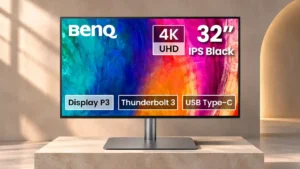
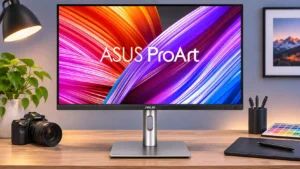
Compare ASUS ProArt Display PA279CRV vs BenQ PD3225U

ASUS ProArt Display PA279CRV

ASUS ProArt Display PA279CRV

Overall score 4.3 / 5

Based on 18 scored reviews

vs
BenQ PD3225U

BenQ PD3225U

Overall score 4.4 / 5

Based on 24 scored reviews

How we score

Scorata scores summarize analyzed review evidence on a 1–5 scale; they are not laboratory measurements or a simple average of customer star ratings. Feature scores summarize the reviews covering that feature. The overall score averages feature scores within each review, then combines review averages. When both expert and customer evidence are available, those two groups receive equal weight. Products can have different review coverage, so small score gaps do not establish a winner.

Recommendations prioritize important features for the category, with a score of at least 3.5, a gap of at least 0.25 points and at least two supporting reviews per product. Features with widely varying scores or broad connectivity contexts are excluded from recommendations. These safeguards do not establish statistical significance.

Quick verdict

What each product is best for

The review evidence points to a tradeoff: Resolution and viewing angles versus KVM switch performance and black levels. Choose according to which strengths matter more to you; the overall score alone does not settle that choice.

Choose ASUS ProArt Display PA279CRV for Resolution and viewing angles.

Choose BenQ PD3225U for KVM switch performance and black levels.

Why these recommendations?

ASUS ProArt Display PA279CRV

Where It Has the Edge

  • Resolution is 5.0 vs 4.2. The 27-inch 4K panel delivers fine detail for photography, native-resolution video editing, and desktop text. Its high density...
  • viewing angles is 5.0 vs 4.5. IPS off-axis color retention is consistently praised. It helps when the monitor is placed to one side or...
  • color gamut is 4.7 vs 4.3. P3 and Adobe RGB coverage are strong for the price, benefiting both digital and print creators. A minority...

BenQ PD3225U

Where It Has the Edge

  • KVM switch performance is 4.9 vs 2.0. The KVM switch allows two computers to share the same keyboard, mouse, and monitor connections. It is especially...
  • black levels is 4.7 vs 2.0. The IPS Black panel produces deeper blacks than conventional IPS, making dark scenes and editing previews more satisfying....
  • contrast is 4.5 vs 2.6. IPS Black generally provides richer depth and much stronger contrast than basic IPS monitors. Results vary by settings...
ASUS ProArt Display PA279CRV 4.3 overall score
BenQ PD3225U 4.4 overall score

Compare features

Scores are out of 5. Missing scores mean missing review evidence, not a missing feature.

Scored on both products

Performance

KVM switch performance
ASUS ProArt Display PA279CRV
2.0

There is no integrated KVM for sharing peripherals between computers. Models with a KVM are more convenient when swapping between two host systems.

BenQ PD3225U
4.9

The KVM switch allows two computers to share the same keyboard, mouse, and monitor connections. It is especially helpful in hybrid Mac and PC setups.

Contrast
ASUS ProArt Display PA279CRV
2.6

Conventional IPS contrast is a repeating weakness, with blacks that can look gray or washed out. This matters more in a dark room or during HDR viewing than routine SDR editing.

BenQ PD3225U
4.5

IPS Black generally provides richer depth and much stronger contrast than basic IPS monitors. Results vary by settings and test conditions, and it is still no match for true HDR blacks.

Brightness
ASUS ProArt Display PA279CRV
3.5

SDR brightness is generally adequate in ordinary workspaces, but some tests place it behind competing monitors. Those in very bright offices may want more headroom.

BenQ PD3225U
4.3

Most users find the display bright enough for office and editing work, and it is noticeably brighter than the earlier PD3220U. Measurements and impressions are mixed, especially with uniformity compensation enabled or against brighter rivals.

Overall picture quality
ASUS ProArt Display PA279CRV
4.6

4K sharpness and rich, accurate SDR color are the main visual strengths. Weak contrast, subdued HDR, and occasional matte-coating haze are the offsets.

BenQ PD3225U
5.0

SDR images look colorful, sharp, and richly contrasted, making the screen enjoyable for design, office work, and media. HDR imagery is less impressive.

HDR performance
ASUS ProArt Display PA279CRV
1.9

HDR signal support does not translate into convincing HDR contrast or highlights. Limited brightness, shallow black levels, and weak or absent effective dimming make HDR the clearest display weakness.

BenQ PD3225U
2.0

HDR10 support exists, but the limited luminance and absence of advanced local dimming mean highlights and dark scenes lack true HDR impact. SDR is much more convincing.

On-screen display usability
ASUS ProArt Display PA279CRV
4.7

Front-mounted buttons and a directional control make presets and settings easy to find. A few users find some buttons redundant or confusingly unlabeled.

BenQ PD3225U
4.8

Menu access is straightforward through the rear joystick, wired puck, or desktop software. The large number of settings feels more manageable with those shortcuts.

Color accuracy
ASUS ProArt Display PA279CRV
4.8

Out-of-box sRGB accuracy and results after calibration are consistently very good. Some testers flag color-space preset or white-point differences that matter to exacting professionals.

BenQ PD3225U
4.8

Factory calibration is a major strength, with precise, convincing colors for design, photography, and video work. A few comparisons find Apple displays slightly more vibrant or differently tuned.

Picture-in-picture and picture-by-picture
ASUS ProArt Display PA279CRV
5.0

Picture-in-Picture and Picture-by-Picture add practical flexibility beyond a basic monitor. The dual-view options are treated as welcome extras.

BenQ PD3225U
5.0

Multiple sources can be displayed in split-screen or smaller inset windows, helping two-computer and video-preview setups. Controls make it practical to rearrange the inputs.

Other features

Black levels
ASUS ProArt Display PA279CRV
2.0

Blacks are relatively light and dark-scene depth is weak by modern IPS Black or OLED standards. The limitation is especially apparent in dark-room grading and HDR.

BenQ PD3225U
4.7

The IPS Black panel produces deeper blacks than conventional IPS, making dark scenes and editing previews more satisfying. OLED and some Apple displays still render darker areas more convincingly.

Portability and weight
ASUS ProArt Display PA279CRV
4.7

The lighter, thinner enclosure is easier to move than earlier ProArt designs. A missing carrying handle is a small complaint for people who rearrange their workspace often.

BenQ PD3225U
2.0

The large, heavy panel is cumbersome to move between desks. It makes more sense as a permanent workstation display.

Packaging presentation
ASUS ProArt Display PA279CRV
5.0

Molded-fiber packaging was welcomed as a neater and more environmentally thoughtful unboxing choice than foam.

BenQ PD3225U
2.7

Some unboxings are simple with plenty of protective material, while others find the folding cardboard frustrating or difficult to open.

Desk footprint
ASUS ProArt Display PA279CRV
5.0

The small stand base and thin profile preserve workspace without giving up useful ergonomics. The open desk area accommodates keyboards, phones, and peripherals.

BenQ PD3225U
3.0

The included stand is wide and some shallow desks will feel crowded. Its unusually flat base helps keep part of the space useful for small accessories.

Reflection handling
ASUS ProArt Display PA279CRV
3.0

The matte treatment keeps many reflections manageable, but strong side lighting can spread into a hazy patch and obscure contrast. Lighting position makes a major difference.

BenQ PD3225U
4.6

The matte coating helps tame overhead lights, windows, and studio reflections. It is less effective against harsh direct glare and slightly changes image clarity compared with glossy glass.

Competitive gaming suitability
ASUS ProArt Display PA279CRV
2.5

Low input lag helps, but a 60Hz refresh ceiling and only moderate response times hold it back for fast competitive play. It is not intended to replace a dedicated esports screen.

BenQ PD3225U
1.0

A 60Hz limit, absent VRR, and modest motion handling make it an unsuitable primary monitor for esports or high-refresh competitive games.

Image scaling
ASUS ProArt Display PA279CRV
3.0

One assessment praises crisp macOS fonts and flexible scaling, while others find 27-inch 4K awkward on Macs without third-party software. Windows scaling receives a more consistent endorsement.

BenQ PD3225U
4.2

Large macOS interface scaling can make text easier to read without losing apparent crispness. It also leaves less room for arranging many windows.

Screen coating clarity
ASUS ProArt Display PA279CRV
2.6

The matte surface cuts direct reflections but can introduce a subtle grain or diffuse glare into a white haze. Opinions range from barely noticeable texture to a significant loss of clarity beside a light source.

BenQ PD3225U
3.7

The matte anti-glare finish reduces reflections but can slightly soften the picture or mute vividness relative to glass. Some users prefer the practical visibility tradeoff.

Device compatibility
ASUS ProArt Display PA279CRV
4.0

Windows and Mac computers can both use the monitor, including USB-C video and charging where supported. Specialized film rates and certain platform behaviors depend on the connected system.

BenQ PD3225U
5.0

Although designed with Macs in mind, the monitor also works well with Windows systems. Its mixed-platform inputs broaden its use.

Input lag
ASUS ProArt Display PA279CRV
5.0

Very low measured display lag makes control feel responsive for its class. That cannot fully compensate for its refresh-rate ceiling in fast games.

BenQ PD3225U
4.0

Measured input responsiveness is respectable for an office monitor, and casual play does not feel excessively delayed.

Resolution
ASUS ProArt Display PA279CRV
5.0

The 27-inch 4K panel delivers fine detail for photography, native-resolution video editing, and desktop text. Its high density is one of the clearest reasons to buy.

BenQ PD3225U
4.2

The 4K resolution remains satisfyingly crisp at 32 inches and supplies ample detail for most work. It does not reach the pixel density of premium 5K monitors.

Premium feel
ASUS ProArt Display PA279CRV
5.0

The solid stand and refined slim design give the display an upscale impression despite its affordable positioning.

BenQ PD3225U
4.3

Substantial construction, a strong stand, and a refined industrial finish create a professional feel. It does not match the all-metal luxury of Apple's Studio Display.

Refresh rate
ASUS ProArt Display PA279CRV
3.0

The standard 60Hz ceiling is generally sufficient for office, photography, and traditional video editing. It is a clear limitation for high-refresh gaming and unusually fluid scrolling.

BenQ PD3225U
2.4

The fixed 60Hz refresh is adequate for work, writing, and slower games, but high-frame-rate gaming feels much less fluid. Faster 120Hz competitors show the limitation clearly.

Viewing angles
ASUS ProArt Display PA279CRV
5.0

IPS off-axis color retention is consistently praised. It helps when the monitor is placed to one side or used in portrait orientation.

BenQ PD3225U
4.5

The IPS panel holds its image reasonably well from the side. Stable viewing angles also help when the screen is rotated or shared.

Color gamut
ASUS ProArt Display PA279CRV
4.7

P3 and Adobe RGB coverage are strong for the price, benefiting both digital and print creators. A minority measured less Adobe RGB coverage than advertised, so the precise gamut remains a caveat.

BenQ PD3225U
4.3

Wide sRGB and P3 coverage is excellent for digital creation, with vivid yet controlled colors. Adobe RGB coverage is less complete, so demanding print workflows may need a different model.

Cable management
ASUS ProArt Display PA279CRV
5.0

A small base, routed stand opening, and consolidated USB-C connections simplify cable organization. The desk can stay uncluttered even with accessories connected.

BenQ PD3225U
4.7

A rear guide and cover help keep workstation wiring organized, and cable slack accommodates rotation. Some would prefer more thorough concealment.

Monitor daisy-chaining
ASUS ProArt Display PA279CRV
4.7

The DisplayPort output is a useful way to reduce cabling between screens. One reported dual-4K arrangement fell to 30Hz on the second display, so source and cable capabilities matter.

BenQ PD3225U
5.0

The downstream Thunderbolt port allows a second compatible display to be connected without running another video cable back to the laptop. Multi-screen creative setups benefit from this tidy approach.

Stand adjustability
ASUS ProArt Display PA279CRV
4.5

Height, tilt, swivel, and portrait pivot are major ergonomic strengths. A few mechanical squeaks and one inconsistent description of height adjustment temper the otherwise strong praise.

BenQ PD3225U
4.8

The stand adjusts for height, tilt, swivel, and portrait orientation with little effort. Its broad movement range is particularly useful during long desk sessions.

VESA mount compatibility
ASUS ProArt Display PA279CRV
5.0

Standard 100mm VESA mounting makes the monitor flexible for arms, wall mounts, and multi-display stands. The attachment arrangement is generally considered easy to manage.

BenQ PD3225U
4.8

Standard 100×100 VESA mounting makes arms and wall mounting practical. A sturdy arm is recommended because this large screen is relatively heavy.

Built-in speakers
ASUS ProArt Display PA279CRV
2.0

The small speakers provide basic system audio but sound thin, weak, or harsh to most listeners. External speakers or headphones are preferable for serious work.

BenQ PD3225U
2.2

The built-in speakers handle alerts, speech, and occasional clips, but sound thin or muffled for music, movies, and serious creative work. External speakers or headphones are the better choice.

USB-C power delivery
ASUS ProArt Display PA279CRV
4.9

Up to 96W laptop charging is a standout advantage over many older professional monitors. It is ample for numerous laptops but cannot meet every high-power workstation's maximum draw.

BenQ PD3225U
4.7

One high-power Thunderbolt connection can charge a MacBook while carrying video and data, reducing desk clutter. Some competing docks provide greater charging power.

USB hub functionality
ASUS ProArt Display PA279CRV
4.8

The built-in USB-A and USB-C ports make keyboard, storage, and accessory hookups convenient. Heavy simultaneous transfers can saturate the host connection.

BenQ PD3225U
5.0

The integrated USB hub conveniently handles storage, microphones, cameras, and other desk accessories. It can replace part of a separate docking station.

Overall satisfaction
ASUS ProArt Display PA279CRV
4.7

Most evaluations recommend the monitor as a well-priced professional and office display. More demanding HDR, gaming, and some Mac/text-intensive workflows expose its compromises.

BenQ PD3225U
4.8

The 32-inch 4K screen, professional color tools, and convenient Mac-oriented features create a highly enjoyable work monitor. Its high asking price and weak entertainment credentials prevent it from being a universal pick.

Stand stability
ASUS ProArt Display PA279CRV
5.0

Despite its small footprint and light construction, the stand generally holds the display firmly while it is moved or rotated. Users praise its steadiness.

BenQ PD3225U
4.9

The weighty base and rigid support generally keep the panel secure with little movement. One assessment notes slight wobble if the display is bumped.

Port selection
ASUS ProArt Display PA279CRV
4.7

USB-C, HDMI, DisplayPort in/out, and USB accessory ports make the connection suite unusually useful for the price. Lack of Ethernet and KVM keeps it short of full docking-station capability.

BenQ PD3225U
4.7

A broad assortment of Thunderbolt, HDMI, DisplayPort, USB, and audio connections makes desk setups flexible. Newer competitors can offer even more advanced ports or Ethernet.

Sharpness
ASUS ProArt Display PA279CRV
4.9

Text, photographs, and 4K timelines look crisp and detailed at normal distances. Coating texture or specific text-comfort complaints can distract some sensitive viewers.

BenQ PD3225U
4.9

4K video, detailed images, and small text look crisp across the large panel. Native 5K Apple displays are denser, but many users are satisfied with the clarity at a normal distance.

Included accessories
ASUS ProArt Display PA279CRV
5.0

The cable bundle and calibration report are welcome, helping buyers get started quickly. Some regional or loaner packages differ, so a missing cable on a loaned unit is not definitive.

BenQ PD3225U
5.0

Useful cables, the controller, and calibration documentation help the monitor feel ready for use out of the box. Not every included cable is long enough for all desks.

Screen uniformity
ASUS ProArt Display PA279CRV
4.0

Uniformity results range from very good to merely acceptable, with some testers seeing luminance hot spots or faint edge shading. The results are not consistently flawless for color-critical work.

BenQ PD3225U
4.0

The screen is generally evenly lit, although mild edge clouding appears in some dark scenes. Uniformity compensation can substantially reduce brightness and contrast.

Ownership and support

Value for money
ASUS ProArt Display PA279CRV
4.9

Wide-gamut color, 4K clarity, docking, and an adjustable stand make a compelling creator-oriented deal. Higher-priced competitors justify their cost mainly with superior contrast, refresh, and switching features.

BenQ PD3225U
3.8

The PD3225U looks attractive compared with Apple's Studio Display because of its larger screen, adjustable stand, and extensive ports. Against similarly priced Dell models and cheaper creator displays, the premium is harder to justify.

Setup ease
ASUS ProArt Display PA279CRV
5.0

The stand assembles and attaches quickly, with a straightforward click-in mechanism. Even less experienced users should find physical setup simple.

BenQ PD3225U
4.8

The stand generally clips together quickly with little or no tool use, and Macs recognize the display with minimal setup. A few unboxing difficulties relate to the packaging rather than installation.

Comfort and build

Eye comfort features
ASUS ProArt Display PA279CRV
4.2

Blue-light and flicker-reduction features receive praise for long editing sessions. One user nonetheless found white-background text and perceived micro-flicker severely uncomfortable.

BenQ PD3225U
5.0

A large, legible presentation, flicker-free operation, and low-blue-light choices make long work sessions feel easier on the eyes. Comfort is especially praised for writing in dim rooms.

Build quality
ASUS ProArt Display PA279CRV
4.3

Most sources find the slim, mostly plastic housing sturdy and convincingly finished. Several notice creaking when the panel is adjusted, preventing universal praise.

BenQ PD3225U
4.9

Sturdy components, a substantial stand, and careful assembly make the monitor feel durable. It is mostly plastic rather than Apple-style metal, but not flimsy.

Design and aesthetics
ASUS ProArt Display PA279CRV
4.8

Slim bezels, a light profile, and restrained styling make a handsome professional monitor. The deeper bottom edge and occasional plastic squeaks are small aesthetic drawbacks.

BenQ PD3225U
4.6

Slim bezels, restrained branding, and dark metallic finishes create a tidy professional look. The styling is functional rather than luxurious, and the housing is fairly chunky.

Screen size
ASUS ProArt Display PA279CRV
5.0

At 27 inches, the display balances a usable editing canvas with comfortable portrait operation and a smaller desk footprint. People accustomed to 32 inches may still prefer more physical space.

BenQ PD3225U
4.9

The generous 32-inch work area makes timelines, editing tools, and multiple windows easier to manage. It requires more physical room than a 27-inch monitor.

Controls and connectivity

Color calibration controls
ASUS ProArt Display PA279CRV
4.9

Creative presets and detailed RGB, gamma, hue, and color-space controls make fine tuning straightforward. Factory accuracy is already strong, although the deepest color work can still benefit from a separate meter.

BenQ PD3225U
5.0

Color temperature, gamma, and gamut presets offer extensive tuning for particular applications. The wide control range appeals to precision-focused creators.

Evidence available for one product

Other features

Accessory compatibility
ASUS ProArt Display PA279CRV
2.0

The inability to fit a shading hood is frustrating because the coating can spread side-window reflections into haze. VESA and USB accessory support are otherwise useful.

BenQ PD3225UNo score yet
Aspect ratio
ASUS ProArt Display PA279CRV
4.0

The conventional 16:9 canvas works naturally for Lightroom and standard video timelines. It offers a familiar workspace rather than an ultrawide view.

BenQ PD3225UNo score yet
Automatic orientation switching
ASUS ProArt Display PA279CRVNo score yet
BenQ PD3225U
5.0

Auto Pivot detects when the display is rotated and updates the image orientation without manual changes. It is especially handy for vertical creative work.

Backlight bleed control
ASUS ProArt Display PA279CRVNo score yet
BenQ PD3225U
4.0

Major backlight leakage is generally absent, though some mild edge clouding can show in dark scenes.

Calibration potential
ASUS ProArt Display PA279CRVNo score yet
BenQ PD3225U
5.0

The strong factory starting point can be refined with compatible software and a colorimeter for precise targets. Direct hardware calibration is more limited than on some dedicated reference monitors.

Console gaming compatibility
ASUS ProArt Display PA279CRV
1.0

A source specifically discourages using the monitor for PlayStation entertainment. Its basic refresh and HDR capabilities limit the experience even if it accepts a console signal.

BenQ PD3225UNo score yet
Documentation quality
ASUS ProArt Display PA279CRV
5.0

A downloadable manual and accessible setup material make assembly and features easier to understand. Calibration paperwork is also a useful reference.

BenQ PD3225UNo score yet
DualView color mode comparison
ASUS ProArt Display PA279CRVNo score yet
BenQ PD3225U
4.8

DualView can show two color spaces or profiles side by side on the same screen. It is a convenient way to compare creative output without repeatedly toggling settings.

Environmental sustainability
ASUS ProArt Display PA279CRVNo score yet
BenQ PD3225U
4.5

Recycled housing materials and recyclable packaging add an appealing environmental dimension. The practical work experience remains the main attraction.

Ethernet network sharing
ASUS ProArt Display PA279CRV
2.0

The display does not include a wired LAN port. People seeking a true one-plug docking station with network access will need another adapter or dock.

BenQ PD3225UNo score yet
Ethernet port availability
ASUS ProArt Display PA279CRVNo score yet
BenQ PD3225U
2.0

There is no built-in Ethernet socket, which is inconvenient for production setups that depend on networked storage. An additional hub can fill the gap.

Ghosting control
ASUS ProArt Display PA279CRV
4.0

Trace Free overdrive can reduce visible ghosting when appropriately adjusted. Motion remains acceptable rather than exceptional.

BenQ PD3225UNo score yet
Gradient smoothness
ASUS ProArt Display PA279CRV
4.7

Gray ramps and photo gradations are generally described as smooth, with minimal obvious banding. Dithering is effective even though the panel's advertised bit-depth terminology raised questions.

BenQ PD3225UNo score yet
HDR highlight detail
ASUS ProArt Display PA279CRVNo score yet
BenQ PD3225U
2.0

The modest HDR peak brightness prevents bright details from standing out convincingly. High dynamic range looks much closer to ordinary SDR.

Heat management
ASUS ProArt Display PA279CRV
5.0

A tested unit stayed cool enough that no warmth was detected at its rear vents. The understated ventilation suits a neat office desk.

BenQ PD3225UNo score yet
HotKey Puck controller
ASUS ProArt Display PA279CRVNo score yet
BenQ PD3225U
4.6

The wired HotKey Puck puts color profiles, brightness, volume, and input switching at your fingertips. It is widely appreciated, although some owners barely use it and the cable can get in the way.

Included color profiles
ASUS ProArt Display PA279CRVNo score yet
BenQ PD3225U
5.0

Dedicated sRGB, P3, Rec.709, M-Book, and application modes simplify color workflow changes. Quick access controls make switching practical.

Included Thunderbolt cable length
ASUS ProArt Display PA279CRVNo score yet
BenQ PD3225U
2.0

The bundled Thunderbolt cable is convenient but short enough to be troublesome with a Mac positioned under or far from the desk. A longer replacement may be necessary.

Mac integration
ASUS ProArt Display PA279CRVNo score yet
BenQ PD3225U
4.9

Color-matching modes, software controls, quick recognition, and keyboard shortcuts make this monitor feel at home with macOS. It offers much of a Mac-native workflow without Apple's 5K density or built-in camera.

Model naming clarity
ASUS ProArt Display PA279CRVNo score yet
BenQ PD3225U
1.0

The model name is widely considered awkward or hard to remember despite an appealing display behind it.

Motion clarity
ASUS ProArt Display PA279CRVNo score yet
BenQ PD3225U
2.3

Games show more movement blur than on high-refresh competitors, although casual play remains tolerable. Fast motion is not a selling point.

Overdrive tuning
ASUS ProArt Display PA279CRV
4.0

The Trace Free setting can be tuned for a good balance of ghosting and overshoot. A moderate setting was preferred in testing over aggressive adjustment.

BenQ PD3225UNo score yet
Panel type
ASUS ProArt Display PA279CRVNo score yet
BenQ PD3225U
5.0

IPS Black adds visibly stronger dark tones while keeping IPS-style color fidelity and viewing flexibility. It is still limited by IPS-level black depth in demanding HDR scenes.

Phone stand utility
ASUS ProArt Display PA279CRV
4.0

The compact stand's base can hold small desk objects such as a phone without consuming extra workspace. It is a minor but appreciated convenience.

BenQ PD3225UNo score yet
Photo editing
ASUS ProArt Display PA279CRVNo score yet
BenQ PD3225U
5.0

Fine detail, controlled color, and factory calibration support detailed photo adjustments. Specialized Adobe RGB print production is the notable exception.

Pixel density
ASUS ProArt Display PA279CRVNo score yet
BenQ PD3225U
4.5

At roughly 140 pixels per inch, the 32-inch 4K panel looks sufficiently crisp for detailed illustrations and reading. Higher-density Apple displays can produce finer text.

Power efficiency
ASUS ProArt Display PA279CRV
4.5

Measured consumption is appropriate for a 27-inch 4K professional display, with especially favorable efficiency at moderate office brightness. The deepest standby-saving mode also disables the USB hub.

BenQ PD3225UNo score yet
Productivity versatility
ASUS ProArt Display PA279CRV
5.0

Sharp text, color modes, docking, and ergonomic adjustment suit a range of desk tasks. Video-intensive work is its strongest niche, while dark-room and high-refresh needs are less well served.

BenQ PD3225UNo score yet
QuickFit layout guides
ASUS ProArt Display PA279CRV
4.0

On-screen rulers, markers, and safe-area guides can assist print and layout work. Some designers may find their editing software's equivalent tools easier.

BenQ PD3225UNo score yet
Remote control usability
ASUS ProArt Display PA279CRVNo score yet
BenQ PD3225U
4.7

Physical dial controls offer direct and responsive access to commonly changed settings. Their convenience is slightly reduced by a wired connection and occasional setup requirements.

Response time
ASUS ProArt Display PA279CRV
3.5

Pixel transitions are serviceable for productivity and some casual games, but do not stand out among gaming displays. Overdrive helps without making motion exceptional.

BenQ PD3225UNo score yet
Shadow detail
ASUS ProArt Display PA279CRVNo score yet
BenQ PD3225U
5.0

Dark photos and video retain subtle details well, an advantage when checking shadows during editing.

Sleep and wake behavior
ASUS ProArt Display PA279CRVNo score yet
BenQ PD3225U
4.0

The display wakes promptly during normal use, but the puck does not wake a sleeping computer on its own. The second limitation is minor for desk work.

Stand weight
ASUS ProArt Display PA279CRVNo score yet
BenQ PD3225U
3.0

The heavy base improves stability but adds effort when moving or setting up the screen.

Thunderbolt accessory transfer speed
ASUS ProArt Display PA279CRVNo score yet
BenQ PD3225U
5.0

Fast downstream USB ports can handle high-speed external SSDs and even editing files directly from compatible storage.

Thunderbolt docking connectivity
ASUS ProArt Display PA279CRVNo score yet
BenQ PD3225U
4.6

Thunderbolt 3 turns the monitor into a useful laptop dock for storage and peripherals while driving its 4K panel. It lacks some newer Thunderbolt 4 capabilities found in competitors.

Uniformity compensation tradeoff
ASUS ProArt Display PA279CRVNo score yet
BenQ PD3225U
2.0

Uniformity compensation can noticeably lower maximum brightness and contrast. It is worth testing with the setting on and off for the preferred balance.

USB port accessibility
ASUS ProArt Display PA279CRVNo score yet
BenQ PD3225U
4.8

Side-mounted USB and audio sockets are easy to reach for flash drives, headphones, and temporary peripherals. A neighboring screen positioned on that side can obstruct them.

Video cadence compatibility
ASUS ProArt Display PA279CRV
3.0

The display supports the common film and television frame rates, which suits professional playback. Certain fractional rates are not exposed for direct selection through macOS without extra hardware.

BenQ PD3225UNo score yet
VRR compatibility
ASUS ProArt Display PA279CRVNo score yet
BenQ PD3225U
1.7

The monitor lacks adaptive refresh support, making frame pacing and tearing more of a concern in games. It is a clear compromise against modern gaming screens.

Window tiling tools
ASUS ProArt Display PA279CRVNo score yet
BenQ PD3225U
5.0

Display Pilot offers handy desktop partitions and customizable window layouts. These improve productivity on the large panel.

Performance

Adaptive sync performance
ASUS ProArt Display PA279CRV
4.0

MediaSync/FreeSync support adds some motion flexibility within the display's narrow refresh range. It does not make the panel comparable with high-refresh gaming displays.

BenQ PD3225UNo score yet
Audio settings
ASUS ProArt Display PA279CRV
5.0

Analog audio passthrough lets editors monitor synchronized sound from the same output clock as the picture. This is useful when avoiding a separate professional video/audio interface.

BenQ PD3225UNo score yet
DisplayPort connectivity
ASUS ProArt Display PA279CRV
5.0

DisplayPort input and output extend the options for laptops and secondary displays. The output helps simplify monitor wiring, subject to source bandwidth and platform limits.

BenQ PD3225UNo score yet
Listing accuracy
ASUS ProArt Display PA279CRV
2.0

At least one independent gamut measurement fell short of an advertised Adobe RGB figure. That creates some distrust of marketing claims despite generally pleasing colors.

BenQ PD3225UNo score yet
Local dimming performance
ASUS ProArt Display PA279CRV
1.5

Limited or ineffective dimming is a core reason the HDR image lacks depth. Testers disagree on how to describe the dimming implementation, but not its lack of useful impact.

BenQ PD3225UNo score yet
MacBook display color matching
ASUS ProArt Display PA279CRVNo score yet
BenQ PD3225U
4.7

M-Book mode and ColorTalk make a connected MacBook and the BenQ look remarkably similar in color. The match is not always perfect, and its value depends on whether consistent dual-screen color matters to your workflow.

Operating noise
ASUS ProArt Display PA279CRV
5.0

The tested unit was silent in both normal operation and standby, regardless of brightness setting. That suits quiet editing rooms.

BenQ PD3225UNo score yet

Battery and charging

Charging speed
ASUS ProArt Display PA279CRV
3.5

The main 96W USB-C connection can charge many laptops comfortably, including some MacBooks under load. Extra device-charging ports are considered slower and less capable.

BenQ PD3225UNo score yet

Tracking and training

Gamma tracking
ASUS ProArt Display PA279CRVNo score yet
BenQ PD3225U
5.0

The default gamma tracks the expected computer-display target well, helping create an accurate, balanced SDR image.

Ownership and support

Hardware calibration support
ASUS ProArt Display PA279CRVNo score yet
BenQ PD3225U
2.0

Color can be profiled using software and an external meter, but direct on-monitor hardware LUT calibration is limited. Specialized print monitors offer more robust options.

Controls and connectivity

PC-based monitor controls
ASUS ProArt Display PA279CRVNo score yet
BenQ PD3225U
4.9

Display Pilot 2 makes profile changes, brightness adjustment, input management, and Mac keyboard controls much easier than reaching for rear buttons. It also adds genuinely useful workflow shortcuts.

Software and driver support
ASUS ProArt Display PA279CRV
2.0

Professional video cadence selection is not entirely seamless on Mac computers because some fractional rates are not exposed through the monitor's EDID. Specialized workflows may need an external interface or future firmware improvement.

BenQ PD3225UNo score yet

Comfort and build

Print size preview tools
ASUS ProArt Display PA279CRVNo score yet
BenQ PD3225U
4.5

Print Assist shows true-size paper outlines so creators can preview dimensions on-screen. It is an appreciated niche shortcut for print layouts.

Screen bezel design
ASUS ProArt Display PA279CRVNo score yet
BenQ PD3225U
5.0

Narrow, unobtrusive borders make the big display look modern and work well in multi-monitor arrangements. Minimal branding keeps attention on the image.

Other Top Monitors to Consider

#1 Asus ROG Swift 34 QD-OLED PG34WCDN
4.5

This 360Hz QD-OLED ultrawide delivers exceptional gaming motion, vibrant HDR and dramatically cleaner text. Its high price, less-than-perfect bright-room blacks and occasional HDR dimming are the main reasons to hesitate.

Pros: color gamut, contrast

Cons: value for money, Resolution

#2 MSI MPG 341CQR QD-OLED X36
4.4

The 360Hz QD-OLED panel delivers exceptional HDR gaming, responsive motion, and cleaner text than earlier ultrawides. Its 3440×1440 resolution is less sharp than 4K, and premium pricing remains a hurdle.

Pros: refresh rate, Text fringing

Cons: Resolution, GPU demands

#3 Dell U4025QW
4.4

A huge, sharp ultrawide workspace and unusually capable Thunderbolt dock make the U4025QW outstanding for demanding productivity and editing. Its high price, modest HDR, and imperfect motion handling keep it...

Pros: overall picture quality, color accuracy

Cons: value for money, built-in speakers

#4 ASUS ROG Strix OLED XG27ACDNG
4.4

Lightning-fast 360Hz OLED gaming, rich color and an unusually flexible USB-C/KVM setup are the big draws. Strong room lighting, limited full-screen HDR brightness and static-content burn-in concerns keep it from...

Pros: color gamut, overall satisfaction

Cons: reflection handling, VRR flicker