#1
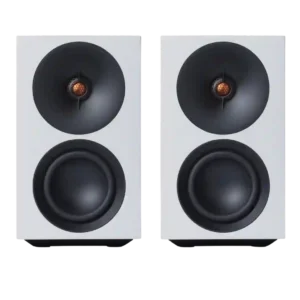
Because amplification is built in, no separate amplifier is required. That self-contained approach is a major part of the product's simplicity and desktop appeal.
Pros: Design and aesthetics, Small-room suitability
Cons: Distortion at high volume, On-device controls
#2
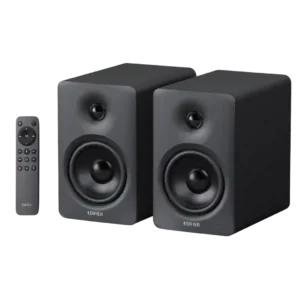
The active, bi-amplified design needs no separate receiver, DAC, or power amplifier, simplifying both desktop and TV systems.
Pros: Bass performance, Value for money
Cons: On-device controls, Auto-off and standby behavior
#3
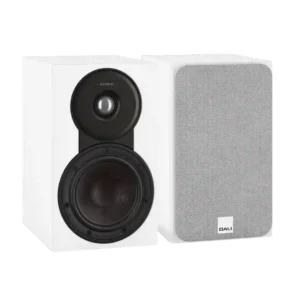
The Sonik 1 is less demanding than its sensitivity figures might suggest. Reviewers had excellent results with common 50-60 watt integrated amplifiers and did not find exotic amplification necessary.
Pros: Value for money, Aesthetic design / Finish options
#4

Available power is considered ample for typical home-theater use.
Pros: Home theater integration, Bass performance
Cons: Value for money, Design and aesthetics
#5
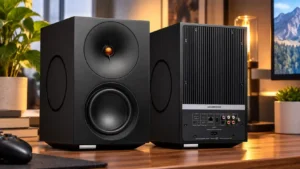
Built-in amplification makes the system self-contained and removes the task of choosing a matching amplifier.
Pros: Design and aesthetics, Overall sound quality
Cons: Placement footprint, Midrange performance
#6

Imported H7 units may need a voltage converter in 220V regions. That practical complication makes local-market models preferable.
Pros: Inter-speaker connectivity, AI Room Calibration
Cons: Value for money, Music performance
#7

One reviewer criticized the high-wattage adapter requirement and unclear power-adapter situation.
Pros: Frequency response balance, Loudness / maximum volume
Cons: Weight convenience, Lighting effects
