#1
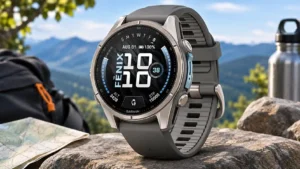
Mountain switchbacks and gravel rides produce strong positioning and pulse results. Improved maps are useful on the bike, with offline rerouting adding depth beyond a static map.
Pros: battery life, mapping and navigation
Cons: value for money, LTE connectivity
#2
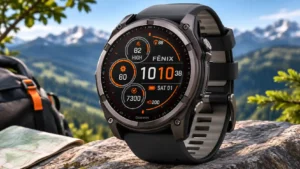
Cycling benefits from accurate routes, useful climbing data, and generally strong workout measurement. Wrist heart-rate results can still wobble with road vibration or brief changes in effort.
Pros: battery life, GPS accuracy
Cons: value for money, menu navigation
#3

Cycling benefits from coaching, on-watch routes and comfortable wear in smaller sizes. Optical heart-rate quality is less consistent in detailed cycling tests.
Pros: mapping and navigation, battery life
Cons: value for money, software smoothness
