
WiiM Sound Smart Speaker Feature Scores
Explore all 52 feature scores for WiiM Sound Smart Speaker, organized into pros and cons.
Scores by Feature
Summary
52 reviewed features-
Very positive 4.5-5.030 (58%)
-
Positive 3.5-4.411 (21%)
-
Neutral 2.5-3.44 (8%)
-
Negative 1.5-2.46 (12%)
-
Very negative below 1.51 (2%)
Pros
Sort
-
Streaming breadth, presets, multi-room management, room correction, and deep settings make the software side a major strength. The overall feature package is unusually broad, though Apple support and hands-free voice remain gaps.
-
Setup is repeatedly described as quick and straightforward, often taking only a few minutes from power-on to playback. The app generally guides the process clearly.
-
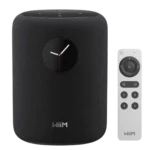
The circular touchscreen is more useful than it first appears, giving quick access to playback, sources, presets, EQ, artwork, and settings. A few caveats remain around screen size, placement height, and limited browsing.
-
WiiM’s biggest ecosystem advantage is flexibility: speakers can join stereo pairs, multi-room groups, subwoofer setups, and broader WiiM systems. Most sources see this as a strong long-term expansion path.
-
A highly versatile first speaker from WiiM, with strong day-to-day usability, broad connectivity, and an unusually useful touchscreen. The main reservations are Apple compatibility, hands-free voice limits, and a few sound-focused dissenters.
-
Sound tuning is a standout strength, with abundant presets plus graphic and parametric EQ controls, often adjustable by source. Tweakers get far more control than on many smart speakers.
-
Vocals and midrange clarity are among the strongest sonic traits, commonly described as clean, natural, warm, and well defined. Spoken content also benefits from the clear midrange presentation.
-
The WiiM Home app is widely praised for stability, speed, and broad control, with several sources calling it excellent. A few isolated issues involve presets, device recognition, or an interface that may feel complex to newcomers.
-
Build quality is consistently strong, with sturdy fabric wrapping, solid assembly, good damping, and little unwanted cabinet noise. The speaker feels substantial and appropriately premium.
-
Most listening impressions favor the WiiM Sound’s neutral or naturally balanced tuning, with smooth highs and controlled bass. RoomFit and EQ can further shape that balance for different spaces.
-
Most assessments find the sound balanced, clean, powerful, and impressive for the size, with especially good mids and vocals. A smaller group hears a flatter, more congested presentation that trails class leaders for detail and dynamics.
-
The front display is bright, colorful, customizable, and useful for album art, clocks, playback status, and quick information. It gives the speaker personality and reduces the need to check a phone.
-
The design is usually seen as clean, understated, and premium enough to blend into modern rooms. The circular screen adds personality, though a few reviewers find it tacky, plain, or uninspiring when off.
-
RoomFit is one of the most consistently praised features, with quick calibration and audible improvements to balance and placement-related bass problems. Results can vary by room, and one treated-room test preferred it off.
-
The ability to use WiiM Sound units as surround, rear, or center speakers is a major expansion path within WiiM systems. Tests and demonstrations generally find this flexible and immersive.
-
High-resolution playback up to 24-bit/192kHz is repeatedly presented as a strength, often exceeding competing smart-speaker limits. Support for multiple lossless formats and streaming paths appeals to more demanding listeners.
-
For everyday music listening, the WiiM Sound is widely considered engaging, enjoyable, and capable of extended sessions. Its strengths are clearest with vocals and balanced material rather than highly demanding audiophile tracks.
-
The touchscreen and touch controls are generally fast and responsive, with multiple sources describing immediate reactions to taps and commands. Direct control feels polished rather than sluggish.
-
The included rechargeable remote is widely praised as convenient, comfortable, and more useful than expected. Its biggest downside is that some voice functions depend on having the remote nearby.
-
Two-speaker stereo pairing can create convincing left/right separation, depth, and a wider stage. A single unit is less precise spatially, with some tests finding its image congested or inherently limited.
-
Small and medium rooms are where the speaker is most consistently comfortable, with enough output for kitchens, studies, bedrooms, and offices. Larger spaces can expose limits in bass extension and maximum room-filling power.
-
Many sources praise clear mids, crisp highs, and strong retrieval of small musical details. The main dissent comes from comparisons with stronger rivals that expose softer treble detail or less precision on complex tracks.
-
Network playback is generally stable, with positive reports across Wi-Fi, multi-room use, and Ethernet-backed setups. Wi-Fi 6E and the wired network option give users extra ways to keep streaming dependable.
-
Stereo and multi-speaker pairing is usually quick, intuitive, and stable. There are isolated software and Bluetooth pairing caveats, including device-specific pairing visibility and channel-switching behavior.
-
Bass is usually described as tight, controlled, full, and surprisingly capable for the cabinet size. It does not deliver true sub-bass or club-level weight, and some sources want more punch in larger rooms.
-
The 3.5mm analog input and Ethernet jack add practical flexibility for turntables, CD players, computers, and stable networking. Several sources specifically appreciate having connections that competing smart speakers often omit.
-
Google Cast and Google-related integration are frequently treated as strengths, especially for Android or mixed-platform homes. In supported setups, it helps the speaker fit naturally into existing multi-room systems.
-
Output is generally strong for the size and can fill small-to-medium spaces well, with several tests calling it surprisingly loud. A few reviewers find it insufficient for larger rooms or high-output listening.
-
The speaker generally stays composed and clean as volume rises, with several tests noting little or no distortion. One source found distortion possible when both bass and volume were pushed to their limits.
-
Value opinions depend heavily on priorities: the feature set, remote, touchscreen, and ecosystem can justify the price, but the speaker is often more expensive than the Sonos Era 100. Buyers focused only on sound or Apple integration may see weaker value.
-
The lack of always-on microphones reduces hands-free convenience but appeals to privacy-conscious users. Push-to-talk voice control lets users invoke assistants more deliberately.
-
At roughly 2.5kg the speaker feels substantial, but one hands-on test still found it easy to move during setup. The weight also helps it feel stable on shelves and counters.
-
The unboxing impression is straightforwardly positive, with the packaging described as very good.
-
Spotify Connect falls within a broader streaming implementation that worked without a hitch in testing. It is a dependable path for Spotify users even though some app functions still happen in Spotify itself.
-
A WiiM Sub Pro can extend the system into 2.1 use and materially increase low-end capability. This is an appealing upgrade path for listeners who want more bass than the compact speaker can produce alone.
-
Google Cast is a strong substitute streaming path for non-Apple households, and one detailed test called its implementation very good. It broadens compatibility with Cast-enabled apps and devices.
-
The proximity-activated top-control lighting is a small but polished touch, illuminating automatically as a hand approaches. It works well, though one source wished the lights could remain on.
-
Wide dispersion helps the speaker spread sound evenly rather than feeling narrowly localized. It is not a true 360-degree design, but off-axis room coverage is a clear strength.
-
The recessed connection area keeps power and other cables visually tidy, letting them route out of the cabinet with minimal visual disruption.
-
When triggered through the remote, assistant response can be effectively instant. The bigger limitation is how voice control is initiated, not raw response speed.
-
One extended test found the tonal character remained consistent from low through higher listening levels. That makes the speaker suitable for quieter background sessions as well as normal playback.
Cons
Sort
-
AirPlay is the clearest recurring weakness: most sources say it is absent and particularly inconvenient for Apple Music and iPhone users. Bluetooth works as a fallback, but is repeatedly described as less seamless.
-
The speaker itself lacks far-field microphones, so it cannot provide the always-listening, hands-free experience typical of many smart speakers. That limits convenience even though the remote can supply a microphone.
-
The WiiM Sound does not provide standalone Dolby Atmos or virtualized spatial-audio effects. Buyers wanting height or immersive simulation from a single speaker will need another product.
-
Single-speaker Bluetooth is straightforward, but one stereo-pair test found it clunky, with playback sometimes jumping between speakers and introducing delay.
-
One Bluetooth stereo-pair test reported latency when switching between speakers. That makes Bluetooth pairing a poor fit for users sensitive to timing or synchronization.
-
With no built-in speaker microphone, the WiiM Sound cannot serve as a convenient hands-free calling speaker. One reviewer specifically missed the ability to take conversations through it.
-
Voice recognition is a weak spot for music requests in one test, especially with specific band and song names. App control was preferred for precise playback selection.
-
Alexa and Google-related control is available, but the experience is inconsistent with the idea of a fully hands-free smart speaker. Many setups require the remote, phone, or another assistant device to issue commands.
-
The speaker can sound coherent and mature with simpler material, but complex or very loud tracks expose some organizational limits. The most critical tests describe congestion or muddling when arrangements get busy.
-
Bluetooth is useful as a universal fallback and works well for simple single-speaker playback. It becomes less attractive when used instead of Wi-Fi or AirPlay, especially across rooms.
-
Dynamics are mostly solid and controlled for a compact smart speaker, but not universally class-leading. More critical listeners hear reduced attack, punch, or contrast compared with larger or pricier speakers.