
If you want better emotional impact
Choose Warhammer 40,000: Boltgun 2. It scores 5.0 vs 4.5 for emotional impact, with a 4.0 overall score.

Repeated robot violence, occasional gore, a parent’s corpse, and disturbing scenes of abuse and choking accompany themes of suicide, self-harm, and euthanasia. Racist and homophobic hostility and emotionally intense family trauma make this best suited to older teens.
A powerful family drama and exceptional music give every swing emotional weight. Satisfying destruction carries the premise, but slow traversal and repetitive combat demand patience with its deliberately sparse mechanics.
Reflective narrative fans and players drawn to difficult stories about grief, family, and humanity. Steam Deck players also have a strong recommendation after the launch performance update.
Players seeking cozy relaxation, a carefree power fantasy, or uncomplicated destructive distraction. Content-sensitive players may find the family trauma and disturbing subject matter too taxing.
Virtue and a Sledgehammer is easiest to recommend for its story: a bruising family drama that uses destruction to explore grief, belonging, and the promise of digital immortality. Its striking low-poly style and frequently celebrated soundtrack make the short journey feel distinctive, while hidden memories give the family’s contradictions room to emerge. Swinging the hammer and collapsing buildings can be wonderfully satisfying. The limitation is how little that interaction develops: repeated robot encounters, slow walking, and inconsistent destructibility frustrate several accounts. Navigation also divides opinion, and a minority find the emotional foundations less convincing than the themes deserve. Reflective narrative fans willing to accept a narrow mechanical vocabulary will find the strongest reasons to play; those seeking relaxed entertainment or a sustained action power fantasy have less to gain.
Compared with other Video Games, this product is above average in graphics settings, narrative quality, camera behavior, near average in emotional impact, overall quality, below average in Enemy design, accessibility options, content variety.
| Attribute | This product | Category average | Difference |
|---|---|---|---|
| Enemy design | 2.0 | 4.1 | -2.1 |
| accessibility options | 1.8 | 3.8 | -2.0 |
| content variety | 2.0 | 3.9 | -1.9 |
| skill tree depth | 2.0 | 3.8 | -1.8 |
| world-building | 2.5 | 4.2 | -1.7 |
| progression system | 2.3 | 3.9 | -1.5 |
| enemy variety | 2.0 | 3.5 | -1.5 |
| graphics settings | 4.5 | 3.1 | +1.4 |
Choose Warhammer 40,000: Boltgun 2. It scores 5.0 vs 4.5 for emotional impact, with a 4.0 overall score.
Choose Silver Pines. It scores 5.0 vs 2.8 for core gameplay loop, with a 4.2 overall score.
Choose SPRAWL zero. It scores 5.0 vs 1.8 for accessibility options, with a 4.0 overall score.
Choose Phantom Blade Zero. It scores 5.0 vs 2.0 for Enemy design, with a 4.1 overall score.
Products reviewers directly compared with this model, grouped into quick takeaways.
Most supplied playthroughs fall around three to five hours, depending on how thoroughly you search for memories. The compact length makes a single sitting practical.
It is a narrative exploration game built around walking and charging a hammer. Destruction can be satisfying, but the small move set and repeated enemies are common complaints.
You can reach the ending without seeing them all, but optional memories add important family context. Some players miss scenes or find retracing areas frustrating.
The supplied Deck assessment strongly recommends it after a release-day update. Tuned medium settings support a generally smooth 40 FPS profile; 60 FPS needs lower settings and uses more battery.
Dialogue is presented as text. Some players appreciate the focus on the words and their own interpretation, while another finds the absence of voices leaves it unusually quiet.
Building demolition can provide catharsis, but the story deliberately complicates that pleasure with family trauma and moral discomfort. It is a poor fit for cozy play or an uncomplicated power fantasy.
Expect robot violence, occasional gore, abuse, choking, a parent’s corpse, and themes involving suicide, self-harm, and euthanasia, alongside racist and homophobic hostility. Flashing visuals also draw an epilepsy warning in the French gameplay session.
These are a few of the reviews included in our analysis.

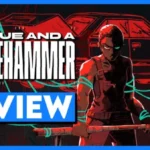

Deconstructeam and Selkie Harbour's narrative exploration game Virtue and a Sledgehammer is out now on Steam, published by Devolver Digital.
Virtue and a Sledgehammer is a violent and tender exploration of the intersectional relationship of love and hate, offering one of the best...
Virtue and a Sledgehammer swings on grief in a sci-fi dystopia, but is it a smash hit? The Finger Guns review:
Deconstructeam's newest is an emotionally wrought crusade against the dangers of AI, a sci-fi parable written entirely with a hammer.
In our review of Virtue and a Sledgehammer, find out how this indie game lives up to its smashing title.

Best for fluid traversal, rewarding exploration, striking art, and forgiving quality-of-life features. Skip it if you want deep combat, radical genre innovation, or consistently demanding bosses.
Pros: difficulty balance, boss design
Cons: innovation, sandbox freedom

Best for superb combat, inventive builds, and richly voiced characters. Skip it if repeated runs, resource gathering, or visually busy battles outweigh the appeal of steady progress.
Pros: overall quality, combat system
Cons: pacing, grind level

Good if you want a beautiful, demanding survival sandbox built around exploration, building, progression, and memorable co-op. Skip it if long resource runs, harsh death recovery, and deliberate pacing sound...
Pros: town-building system, exploration quality
Cons: grind level, fast travel convenience

Choose Clair Obscur if you want a story-rich RPG with thrilling timed combat, gorgeous art, and standout music. Skip it if poor maps, tight parry timing, or occasional bugs and...
Pros: narrative quality, combat system
Cons: map and navigation design, menu usability