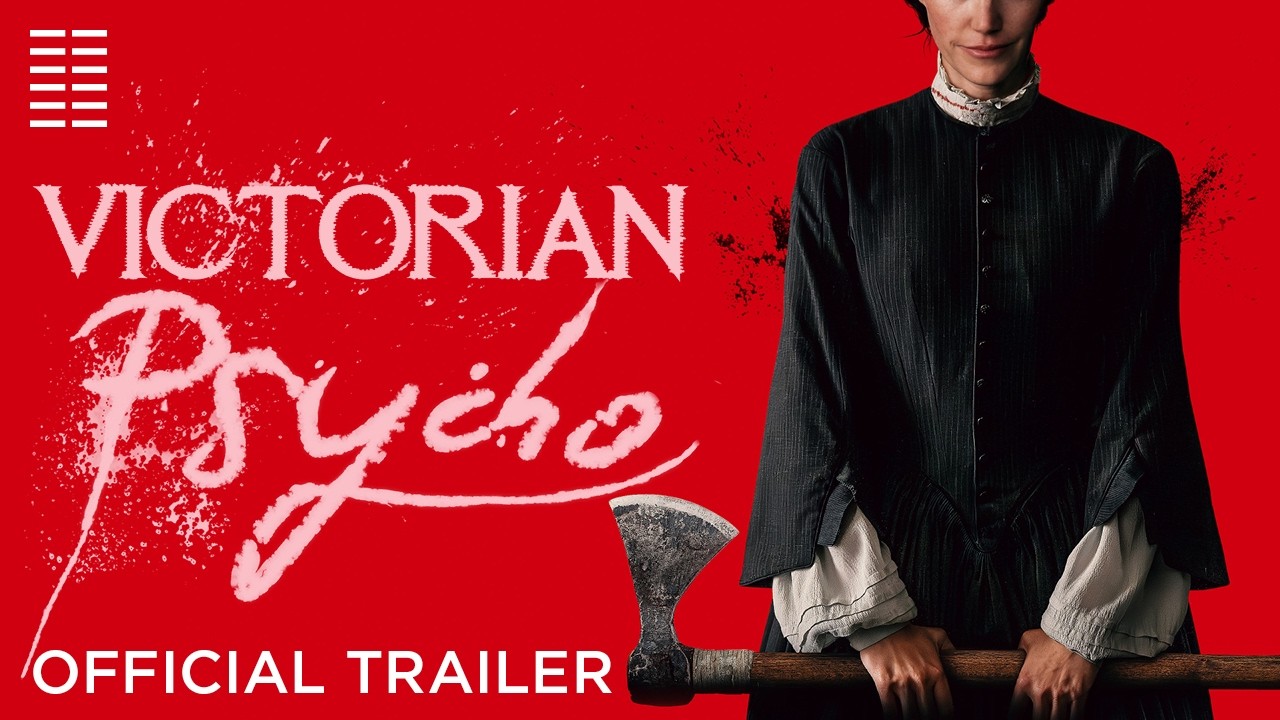
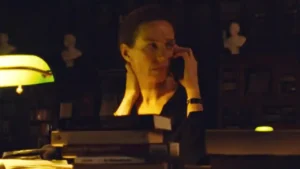
Best suited to older teens because it includes bloody murders, severed-body-part cannibalism, child and baby peril/deaths, animal cruelty, and sexual or predatory material.
Official ratingR
Bottom Line
Choose it for Maika Monroe’s fearless lead turn, lavish Gothic craft, and pitch-black humor. Skip it if you need sustained tension or a fully unleashed bloodbath, because the finale is the most common sticking point.
Best for
Best for viewers who enjoy Gothic horror, pitch-black comedy, female antiheroes, lavish period craft, and performances that deliberately push into the bizarre.
Not for
Less suited to viewers who want sustained scares, a tightly escalating slasher structure, or a fully unleashed gore-heavy climax with clear catharsis.
Verdict
Victorian Psycho is built around a performance that most critics find impossible to ignore: Maika Monroe turns Winifred into a funny, unnerving, physically precise Gothic antihero. The period production design, off-kilter cinematography, costumes, score, and practical gore give the film a distinctive identity, while its class and gender satire often lands with wicked humor. The tradeoff is consistency. Several critics think the horror-comedy balance works beautifully, but others find it too arch, insufficiently frightening, or tonally scattered. The finale is even more divisive, with repeated complaints that the movie promises wilder carnage and catharsis than it ultimately delivers. For viewers who click with its manic tone, the craft and Monroe’s performance can outweigh the uneven payoff.
The period wardrobe consistently strengthens the Victorian setting, from severe governess blacks to more lavish dresses. The costuming is repeatedly folded into praise for the film’s polished Gothic visual identity.
The film’s Gothic look is consistently strong, combining candlelit interiors, crooked framing, dreamlike imagery and lush period decay. Even negative assessments often separate the striking visuals from their complaints about story and tone.
production design: 4.9, 8 reviews, strong consensus
Ensor House and its decaying Victorian grandeur are among the film’s most consistent strengths. Lavish rooms, Gothic embellishments and period detail make the setting visually rich even for assessments that dislike the story or tone.
The camera work is a major strength, using canted angles, wide lenses, unusual viewpoints and restless movement to mirror Winifred’s instability. Even a harsh overall assessment credits the off-kilter lensing with creating atmosphere.
The supporting ensemble is broadly well regarded, with Ruth Wilson, Jason Isaacs, Jacobi Jupe, Evie Templeton and Thomasin McKenzie receiving particular praise across the coverage. The younger performers are especially effective at mixing entitlement, vulnerability and menace.
lead performance: 4.7, 16 reviews, moderate consensus
Maika Monroe is the strongest point of agreement, repeatedly described as fearless, commanding, funny, chilling and even career-best. A minority finds her miscast or not fully convincing in villain mode, but the consensus on her commitment is overwhelmingly positive.
Suspense is one of the biggest fault lines: one take praises the film for building intense unease through atmosphere and unreliable perspective, while others say narration and predictable buildup drain surprise, stakes and tension.
The finale is the most disputed part of the movie. Some find the twist, coda or final spree satisfying, while several others say the last act loses steam, waters down the carnage or stops short of the catharsis the buildup promises.
Pacing is split: energetic takes praise the manic momentum or say the film never slows, while others feel the final chapters overstay their welcome, the middle meanders or the movie drags before finding its footing.
faithfulness to source material: 3.3, 3 reviews, low consensus
The adaptation earns praise for carrying over the novel’s storybook structure while making use of film language. Other reactions argue that some changes dilute the book’s darkest impulses, or conversely that the movie stays too attached to suggestion from the source.
The script draws praise for wit, surprise and a smart page-to-screen foundation, but it also takes criticism for heavy narration, late-reveal structure and a first-draft feeling in its escalation. The final-act writing is the most common weakness.
Monroe receives overwhelming praise for a fearless, highly physical performance that moves between comedy, menace and tiny behavioral tics. One sharp dissent calls her miscast, but most assessments treat her as the movie’s defining strength.
Jupe earns strong praise for scene-stealing line delivery, bratty comic energy and a believable mix of entitlement and vulnerability. His reactions to Winifred are also singled out as especially effective.
Marx’s score is a consistent craft highlight, moving between lyrical elegance and stormy menace while tracking Winifred’s descent. The music strengthens both the theatricality and the Gothic atmosphere.
Aguilar’s cinematography is praised for using canted angles, wide lenses and unstable movement to externalize Winifred’s fractured perspective. His camera work repeatedly turns the manor into an active part of the character study.
McKenzie brings warmth, playfulness and nervous tension to Miss Lamb, and multiple assessments single her out as a welcome or standout supporting presence.
Wigon earns strong praise for precision, visual control and genre adaptability in several assessments, but a major dissent sees his horror-comedy blend as awkward and insufficiently frightening. His handling of tone is the dividing line.
Compared with other Movies, this product is above average in marketing accuracy, runtime, dialogue quality, near average in lead performance, humor, below average in suspense, plot originality.
Comparison summary
40 compared features
Above average0.4+ pts higher
23(57%)
Same as averagewithin 0.3 pts
15(38%)
Below average0.4+ pts lower
2(5%)
Largest category differences
Attribute
This product
Category average
Difference
marketing accuracy
5.0
2.4
+2.6
runtime
5.0
2.7
+2.3
dialogue quality
4.7
3.0
+1.7
suspense
2.4
3.8
-1.4
rewatch value
5.0
3.5
+1.5
makeup quality
5.0
3.6
+1.4
originality
4.6
3.4
+1.2
message quality
4.8
3.7
+1.1
Consider This Instead
If you want better plot originality
Choose Obsession. It scores 4.8 vs 2.0 for plot originality, with a 4.3 overall score.
Products reviewers directly compared with this model, grouped into quick takeaways.
American Psycho
Better: character unraveling and payoffThe reviewer says this film lacks the carefully built unraveling and cathartic payoff admired in American Psycho.
Similar: black-comic psychopath satireThe film is compared to American Psycho as part of its blend of Gothic horror and macabre satire.
Pearl
Similar: lead performanceMonroe's villainous lead performance is favorably compared with Mia Goth's work in Pearl.
Saltburn
Similar: class satire and Gothic toneThe film is likened to Saltburn through a Gothic literary lens, with the comparison favoring this film.
FAQ
Is Victorian Psycho actually scary?
It is more consistently unsettling and grotesque than conventionally frightening. Some reactions find Monroe terrifying, while others say the horror-comedy approach mutes the scare factor.
How gory is it?
It contains bloody murders, body-part imagery, practical gore, and disturbing violence. Several reactions still think the finale holds back compared with the extreme payoff the setup seems to promise.
How is Maika Monroe in the lead role?
Her performance is the clearest strength, with repeated praise for her facial tics, comic timing, menace, and ability to shift between charming and frightening. One notable dissent finds her miscast.
Does the dark comedy work?
For many, yes: the class satire, absurd dialogue, and macabre behavior are genuinely funny. Others find the comedy too arch or feel it clashes with the horror instead of strengthening it.
How does it compare with the source novel?
The adaptation is praised for preserving the storybook structure and some of the book’s spirit, but reactions differ on the changes. Some think the film softens the darkest impulses, while another finds it too attached to suggestion from the novel.
Is the ending satisfying?
That is the biggest point of disagreement. Some like the twist, coda, or final spree, but several reactions say the last act loses steam or stops short of the carnage and catharsis it builds toward.
Sample Expert Reviews We Analyzed
These are a few of the reviews included in our analysis.
Best for pristine archival footage, immersive sound, and a surprisingly tense look at Disneyland’s construction. Skip it if you want a comprehensive, deeply critical history; several reviewers found the 78–79-minute...
Best for an intimate, inventive archival portrait with strong emotional and cultural impact. Skip it if substantial nudity or an occasionally wandering biographical structure will frustrate you.
Pros: chemistry between characters, emotional impact
Best for an audacious, text-driven conspiracy thriller with gorgeous 16mm atmosphere and mounting dread. Skip it if long stretches of reading, deliberate repetition, and an intentionally austere narrative sound more...
Best for slow-burn suspense, iconic synth music, and shadow-soaked filmmaking that still feels influential. Skip it if you need fast pacing, polished sound, consistently natural dialogue, or modern gore-heavy kills.
Pros: chemistry between characters, directing quality