Choose it for committed performances, brutal historical drama, and timely themes. Skip it if shaky camerawork, graphic violence, thin characterization, or the divisive Robin Hood coda are likely to overwhelm the experience.
Best for
Best for viewers who enjoy grim historical epics, forceful performances, morally complicated rebellion stories, and intentionally rough handheld filmmaking.
Not for
Skip it if you are sensitive to graphic violence or shaky camerawork, or if thin characterization and a heavily disputed mythic coda tend to ruin historical dramas for you.
Verdict
The Uprising works best as a grim, immediate account of the Peasants’ Revolt, powered by Andrew Garfield and an unusually strong supporting cast. Reviewers repeatedly praise its moral tension, period grime, forceful action, and modern resonance, while the handheld cinematography is a true love-it-or-hate-it choice: immersive for some, exhausting or nauseating for others. Character depth and screenplay clarity draw recurring criticism, especially through the middle. The largest fault line is the ending, where the film pivots toward Robin Hood mythology. A few reviewers find that coda hopeful or satisfying, but many say it cheapens an otherwise grounded historical drama. The result is a compelling but highly uneven epic whose performances and themes land more consistently than its style and final turn.
The supporting cast receives unusually consistent praise. Jamie Bell, Cosmo Jarvis, Thomasin McKenzie, Woody Norman, Katherine Waterston, and other character actors are repeatedly described as strong, outstanding, or scene-stealing.
Andrew Garfield is the strongest point of consensus. Most reviewers praise his grief, humanity, physical commitment, or intensity, though a handful find the role too passive, one-note, or ill-defined.
The film is strongest when wrestling with whether justified anger can survive mob violence without becoming vengeance. Reviewers repeatedly praise that moral unease, though a few think the political ideas remain too broad or shallow.
The ensemble is one of the film’s safest strengths, with many reviewers calling the performances strong, first-rate, or effective. A small minority found the acting monotonous, but the broader cast response is clearly positive.
The film lands emotionally for many reviewers, with the revolt’s grief, betrayals, and class suffering described as heartbreaking, moving, or bracing. Even some negative reviews acknowledge moments that rattle the nerves or carry real weight.
The battles are often praised as intense, brutal, and well staged, with several reviewers loving their immediacy. The main tradeoff is legibility: shaky camerawork and rapid cutting sometimes turn the fighting into a confusing blur.
The sound mix is one of the clearest technical complaints in the video reviews. Multiple reviewers say dialogue is hard to understand because the mix is poor or noisy.
The ending is the clearest source of disagreement and the most repeated complaint. Most reviewers dislike the Robin Hood-flavored coda as awkward, silly, or unearned, while a smaller group sees it as a hopeful or energizing finish.
The violence is relentless, graphic, and often deliberately disturbing. Some reviewers see that brutality as essential to the film’s argument, but family-oriented and more critical voices find the level excessive or difficult to watch.
character development: 2.4, 15 reviews, low consensus
Character depth is one of the most repeated complaints: Ploughman and several rebels are often described as thin, archetypal, or underwritten. A few reviewers found the side characters distinct and well introduced, so the weakness is not universal.
The visual approach is mostly dark, muddy, and aggressively handheld, which some reviewers find raw and appropriate. Others reject it as ugly, flat, repetitive, or visually out of step with the material.
Digital imagery is a recurring weak point, especially aerial views and hazy-looking backgrounds that some reviewers say break the otherwise grounded feel. A few found the effects acceptable, but praise is limited.
Andrew Garfield: 4.4, 33 reviews, moderate consensus
Garfield is the film’s clearest acting strength, with reviewers repeatedly praising his grief, humanity, physical commitment, and ability to ground Ploughman. A small minority finds the performance passive or one-note, but the consensus is strongly favorable.
Bell is repeatedly praised for making John Ball fiery, forceful, and emotionally credible. Reviewers highlight both his conviction and vulnerability, with several calling his work outstanding.
Jarvis earns strong praise as Wat Tyler, bringing force, physicality, and a magnetic leadership presence. Reviewers consistently see him as one of the supporting cast’s strongest anchors.
Norman earns some of the film’s strongest supporting notices as Richard II, with reviewers calling him brilliant, riveting, terrific, and even the movie’s scene-stealer. One dissenting review finds him miscast, but the overall response is highly positive.
Waterston draws consistently strong notices as Joan of Kent, with reviewers calling her excellent, compelling, or quietly scene-stealing. Even with limited dialogue, she makes the role feel substantial.
McKenzie receives standout praise for fierceness, vulnerability, and barely contained fear. Several reviewers see her as one of the supporting cast’s most affecting performers.
Compared with other Movies, this product is above average in drama quality, suspense, special effects quality, near average in entertainment value, historical accuracy, below average in sound design, critic appeal, visual style.
Comparison summary
42 compared features
Above average0.4+ pts higher
11(26%)
Same as averagewithin 0.3 pts
14(33%)
Below average0.4+ pts lower
17(40%)
Largest category differences
Attribute
This product
Category average
Difference
sound design
1.2
4.2
-3.0
critic appeal
1.5
3.5
-2.0
visual style
2.2
4.0
-1.8
age appropriateness
1.0
2.9
-1.9
tonal consistency
1.5
3.2
-1.7
humor
2.0
3.7
-1.7
family friendliness
1.0
2.6
-1.6
ending satisfaction
2.3
3.3
-1.1
Consider This Instead
If you want better sound design
Choose The Furious. It scores 4.9 vs 1.2 for sound design, with a 4.0 overall score.
Worse: overall audience offeringThe reviewer considers The Uprising the stronger offering, while still calling it uneven.
A Knight of the Seven Kingdoms
Better: production design and lived-in worldThe reviewer says the comparison makes The Uprising’s low-budget-looking sets harder to ignore.
Braveheart
Better: overall historical-epic executionThe reviewer says this film is the poor version of the kind of historical epic Braveheart does well.
FAQ
Is The Uprising historically accurate?
Reviews say the film captures the Peasants’ Revolt’s social pressures and period atmosphere reasonably well, but it also takes major dramatic liberties. The Robin Hood connection is the most criticized departure.
Is this really a Robin Hood movie?
Most reviewers say the film plays primarily as a Peasants’ Revolt drama. The Robin Hood idea becomes explicit mainly in the late coda, and reactions to that turn range from satisfying to deeply frustrating.
How is Andrew Garfield?
Garfield is the clearest point of critical agreement, with most reviewers praising his grief, humanity, intensity, and physical commitment. A few find the role too passive or one-note.
How are the action scenes?
The battles are frequently praised as brutal, immediate, and intense. However, several reviewers say shaky camerawork and rapid editing make some fights difficult to follow.
Is The Uprising family friendly?
The supplied reviews describe graphic executions, battlefield deaths, and sustained bloody violence. One family-focused review specifically recommends that kids and teens sit this one out.
Who is most likely to enjoy it?
Historical-drama fans and Andrew Garfield fans are the safest audience. Viewers who like morally complicated political stories may also respond well, provided they tolerate a grim tone and aggressive handheld style.
Sample Expert Reviews We Analyzed
These are a few of the reviews included in our analysis.
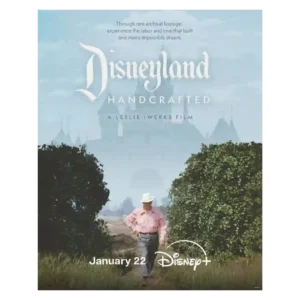
Best for pristine archival footage, immersive sound, and a surprisingly tense look at Disneyland’s construction. Skip it if you want a comprehensive, deeply critical history; several reviewers found the 78–79-minute...
Best for an intimate, inventive archival portrait with strong emotional and cultural impact. Skip it if substantial nudity or an occasionally wandering biographical structure will frustrate you.
Pros: chemistry between characters, emotional impact
Best for an audacious, text-driven conspiracy thriller with gorgeous 16mm atmosphere and mounting dread. Skip it if long stretches of reading, deliberate repetition, and an intentionally austere narrative sound more...
Best for a profound, formally inventive meditation on grief, memory, and the ethics of filming family. Skip it if intensely personal addiction material, a 114-minute runtime, or occasional repetition will...