
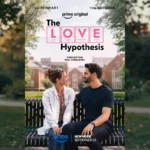
The Love Hypothesis Feature Scores
Explore all 43 feature scores for The Love Hypothesis, organized into pros and cons.
Scores by Feature
Summary
43 reviewed features-
Very positive 4.5-5.011 (26%)
-
Positive 3.5-4.48 (19%)
-
Neutral 2.5-3.47 (16%)
-
Negative 1.5-2.47 (16%)
-
Very negative below 1.510 (23%)
Pros
Sort
-
Olive and Anh’s bond is widely praised as the film’s emotional center, giving their chosen family story a pull of its own.
-
Reinhart’s warmth and comic timing draw steady praise, while Bateman’s reserved Adam divides opinion as he slowly softens.
-
The film embraces fake dating and familiar rom-com pleasures; whether that feels comforting or conventional depends on the viewer.
-
Rachel Marsh’s Anh often steals scenes, and the friend group brings welcome personality. Some supporting characters have too little room to develop.
-
Olive’s grief, ambitions and bond with Anh give the film heart beyond the central romance.
-
Awkward encounters and friend-group reactions draw laughs, although a few viewers find the comedy muted.
-
Book readers appreciate key romantic beats and the friendship focus, while some miss characters, context or stronger yearning.
-
For many, this is an easy, charming movie night watch. Detractors find the familiar path too dull to linger.
-
Performances are a frequent bright spot, particularly Reinhart’s approachable Olive and the lively ensemble. A few critics find Bateman too stiff for the romance to fully ignite.
-
The leads’ awkwardness can feel grounded, yet the fake-dating setup and academic power dynamics test plausibility.
-
Scanlon’s feel for comic timing and tender moments earns praise, though a few critics find the direction too safe.
-
The campus setting adds a fresh academic frame and lets Olive’s research matter to the story.
-
Many feel the leads turn awkward banter into genuine attraction; others find the spark thin or Bateman’s reserve hard to warm to.
-
Genre fans and book readers are the clearest audience, though expectations about heat and chemistry vary.
-
Fans who find it comforting already want another watch; others see little reason to revisit it.
-
Friendship, consent and a woman’s right to pursue science on her own terms give the romance a clear point of view.
-
Its strong early critic score suggests the film reaches much of its genre audience.
-
The film touches on grief, sexism and power in academia, but some wish those ideas had more space.
-
The friends and campus details make Olive’s world feel larger than her romance.
Cons
Sort
-
The friendship and academic ambitions enrich a familiar story, but thin motivations and late plot shortcuts draw criticism.
-
The opening moves briskly, but several reviews say the last act rushes through a serious conflict and resolution.
-
The familiar fake-dating plot rarely surprises, even when its science setting and friendship give it a little freshness.
-
Some editing choices enliven Olive’s viewpoint, but choppy or low-energy cutting draws criticism.
-
A quick swing from comedy to career-threatening harassment jars some viewers, while others accept the change in stakes.
-
Flat or uninspired camerawork is a recurring visual complaint.
-
Sex and strong language limit its appeal as a family movie.
-
The length gives room to the couple’s gradual connection for some, while others feel a two-hour romance drags or compresses key scenes.
-
A few viewers find the look drab and washed out despite the film’s lively romantic premise.
-
The romantic payoff pleases some, while others find the final conflict and its consequences resolved too quickly.
-
Sexual content and strong language make the film a poor fit for younger or sensitive viewers.
-
Strong language stands out as a drawback for viewers seeking a gentler romance.
-
The fake-dating setup and academic stakes can feel convoluted when the film hurries to establish them.
-
The score’s fan-fiction nods amuse some, while others hear a pushy cueing of the romance.
-
A pushy score makes the soundscape feel cramped in one sharply negative assessment.
-
Costumes offer small character details for some; others find the wardrobe generic or dated.
-
The script gives the fake-dating setup a playful rhythm, but some dialogue and the late harassment conflict feel underworked.
-
Its comfortable genre formula is easy to enjoy for some and short on novelty for others.
-
The intimate scene is tender or suitably steamy for some, while others find its heat lacking or its placement jarring.
-
Olive’s confidence and ambitions give her more substance than a stock romantic lead. Adam and several friends can feel underdeveloped.
-
Naming Olive’s demisexuality is meaningful to some viewers; others question the treatment of Anh’s cultural identity or the trimmed gay romance.
-
Witty exchanges and awkward banter often land, though science jargon and a few clunky lines break the spell for some.
-
Music and needle drops can add playfulness, but some find the soundtrack surprisingly weak or intrusive.
-
The romance is sweet and occasionally swoony, though its slow build and uneven spark do not convince everyone.
Cast & Creators
-
AnhMarsh gives Anh bright comic timing and genuine warmth, often making the friendship scenes stand out.
-
OliveReinhart brings warmth, wit and believable insecurity to Olive; even harsher critics often see her as the film’s strongest asset.
-
DirectorScanlon earns praise for balancing the romance and comic ensemble, though some see the approach as safe.
-
MalcolmYoung-White brings humor to Malcolm and makes his smaller scenes lively.
-
AdamBateman’s gruff Adam works for many as he softens, but some find his early stiffness or accent hard to get past.
-
TomFroushan makes Tom’s arrogance convincing and draws praise for a memorable antagonist turn.
-
JeremyDuvernay helps the supporting ensemble feel like a campus community.
-
WriterRothschild’s adaptation and script draw both praise for compressing the book and criticism for thinning the STEM detail and fallout.