If you want better flashlight usefulness
Choose Suunto Race 2. It scores 5.0 vs 2.8 for flashlight usefulness, with a 4.0 overall score.

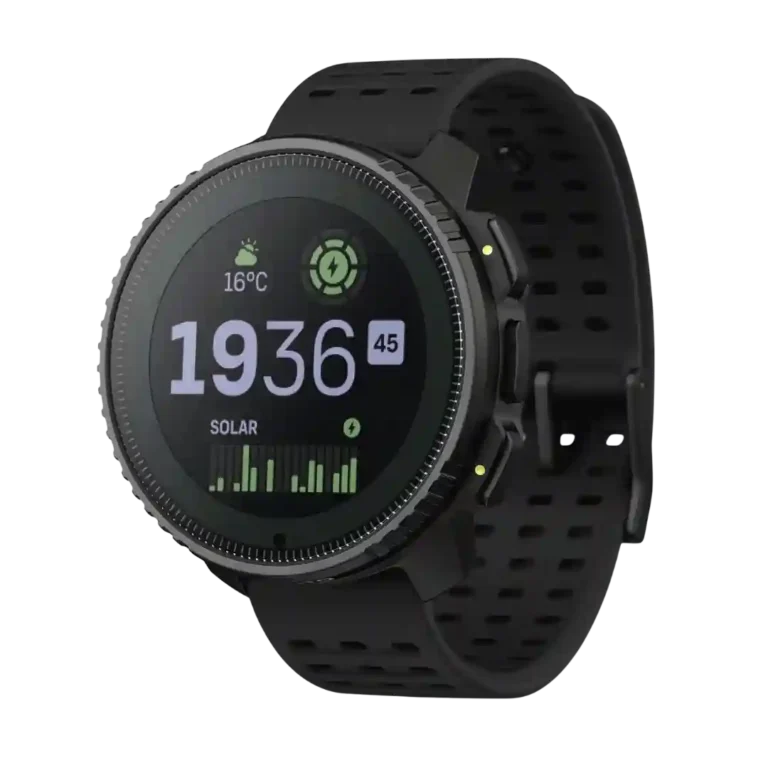
Choose the Suunto Vertical for long hikes, ultraruns, and offline navigation where battery life and GPS matter most. Skip it if you need reliable wrist heart-rate data, onboard music, payments, or a smoother smartwatch feel.
Best for hikers, trail runners, ultra-distance athletes, and multi-day adventurers who care most about battery life, offline maps, GPS accuracy, and rugged outdoor reliability.
Not for buyers who prioritize reliable wrist heart-rate data, onboard music, contactless payments, ECG, fast smartwatch polish, or fully routable map features.
The Suunto Vertical lands as an outdoor-first GPS watch with unusually strong agreement around battery life, offline maps, GPS accuracy, rugged construction, and Suunto’s route-planning app. Reviewers repeatedly found it dependable for hiking, trail running, multi-day trips, and navigation in difficult terrain. The tradeoff is that it behaves less like a full-featured smartwatch: wrist heart-rate accuracy is the most consistent weakness, music storage and payments are missing, and several reviewers noted lag or limited map routing. Its best case is long outdoor use where battery endurance and navigation matter more than polish, media features, or perfect optical HR.
Compared with other Smartwatches, this product is above average in mapping and navigation, battery life, third-party app support, near average in build quality, display quality, below average in resume later function, heart rate accuracy, onboard music storage.
| Attribute | This product | Category average | Difference |
|---|---|---|---|
| resume later function | 1.5 | 4.9 | -3.4 |
| heart rate accuracy | 2.3 | 3.9 | -1.6 |
| mapping and navigation | 4.5 | 3.4 | +1.1 |
| onboard music storage | 1.8 | 2.9 | -1.1 |
| software smoothness | 3.0 | 4.0 | -1.0 |
| Bluetooth connectivity | 2.6 | 3.7 | -1.1 |
| battery life | 4.9 | 4.2 | +0.8 |
| third-party app support | 4.2 | 3.2 | +1.0 |
Choose Suunto Race 2. It scores 5.0 vs 2.8 for flashlight usefulness, with a 4.0 overall score.
Choose Suunto Run. It scores 4.7 vs 3.3 for value for money, with a 4.0 overall score.
Choose Amazfit T-Rex 3 Pro. It scores 4.7 vs 3.0 for charging convenience, with a 3.6 overall score.
Choose Suunto Vertical 2. It scores 4.7 vs 3.0 for software smoothness, with a 4.2 overall score.
Products reviewers directly compared with this model, grouped into quick takeaways.
Yes. Reviewers repeatedly praised its offline maps, GPS accuracy, long battery life, and rugged design for hiking and multi-day outdoor trips.
Battery life was the strongest point across the review set. Reviewers described it as exceptional, class-leading, and suitable for multi-day use.
No. Reviewers liked the offline topographic maps and route-following, but noted that the maps are not fully routable like higher-end Garmin mapping.
The evidence is weak for sports use. Multiple reviewers said wrist heart-rate accuracy was unreliable, especially compared with chest straps or harder workout scenarios.
No. Several reviewers called out the lack of onboard music storage or playback as a downside.
Yes. Reviewers praised the Suunto app for route planning, map downloads, recovery/training views, and general usability.
These are a few of the reviews included in our analysis.

Best for long battery life, accurate GPS and useful offline maps at a strong price. Skip it if you need payments, richer apps, a built-in LED flashlight or polished smartwatch...
Pros: mapping and navigation, value for money
Cons: smartwatch features, contactless payments

Best for accurate run tracking, deep Garmin coaching and phone-free Spotify in a light package. Skip it if you need full maps, triathlon mode, Apple Music support or the strongest...
Pros: value for money, GPS accuracy
Cons: mapping and navigation, third-party app support

Good if you want premium running features, long battery life, and maps for under $200. Skip it if you need flawless heart-rate data, multiband GPS, LTE, or richer app support.
Pros: value for money, battery life
Cons: heart rate accuracy, third-party app support

Best for accurate running metrics, excellent coaching tools, a bright AMOLED display, and dependable battery life. Skip it if you need offline maps, music storage, contactless payments, multi-band GPS, or...
Pros: battery life, value for money
Cons: mapping and navigation, smartwatch features