
If you want better step counting accuracy
Choose Coros Pace 4 Pro. It scores 5.0 vs 1.3 for step counting accuracy, with a 4.4 overall score.

A lightweight sports watch with excellent running accuracy, a bright screen and useful offline maps. The higher price, limited smartwatch extras and occasional tracking or software quirks make cheaper rivals worth considering.
Road runners, marathon trainees and shorter-distance trail runners who want strong tracking and offline navigation without a bulky watch. It also suits multisport athletes willing to use an external heart-rate sensor when necessary.
Budget-first buyers, long-distance ultra runners needing extended GPS runtime, or anyone seeking a full smartwatch replacement with payments and streaming music. Dedicated wellness tracking or precise wrist heart-rate readings during upper-body lifting are not its strongest uses.
The Suunto Run 2 is a strong option for runners who prioritize reliable training data, a lightweight premium-feeling build and easy-to-read offline maps. Its redesigned optical heart-rate sensor is a clear improvement over the original, although some testers still encountered spikes and weaknesses during outdoor cycling or strength workouts. Dual-band GPS is generally accurate, particularly on roads, but difficult terrain and open-water swimming can expose errors. Battery life is good for regular training, with always-on display use and mapping reducing endurance. The companion app offers substantial training detail, but its terminology and limited external workout support make it less accessible than some rivals. At its higher launch price, the Run 2 is no longer an automatic budget recommendation. It makes the most sense when the better sensor, maps and quality hardware matter more than streaming music, payments or advanced smartwatch conveniences.
Compared with other Smartwatches, this product is above average in mapping and navigation, external sensor support, charging convenience, near average in brightness, battery life, below average in step counting accuracy, safety features, reliability.
| Attribute | This product | Category average | Difference |
|---|---|---|---|
| step counting accuracy | 1.3 | 3.8 | -2.4 |
| safety features | 2.0 | 3.9 | -1.9 |
| reliability | 2.0 | 3.7 | -1.7 |
| smartwatch features | 2.0 | 3.5 | -1.5 |
| mapping and navigation | 4.5 | 3.4 | +1.1 |
| smartphone notifications | 2.0 | 3.5 | -1.5 |
| operating system experience | 2.5 | 3.8 | -1.3 |
| training analysis | 2.9 | 4.1 | -1.1 |
Choose Coros Pace 4 Pro. It scores 5.0 vs 1.3 for step counting accuracy, with a 4.4 overall score.
Choose Suunto Run. It scores 4.7 vs 3.3 for value for money, with a 4.0 overall score.
Choose Suunto Vertical 2. It scores 5.0 vs 2.0 for reliability, with a 4.2 overall score.
Choose Suunto Race 2. It scores 5.0 vs 2.5 for operating system experience, with a 4.0 overall score.
Compared with Suunto Run 2
Most sources report free offline maps on both storage versions, although some early video reviews describe mapping as exclusive to 64GB. Check the exact variant before buying; map detail and rerouting are more limited than on some premium watches.
It generally performs very well for running and intervals, often matching chest straps closely. Cycling and strength-training results vary, so an external sensor remains useful for precision.
Several testers reported roughly four to seven days with regular workouts and always-on use. The advertised 24-hour maximum high-accuracy GPS runtime can fall with brighter display settings, navigation and other features.
The smaller capacity is typically sufficient for local maps and limited audio. The 64GB model is useful for storing multiple map regions or a large local music library.
No native music streaming or contactless payments are supported in the supplied accounts. Local audio can be transferred to the watch for Bluetooth headphone playback.
The improved heart-rate sensor, brighter display and offline maps are the strongest reasons to upgrade. If those features are not important, the older watch can be a better value.
It supports multisport workouts and cycling sensors, but swimming accuracy and advanced transitions are less convincing than its running performance. More specialized watches may suit demanding triathlon training.
These are a few of the reviews included in our analysis.
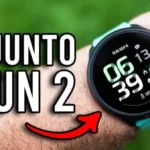
In-depth review of the Suunto Run 2, from features to accuracy, to how it comapres with other watches from Suunto and more!
We review the best triathlon watches on the market to find out which ones are best placed to help you improve your performance
Suunto is making a push into the road running scene with a more affordable feature focussed watch. What does Ivan think? Come find out.
Suunto Run 2 review covering GPS, offline maps, stored music, 4GB vs. 64GB storage, battery claims and what Tom’s Guide reported in testing.
See what the Suunto Run 2 offers, how its GPS and battery claims are qualified, and what to check when choosing 4GB or 64GB storage.
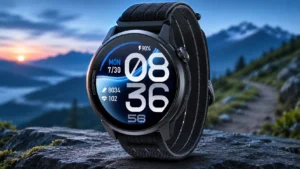
The Pace 4 Pro delivers an exceptional display, impressive battery life and reliable GPS in a remarkably light sports watch. Its wrist heart-rate tracking can be inconsistent during intense workouts,...
Pros: heart rate accuracy, display quality
Cons: band quality, smartwatch features
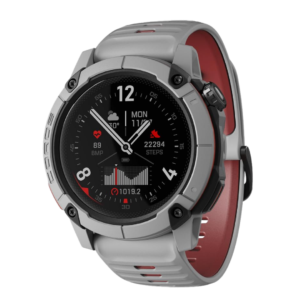
Best for long battery life, accurate GPS and useful offline maps at a strong price. Skip it if you need payments, richer apps, a built-in LED flashlight or polished smartwatch...
Pros: mapping and navigation, value for money
Cons: smartwatch features, contactless payments
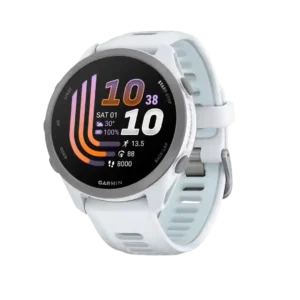
Best for accurate run tracking, deep Garmin coaching and phone-free Spotify in a light package. Skip it if you need full maps, triathlon mode, Apple Music support or the strongest...
Pros: value for money, GPS accuracy
Cons: mapping and navigation, third-party app support
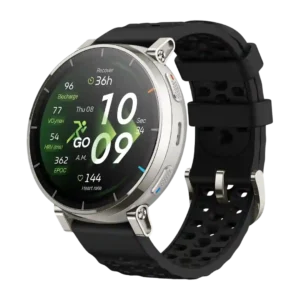
Good if you want premium running features, long battery life, and maps for under $200. Skip it if you need flawless heart-rate data, multiband GPS, LTE, or richer app support.
Pros: value for money, battery life
Cons: heart rate accuracy, third-party app support