
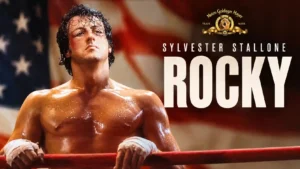
Rocky Feature Scores
Overall Scorata score: 4.6/5
Based on 46 analyzed reviews · View source samples
Explore all 48 feature scores for Rocky, organized into pros and cons.
Scores by Feature
Summary
48 reviewed features-
Very positive 4.5-5.030 (63%)
-
Positive 3.5-4.49 (19%)
-
Neutral 2.5-3.45 (10%)
-
Negative 1.5-2.44 (8%)
Pros
Sort
-
The simple chance-at-a-title premise becomes a surprisingly affecting story about a man trying to matter. A few detractors find the fairy-tale setup contrived, but most are drawn in by the intimate character drama.
-
Its training imagery and underdog storytelling remain touchstones for later sports movies and popular culture.
-
Most viewers leave moved, excited and impressed, particularly by the unexpected balance of romance and physical competition.
-
Its emotional payoff goes beyond the boxing result, with viewers responding strongly to Rocky’s search for dignity and Adrian’s affection. A minority find its sentiment manipulative or less moving.
-
Perseverance, working-class dignity and the need for connection give the familiar boxing premise emotional depth.
-
Rocky wins affection for the decency beneath his rough manner; even prickly supporting characters feel worth following.
-
The cast generally earns enthusiastic praise for making tough, damaged people sympathetic, although a few critics question particular performances.
-
Stallone’s mumbling, vulnerable, unexpectedly gentle Rocky is central to the film’s appeal. A sharp dissent regards his mannerisms as acting rather than a believable character.
-
Bill Conti’s stirring brass and melancholy piano give the training and intimate scenes their emotional shape.
-
The awkward, tender bond between Rocky and Adrian is one of the film’s biggest surprises. A few viewers find the early courtship pushy or the relationship insufficiently developed.
-
Rocky’s effort to believe in himself and Adrian’s gradual emergence give the film its momentum. A few critics wish Paulie and the other supporting characters had fuller arcs.
-
Grimy Philadelphia streets, expressive compositions and moving training shots lend the film a distinct physical world. Some critics find the camera work uneven indoors.
-
The final fight makes endurance and love more important than the championship result, producing a powerful emotional finish. Some viewers find the conclusion abrupt or overly engineered.
-
The climactic bout feels exciting and hard-won, making a limited amount of boxing count. A few observers notice sparse staging or uneven technical execution.
-
The supporting players bring warmth, resentment, humor and frailty to the gym and neighborhood. A few performances feel broader or less developed than the leads.
-
Philadelphia feels worn, cold and unmistakably lived in, from its neighborhood blocks to the art-museum steps.
-
Stallone’s script makes awkward conversations and small acts of kindness as consequential as the championship fight. Some find its old-fashioned plotting blunt or overly generous to its lead.
-
Its clearest triumph is the idea that effort, self-respect and love can matter more than winning a title.
-
Awkward jokes and small character reactions provide humor amid the hardship without turning the film into a broad comedy.
-
The running, gym work and famous museum steps transform repetitive effort into a soaring moment of self-belief.
-
Avildsen balances the intimate neighborhood scenes with a stirring boxing climax and strong use of location. A minority fault his cramped interiors or workmanlike staging.
-
Rocky’s halting jokes and half-formed declarations give the relationships warmth and individuality. Some find the exchanges stilted, but others see that awkwardness as the point.
-
Street grime and gym sweat sit alongside unexpected warmth, giving the underdog tale a convincing blue-collar mood.
-
The training run, art-museum steps, exchanges with Adrian and final embrace have become remarkably enduring images.
-
The character details, music and familiar moments reward repeat visits; some viewers return to this installment more than its sequels.
-
The training and final-bout editing make physical effort feel cumulative and stirring, although some dramatic cuts are conspicuously uneven.
-
The ordinary conversations and shabby surroundings feel unusually lived-in despite the unlikely championship premise. A dissenting critic finds the whole affair unconvincing.
-
The performers fit the battered, ordinary people they portray, making the unlikely boxing fairytale feel grounded.
-
Bruises, swelling and damaged faces make the championship fight look punishing and physically credible.
-
The rough, unpolished look generally suits the working-class material, though it can seem uneven in some versions.
-
The rough streets, modest gyms and everyday conversations firmly situate the drama in the struggling urban world of the 1970s.
-
The film spends much of its running time on small conversations and relationships before the major fight. Admirers value that patience, while others find the early stretches slow.
-
The distinctive lighting and restrained look strengthen the film’s unpolished, everyday quality.
-
The worn, functional gym and modest living spaces give the surroundings a believable texture.
-
Tonal consistency is a notable strength, adding texture and conviction to the drama.
-
Villain quality is a notable strength, adding texture and conviction to the drama.
-
The chance to rise from obscurity draws on American-dream optimism while acknowledging the working-class hardship and commercial spectacle around the fight.
-
The shoestring production usually feels resourceful and cinematic, although sparse crowds and occasional stock footage show its limits.
-
Impactful punches strengthen the brutal finale, although one critic reports uneven sound editing.
Cons
Sort
-
The early romance is affecting for many, but Rocky’s persistence and the treatment of Adrian can feel uncomfortable through a modern lens.
-
Some dialogue, particularly Stallone’s muffled speech during the bout, can be hard to follow; subtitles may help.
-
Adrian gains emotional independence, but the surrounding male characters sometimes treat women possessively and demeaningly.
-
The final bout’s blood, swelling and repeated punches can feel distressingly graphic, especially the eye injury.
-
The strongest praise centers on the film’s emotional honesty, while skeptical critics question its sentimental manipulation and conventional plotting.
-
Apollo’s racial framing and the film’s period politics draw some discomfort even when his character is allowed nuance.
-
Many embrace the unabashedly heartwarming resolution; a vocal minority feel the film works too hard to direct their emotions.
-
The underdog formula and familiar twists are hardly new, yet the characters and lived-in details give the familiar story its identity.
-
The film portrays bruised, overlooked workers with compassion, although some critics detect patronizing attitudes toward its blue-collar characters.
Use Cases
Best for
Sort
-
The movie builds an uplifting argument for persistence and self-respect rather than measuring success only by winning.
-
The film gives Rocky and his relationships time to develop, making it a strong fit for people who value character over spectacle.
-
An especially rewarding choice for those who want expressive, vulnerable lead acting and substantial supporting performances.
-
A landmark sports drama whose training and final bout work because the personal stakes are carefully developed.
-
People who do not ordinarily enjoy boxing can still connect with its romance, humor and deeply personal struggle.
-
The final match and training sequences are exciting, but there is much less boxing than the premise may suggest.
-
The mix of intimate 1970s drama and influential sports-movie imagery rewards an interest in film history.
-
The late-autumn and winter atmosphere makes this a rewarding cold-weather revisit for viewers who already enjoy its characters.
-
The film is a strong fit for realism focused thanks to its character-led drama.
-
The story offers plenty to consider about poverty, dignity and the way vulnerable people are valued by those around them.
-
The underdog’s perseverance provides topics to discuss together, though families should consider the bruising fight and rough behavior.
-
Its patience and ordinary-life concerns may land more strongly with viewers who can appreciate the slower, relationship-centered story.
Conditional or not ideal for
-
Action-fan viewingViewers expecting frequent bouts or action may find the long character-focused build surprisingly subdued.
-
Returning fan viewingReturning fans may be surprised by how quiet, intimate and sparing with boxing the original is compared with later installments.
Cast & Creators
-
Rocky BalboaHis rough-edged, tender portrayal is widely seen as the reason the ordinary underdog becomes so compelling. A small minority find the vocal mannerisms studied or the writing too centered on him.
-
MickeyHis irascible, wounded trainer brings memorable bluster and unexpected humanity, though a dissenter finds him cartoonish.
-
AdrianHer hesitant, vulnerable Adrian gives the romance its poignancy, and her gradual confidence is a frequent highlight.
-
DirectorHis attention to Philadelphia streets, intimate encounters and the final fight is widely admired. Some find the small interiors and visual continuity less assured.
-
PaulieHis bitterness and bruised loyalty make Paulie more than a simple comic or abusive side character, although the role occasionally feels broad.
-
Apollo CreedHis charisma and ring presence make Apollo a persuasive showman, even as some critics find the characterization thin or racially dated.
-
ComposerHis combination of melancholy piano and rousing training music is essential to the movie’s emotional lift.
-
CinematographerHis images make the city look lived in and expressive, though one critic finds the camera work inconsistent.
-
EditorHis training and fight editing helps build momentum, with some criticism of rough cuts during dialogue scenes.
-
EditorHis cutting turns preparation into momentum, although one critic notices clumsy continuity in quieter scenes.
-
ActorHis trainer is singled out for an understated performance that gives the title bout added tension.