
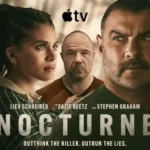
Nocturne Feature Scores
Explore all 64 feature scores for Nocturne, organized into pros and cons.
Scores by Feature
Summary
64 reviewed features-
Very positive 4.5-5.017 (27%)
-
Positive 3.5-4.416 (25%)
-
Neutral 2.5-3.424 (38%)
-
Negative 1.5-2.47 (11%)
Pros
Sort
-
Graham’s controlled menace and Beetz’s layered undercover work dominate the praise. Schreiber’s restrained detective divides opinion between quietly devastating and too familiar.
-
The cast is the clearest shared strength, with Graham and Beetz drawing especially enthusiastic praise. Even disappointed critics usually credit the performers with elevating uneven material.
-
Jurek’s apparent gentleness, calculated empathy, and eerie calm make him the show’s strongest attraction. A dissenting view finds his psychological power underused, with tricks and notes replacing the promised verbal warfare.
-
Culkin’s vulnerable nurse and Jagannathan’s forceful but human agent frequently enrich the thriller. Camp is a standout for some, while one critic finds Culkin’s nervous manner overplayed.
-
The hospital encounters create the strongest sparks, particularly Graham’s exchanges with Culkin and Beetz. Several critics also find the wider ensemble’s relationships convincing and mutually reinforcing.
-
The hospital mind games and race to find a missing girl can be gripping even when twists are predictable. A smaller group finds the prolonged setup and heavy mood ineffective at generating real tension.
-
An addictive central mystery and escalating stakes invite continued watching. Continuous viewing may also make the slow opening and delayed explanations easier to tolerate.
-
Schreiber’s regional delivery is a particular pleasure, while Graham’s chilling vocal choices help define the villain. Accent work also earns praise for adding texture to the ensemble.
-
The series earns praise as an emotionally charged crime drama, with Schreiber and Beetz supplying its turbulent core. Its strongest dramatic pull comes from the characters’ personal stakes.
-
Jonah’s grief can be evocative, while the broader mystery integrates parenthood and letting go with unusual elegance for one critic. The emotional weight is a meaningful part of the show’s appeal.
-
Saga’s undercover danger and the missing-girl investigation create escalating personal stakes. Favorable assessments find that each episode gives the audience another reason to stay invested.
-
Karl’s vulnerability, Saga’s resourcefulness, and several supporting figures create strong interest. Jonah is more divisive, with reactions ranging from an engaging flawed protagonist to an uninspiring genre fixture.
-
The central mystery can be addictive and thought-provoking, especially once the hospital plot gathers strength. Its reception is split by overcrowded threads, delayed context, familiar beats, and uneven episodes.
-
The production is widely seen as handsome and well made. Its polish can become a drawback when it feels overproduced and distant from the grounded story.
-
Strong performances and effective tension make this a satisfying crime thriller for its admirers. Familiar conventions limit its distinctiveness, but several critics still place it above many contemporary genre entries.
-
The direction is often praised for eerie atmosphere, momentum, and natural character dynamics. Dissenters find it too dutiful or unable to overcome implausible plotting.
-
Parenthood and letting go deepen the central mystery, and the Frost family’s early scenes are described as heartfelt. These relationships give the investigation stakes beyond solving a puzzle.
-
Several favorable assessments expect the thriller to linger, particularly once its later episodes gather force. Its unsettling central performance is a major part of that impression.
-
One enthusiastic assessment finds the nonlinear construction unusually effective. Visits to the past give present-day events meaning rather than merely interrupting them.
-
The opening quickly establishes Jurek’s sinister influence. One critic ranks it among the psychological-thriller genre’s best openers.
-
The clinical cell and dim police-station interiors create effective claustrophobia. These confined spaces strengthen the sense that Jurek’s influence reaches beyond his physical surroundings.
-
A gloomy small town and claustrophobic hospital create sustained dread for many critics. Others find the darkness so heavy and self-conscious that it drains energy rather than deepening suspense.
-
The hospital exchanges can be sharp and even brilliant, particularly between Beetz and Graham. Another critic finds the dialogue too carefully manufactured to sound like real people.
-
Camp’s Western Pennsylvania accent and the ensemble’s regional speech earn strong approval from some critics. Another finds the accents inconsistent, so the authenticity does not convince everyone.
-
The adaptation’s handling of the novels is sharply contested. Some find that its liberties preserve or enhance their frightening essence, while others believe it misses the wider impact of Jurek’s crimes.
-
Schreiber is considered a strong fit for Jonah, and Culkin is singled out as perfectly cast as Karl. Their ability to provoke frustration with the characters is treated as effective acting rather than a casting failure.
-
The trailer earns praise for planting uncertainty about whether Jurek’s influence is supernatural or psychological. That favorable impression concerns the promotional material rather than the completed season.
-
The familiar rhythms recall the wave of serial-killer thrillers that followed Hannibal Lecter in the 1990s. For the right viewer, that predictability is part of the comfort.
-
Saga actively advances the investigation rather than simply enduring the villain’s games. Her ability to extract information and manipulate the manipulator gives the undercover storyline force.
-
The investigators’ cooperation avoids familiar jurisdictional arguments. That practical teamwork lets the story concentrate on the killer’s attacks and the shared effort to stop him.
-
The best performances bring grief and vulnerability into the detective story, and some critics find this its most effective dimension. Others feel mechanical characterization or excessive polish keeps them emotionally distant.
-
Some critics see enough strong characters and source material to welcome another season. That interest is conditional on a satisfying finish and improvement to the current plotting weaknesses.
-
The opening establishes the thriller’s world effectively. Its gloomy town, institutional setting, and intertwined mysteries create a clear foundation even as the familiar ingredients accumulate.
Cons
Sort
-
Hospital security, convenient coincidences, and implausible decisions repeatedly test suspension of disbelief. Strong acting helps some viewers accept these stretches, but logical plotting is a persistent weakness.
-
Quinn, Ida, Nathan, and the tense hospital encounters can feel shortchanged. Some critics also want Jurek’s psychological abilities used more fully rather than keeping the most magnetic presence at a distance.
-
The investigation and psychiatric-facility operations can require frustrating leaps of faith. Several critics single out decisions inside the hospital as difficult to believe.
-
The nearly total lack of humor is a drawback in one assessment. Its relentless seriousness makes the already grim atmosphere feel exhausting.
-
One critic finds the soundtrack intrusively shrill. Its insistence on signaling pain and dread detracts from the drama.
-
Multiple timelines, investigations, and withheld connections make the story feel overcrowded to several critics. One enthusiastic assessment finds the plotting notably coherent, so tolerance for the mystery’s complexity matters.
-
The sprawling cast is not always served evenly: supporting figures can lose depth as attention shifts toward Jonah. An enthusiastic minority finds every subplot relevant, but crowding is a recurring complaint.
-
One critic finds the episodes considerably longer than necessary. The expanded running time adds to the sense that familiar thriller material has been stretched.
-
The nursing workload and institutional pressures offer potential depth, but one critic finds them reduced to plot devices. The workplace itself receives less meaningful exploration than its premise promises.
-
The hospital setting raises promising questions about care and vulnerability, but treatment of these ideas is uneven. One criticism is that Saga’s internal response to isolation and reopened wounds remains underexplored.
-
One favorable assessment finds Jonah’s choices grounded in his past, but others see characters making foolish decisions to move the plot. The most frustrating behavior often occurs around the hospital investigation.
-
Karl and Saga offer intriguing psychological layers, but Jonah and several supporting roles often feel underwritten. Critics disagree over whether the slow reveal deepens these people or reduces them to plot functions.
-
One critic finds the layered lighting and other visual flourishes disconnected from the material. Technical polish works against the grounded atmosphere the story needs.
-
The trailer sets expectations that the series does not fully meet for one critic. The finished show remains engaging, but its production choices fall short of that initial promise.
-
The series relies heavily on familiar broken-cop and imprisoned-mastermind conventions. Its manipulative villain and emphasis on how crimes continue offer fresh interest for some, while others see an overly familiar remix.
-
The camera work creates eerie anticipation for one critic but feels plain and informational to another. A further complaint is that elaborate polish, lenses, and blurred backgrounds weaken the story’s grounded feel.
-
Sharp dialogue and steady information release help the thriller work at its best. Critics also point to contrived decisions, excessive withholding, and characters whose emotional lives serve the plot too narrowly.
-
The steady discovery of Jurek’s plan works well for some, while other clues land unevenly. One especially predictable reveal is criticized as both heavily signposted and stale; the final resolution remains unassessed.
-
The small-town setting captures a chilling local atmosphere for one critic. Another finds Pennsylvania’s people and daily life much less specific than in comparable regional dramas.
-
The music amplifies dread for one critic but becomes an intrusive, pained screech for another. Its forceful presence is a significant part of the show’s mood.
-
Moving the story to rural Pennsylvania largely works for one critic. Another finds the retained Scandinavian names awkward within the new setting.
-
Exposition slows the otherwise strong clip slightly more than necessary. The pauses are still considered less intrusive than in many contemporary thrillers.
-
Ten hours gives the familiar thriller formula a substantially larger commitment than a movie. One critic notes the repeated rhythm of Jonah proving himself right across that longer format.
-
The detective mystery and reflection on psychiatric care do not always balance smoothly. The mismatch is noticeable without completely undermining the show.
-
The small-town setting gives the thriller a distinct, handsome identity for some. Others find its glossy sheen poorly matched to the grounded material.
-
Responses range from one of the year’s best shows to a competent but unexciting crime drama. Strong performances are the most dependable draw when the mystery feels slow or contrived.
-
Grief, parenthood, revenge, and ethical gray areas give the mystery substance for some critics. Others feel that withheld backstory and plot machinery prevent these ideas from developing fully.
-
Late twists divide opinion between exciting escalation and implausible excess. Several critics find the surprises telegraphed, although the tension often survives knowing what is coming.
-
The flashbacks can give the present-day mystery useful stakes and context. Other critics find the same device stingy with essential information or too busy adding disturbing incidents to clarify events.
-
Performers often make the characters’ old wounds and Michael’s post-captivity distress convincing. The writing is more divisive, sometimes treating trauma as a heavy backstory or neglecting its inner consequences.
-
Some critics find a breathless, steadily escalating thriller; others struggle through a glacial opening before momentum arrives. The later available episodes generally generate more excitement than the early setup.
Use Cases
Best for
Sort
-
Serial-killer thriller fans have a strong reason to watch in Graham’s unsettling villain and the tense hospital confrontations. Enjoyment depends partly on accepting familiar conventions and occasional implausibility.
-
Attentive viewing is rewarded by the performances and developing mystery. The show is praised for expecting more engagement than a second-screen watch.
-
Viewers missing twisted 1990s serial-killer movies should find familiar pleasures in the big performances and cat-and-mouse games. The ten-hour commitment is considerably larger than a single film.
-
The lead performances make the series worth watching even for a critic frustrated by its structure. Schreiber, Graham, and Beetz provide the most reliable reason to stay with it.
-
The spine-chilling serial-killer premise makes this a fitting seasonal watch for Halloween. Its appeal comes from unsettling psychological menace rather than a light festive mood.
-
One critic finds strong reasons to return every week, while another worries that delayed explanations will lose viewers between releases. The weekly experience depends on how much patience the early mystery earns.
-
Fans of Scandinavian murder stories are likely to enjoy its dark atmosphere and intriguing ensemble. The recommendation is qualified by familiar conventions and implausible twists.
-
Binging may be a better fit than waiting between episodes. Watching continuously can soften the frustration of the slow opening and delayed character context.
-
The story asks for patience before its threads start coming together. Viewers willing to stay through the opening may find renewed momentum, but early disengagement is a real concern.
Conditional or not ideal for
-
Background viewingThis is a poor fit for distracted streaming while using a phone. Its character work and unfolding connections benefit from sustained attention.
-
Realism-focused viewingViewers who need airtight logic may struggle with convenient plot developments and irrational hospital decisions. Earnest performances provide some grounding, but they do not remove those structural stretches.
Cast & Creators
-
Jurick WalterGraham’s calm delivery, manipulative warmth, eerie laugh, and sudden menace make him the most consistently praised attraction. Even critics unhappy with the plotting find his performance hard to look away from.
-
Saga BauerBeetz earns repeated praise for moving convincingly between Saga and her undercover persona. Her hospital encounters combine intelligence, emotional range, and risk, making her one of the ensemble’s strongest draws.
-
Jonah LynnSchreiber’s restrained grief and steady presence often anchor the investigation. Some find the performance quietly devastating, while a dissenting critic sees a commanding actor unable to lift Jonah beyond a one-note detective.
-
KarlCulkin gives Karl an affecting mix of innocence, loneliness, and vulnerability that strengthens the hospital scenes. Most critics praise the work, although one finds his nervous, haunted manner overdone.
-
QuinnJagannathan brings warmth, authority, and believable personal strain to Quinn. Her ability to suggest exhaustion without overplaying it is singled out as a strength.
-
EllisonCamp’s grounded presence, sympathy, and regional accent draw strong praise. One critic considers him the cast’s brightest performer and a stabilizing force whenever the production becomes overelaborate.
-
IdaMetz contributes to the strong ensemble and earns approval for her regional accent. Her performance is part of the cast’s ability to sustain familiar thriller material.
-
DirectorVan Patten’s early direction earns praise for defining the show’s quiet menace and momentum. A less favorable assessment credits the directors’ efforts while finding the plotting too implausible to overcome.
-
DirectorMenon shares praise for episodes that maintain eerie atmosphere, lively plotting, and natural character dynamics. The direction helps make the hospital threat feel pervasive.
-
NathanCarr contributes to an ensemble praised for compelling, layered performances. His work helps add human texture and complexity to the mystery.
-
MichaelValentin conveys Michael’s captivity trauma through altered movement, facial expression, and a haunting voice. His restrained physical performance is considered remarkably accomplished.
-
DirectorChappelle shares credit for the series’ consistently eerie atmosphere. The direction helps keep a sense of danger present even when little overt action occurs.
-
ComposerToydrum’s score effectively amplifies the dread in one assessment. The music works with the confined settings to intensify the thriller’s unease.
-
DirectorKarlsen shares praise for the unsettling atmosphere across the episodes. That sustained eeriness supports the mystery even in quieter scenes.
-
DirectorCoulter shares praise for a distinctive atmosphere and efforts to keep the story moving. The strongest criticism concerns plot swings that undermine those efforts.
-
DirectorKibens shares credit for eerie tension and maintaining momentum. That work is less persuasive to a critic who finds the mystery’s turns too implausible.
-
Creator, WriterJoffé earns credit for tension, pace, natural relationships, and a strong cast. Critics disagree sharply over whether the adaptation develops its ideas or lets withheld context and contrived plotting overwhelm them.
-
Writer, ShowrunnerHlavin shares praise for controlled reveals, momentum, and an excellent ensemble. Less favorable assessments criticize the adaptation’s narrow emotional scope and decisions that serve the plot more than the characters.
-
WriterThe writing team is criticized for giving intriguing characters implausibly poor decisions. Those choices make the mystery feel driven by contrivance rather than convincing behavior.
-
WriterThe writing team is criticized for giving intriguing characters implausibly poor decisions. Those choices make the mystery feel driven by contrivance rather than convincing behavior.
-
WriterThe writing team is criticized for giving intriguing characters implausibly poor decisions. Those choices make the mystery feel driven by contrivance rather than convincing behavior.
-
WriterThe writing team is criticized for giving intriguing characters implausibly poor decisions. Those choices make the mystery feel driven by contrivance rather than convincing behavior.