
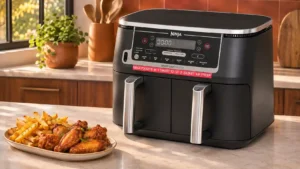
Ninja Foodi DZ550 Feature Scores
Overall Scorata score: 4.0/5
Based on 21 analyzed reviews · View source samples
Explore all 63 feature scores for Ninja Foodi DZ550, organized into pros and cons.
Scores by Feature
Summary
63 reviewed features-
Very positive 4.5-5.028 (44%)
-
Positive 3.5-4.416 (25%)
-
Neutral 2.5-3.47 (11%)
-
Negative 1.5-2.412 (19%)
Pros
Sort
-
Smart Finish is one of its most appreciated features, timing a main and a side to end together. Actual doneness can still require extra cooking time.
-
Air fry, bake, roast, broil, reheat, and dehydrate modes give it broad usefulness, with independent zone settings adding flexibility.
-
Its two-zone flexibility, crisp snacks, and helpful probe earn broad approval, tempered by its size, price, and inconsistent raw-meat results.
-
The ten-quart total gives generous room for family meals, but it is divided into two smaller drawers rather than one open cavity.
-
The built-in probe can remove guesswork and supervision from meat cooking, although its usefulness depends on getting trustworthy doneness readings.
-
Crispy prepared snacks and quick cooking are consistent strengths, with less dependable results for high-heat raw proteins in both zones.
-
Frozen fries and breaded snacks come out crunchy and golden, but fresh wings sometimes need extra time or still lack an evenly crisp exterior.
-
The mode buttons and display are generally easy to understand, helping with separate-zone cooking and manual adjustments.
-
Preheating typically takes only a few minutes, keeping the wait short for snacks and dinner.
-
The controls are approachable and the dual-zone modes help with meal planning, although timings occasionally need trial and error.
-
Heat stays fairly consistent in single-zone testing, but running two zones can cause fluctuation or difficulty holding high heat.
-
Single-basket snacks cook quickly after a brief preheat; two-zone recipes and thick meats can need significantly longer.
-
Nonstick drawers generally wipe or rinse easily, though grease collects in corners and ceramic plates or exposed heating areas can take more effort.
-
Frozen snacks are usually evenly crisp, while raw poultry, crowded fries, and power-shared dual-zone loads can finish less consistently.
-
A broad set of temperatures supports crisping, broiling, and drying foods, although the maximum depends on which zones are in use.
-
The sleek black-and-silver design looks modern and attractive, despite some inexpensive-feeling plastic details.
-
Despite its size, the unit sits firmly on the counter and resists wobbling when drawers are pulled out.
-
Handles and drawers feel sturdy to some users, while others find the plasticky trim and drawer construction less premium than expected.
-
Removable baskets and crisper plates can be dishwasher-safe, making post-meal cleanup less demanding even if handwashing is gentler on coatings.
-
Faster small-appliance cooking can save electricity compared with firing up a large oven, especially for routine dinners.
-
Different fan settings complement its varied cooking methods and help make it useful beyond standard air frying.
-
Independent drawers let mains and sides stay apart, and one dish can be removed without disturbing the other.
-
Juicy meat and crisp snacks are possible, but vegetables can dry out badly and fresh wings do not always achieve crisp skin.
-
Removable plates simplify washing, and the wider slots catch less food; experiences with how tightly the plates fit are less consistent.
-
The cooking chart provides useful starting temperatures and recipes, especially when the automatic programs need adjusting.
-
Six cooking modes provide plenty of choice for normal roasting, baking, dehydrating, and reheating tasks.
-
Several months of regular use produced no obvious coating damage in one test, but other accounts raise concerns about peeling and long-term wear.
-
The high price can be justified by frequent two-zone dinners and probe use, but simpler or older dual-basket models may offer better value for some.
-
A home test of frozen fries produced no visible smoke, even though cooking odors were noticeable.
-
The bright digital screen is easy to read, including when cooking later in the evening.
-
The fryer arrives largely assembled, requiring little more than inserting plates and plugging in the probe.
-
Probe-controlled chicken allowed cooking without repeated checking, a meaningful convenience when the thermometer behaves correctly.
-
Fries and prepared snacks brown fairly evenly, while raw wings can emerge colored on one side and pale on the other.
-
Selected temperatures are generally close, but slight overshoot and difficulty sustaining high heat in some tests limit precision.
-
Strong heating and fan power help produce fast, well-browned fried snacks when one zone is active.
-
Lightly misted potatoes developed attractive color and texture without needing much added oil.
-
Parchment liners helped reduce stubborn scraping after greasy or sticky recipes, though they do not eliminate all cleanup.
-
Time and temperature can be adjusted instead of relying on presets, which is especially helpful when default timings disappoint.
-
Daily use felt consistent and the handles remained sturdy in positive accounts, though this does not establish long-term service life.
-
Smart Finish is a standout everyday feature because it removes much of the manual coordination between dinner components.
-
Food releases easily from the coated surfaces and some short-term tests showed no peeling, but durability concerns remain.
-
Fat drains away from wings to keep them juicy without feeling greasy, although oil can gather in corners during cleanup.
-
The quick-start chart is detailed enough to guide whole-chicken timing when the smart probe program falls short.
-
Operating sound ranges from tolerable background fan noise to an intrusive whoosh depending on the kitchen and sensitivity.
Cons
Sort
-
Using both drawers alternates heating power, which can lengthen cook times and hurt temperature consistency compared with one active basket.
-
Its capacity comes with a bulky counter footprint, although one owner liked its relatively narrow shape compared with other large appliances.
-
Probe experiences are sharply split: it hit the target in some kitchens, but other tests found premature stopping and large temperature discrepancies.
-
Plastic trim and drawers feel less substantial than the appliance's price might suggest.
-
The glossy finish attracts fingerprints quickly and needs regular wiping to keep its polished look.
-
The end-of-cycle chime carries into the next room and can be startling when standing beside the unit.
-
The short cord may force placement close to a wall outlet and limit where the bulky fryer can sit.
-
Shaking fries or checking loaded baskets remains important for even browning; synchronization does not replace mid-cook attention.
-
Grease and oil aromas can spread throughout the kitchen during wings and other fatty foods.
-
Pack size and food type affect the cook considerably, with presets sometimes producing burnt food or requiring much more time.
-
Side and rear vents send out noticeable hot air, so give the appliance breathing room and keep heat-sensitive items clear.
-
The lack of a dedicated keep-warm setting means hot food should be served promptly or reheated later.
-
The heavy unit is much better left on the counter than moved in and out of a cabinet regularly.
-
Hot air leaving the side and rear vents can warm the surrounding kitchen area, so sufficient clearance matters.
-
Lingering aromas from a previous meal can remain noticeable at the next cooking session.
-
The high power draw calls for checking the outlet and what else shares the circuit before adding it to a busy kitchen.
-
An initial plastic smell faded after a day in one kitchen rather than persisting through ongoing use.
-
Preset opinions are mixed: some appreciate the convenience, while others found the defaults burnt or undercooked food.
-
Independent drawers are excellent for separating dishes but restrict wide pizzas, roasts, and other items that need a continuous cooking surface.
Use Cases
Best for
Sort
-
Cooking a protein and a side in separate drawers is the central advantage, especially when they need different times or temperatures.
-
Two five-quart drawers handle family-sized mains and sides at the same time, although each drawer still limits very large single foods.
-
Chicken and other meats can stay juicy, and whole chickens can turn out well. Fresh wings often brown unevenly, and thermometer results vary.
-
The built-in thermometer simplifies targeting meat doneness, but some tests found premature stops or significant differences from a separate thermometer.
-
French fries, onion rings, nuggets, and other prepared snacks usually become crisp and golden. Overcrowding and preset timing can leave a few pieces uneven.
-
Whole chicken can fit and roast successfully, but tall or broad foods may run short of room in an individual basket.
-
Fast preheating, separate cooking zones, and crisp results make weeknight mains and sides much easier to put together.
-
Vegetable results depend strongly on the recipe: roasted potatoes and some sides turned out well, while broccoli and carrots dried out badly in another test.
-
Pizza and other leftovers can regain crispness quickly, but the default reheat program may need substantial shortening.
-
Large portions and separately cooked sides make it handy for guests, but a crowded counter and slower two-zone cooking deserve consideration.
-
Temperature guidance helped prepare moist, flaky fish, making the probe especially appealing for delicate proteins.
-
Simple controls make it approachable for beginners, although learning multiple zones and adjusting presets takes a little practice.
-
Its low-temperature mode is useful for drying foods, though a model with an even lower minimum temperature may be preferable for specialized dehydrating.
-
A test batch of air-fryer doughnuts turned out golden and delicious when the cooking time was shortened.
-
Large divided capacity, easy-to-repeat modes, and the thermometer make it useful for batch preparation and complete meals.
-
Ceramic-coated crisper plates appeal to people trying to limit PTFE contact, although the baskets themselves still have nonstick surfaces.
-
It can take over some toast duties from a separate appliance, though its basket layout is less flexible than a toaster oven.
Conditional or not ideal for
Sort
-
Steak cookingHigh-heat steak cooking requires limiting use to one basket, and the probe did not consistently hit the intended medium-rare level.
-
Cooking for one or twoSmall households can use one drawer, but the large appliance is difficult to justify if most meals are single servings or snacks.
-
Small kitchens and apartmentsIts wide body and hot ventilation make it a challenging fit in kitchens with little permanent counter space.
-
Pizza cookingLarge pizzas are awkward because the two narrow baskets cannot be joined into one wide cooking area.
-
Dough proofingIts low settings are less useful for proofing than a competing divided-basket model with a lower minimum temperature.
-
BroilingHigh-heat broiling works best with one basket; using both reduces the available temperature for browning steaks.
-
Freezer-to-fryer cookingFrozen fries cook from the bag, but the default program can brown them too aggressively unless time and temperature are reduced.