
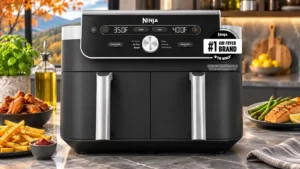
Ninja DualZone Pro DZ950 Feature Scores
Overall Scorata score: 3.9/5
Based on 6 analyzed reviews · View source samples
Explore all 48 feature scores for Ninja DualZone Pro DZ950, organized into pros and cons.
Scores by Feature
Summary
48 reviewed features-
Very positive 4.5-5.021 (44%)
-
Positive 3.5-4.416 (33%)
-
Neutral 2.5-3.46 (13%)
-
Negative 1.5-2.45 (10%)
Pros
Sort
-
The combination of two coordinated cooking zones, crisp frozen snacks and a meat probe earns strong praise for family meals. Its bulk and uneven results with some fresh foods temper the appeal.
-
With air frying, roasting, broiling, baking, reheating and dehydrating, the fryer covers much more than snacks. Low and high temperature settings help it handle contrasting techniques.
-
The broad 105°F to 450°F range accommodates gentle fruit drying and high-heat browning. Having both extremes makes the six programs substantially more flexible.
-
Air frying is strong overall, particularly for smaller frozen foods that brown consistently. Fresh vegetables and moisture-sensitive proteins are less dependable.
-
Smart Finish coordinates two baskets, Match Cook mirrors settings, and the meat probe can stop cooking at target doneness. These conveniences are among the biggest reasons to buy it.
-
Removable plates can go in the dishwasher, and repeated cycles reportedly left the coating intact. Easy machine washing is a welcome convenience for an appliance with two baskets.
-
Fries, nuggets and other small frozen foods develop a good crisp exterior with fairly even color. Fatty meats and fresh vegetables can be less consistent.
-
Short preheat times and fast convection make frozen snacks and weeknight meals quicker than using a conventional oven. Running both zones at very high heat may add a little time.
-
It maintains relatively steady cooking temperatures and quickly recovers after a drawer is opened. That consistency helps food cook more predictably.
-
Separate cooking chambers do a good job keeping strong fish or garlic odors out of food in the neighboring drawer. The isolation is useful when making sweet and savory dishes together.
-
Smart Finish delays the shorter program until the longer-running dish catches up. It removes much of the timing work involved in serving both baskets together.
-
Match Cook saves repeated setup when preparing two batches of the same food, while Smart Finish handles dishes with different cooking times. Both remove common meal-preparation hassles.
-
The built-in probe offers a simpler way to aim for medium-rare steak or properly cooked poultry. It reduces repeated basket checks and can shut heating off at the target temperature.
-
Most accounts praise the nonstick release and dishwasher-safe crisper plates, with grease wiping away easily. Ceramic plates or tight corners can require soaking after sticky meals.
-
Sticky sauces and grease generally release from the coated baskets with minimal effort. Some find the ceramic crisper plates less convenient to clean than traditional nonstick surfaces.
-
Six cooking modes cover frying, baking, roasting, broiling, reheating and dehydrating. The breadth makes the appliance more useful than a basic fry-only unit.
-
Smart Finish and the meat probe simplify daily cooking once set up. The two-drawer controls present a brief learning curve for first-time or single-dial users.
-
The fans produce a steady, relatively low-pitched hum rather than an especially piercing whine. Normal conversation remains possible nearby.
-
Ten quarts across two baskets is generous for several dishes, but each individual drawer is only five quarts. The divided design limits bulky single foods despite ample combined room.
-
The meat probe and synchronized drawers can justify a higher price for busy families. Pricing varies widely between sellers, making discounted offers more attractive than paying full price.
-
Independent cooking chambers limit flavor transfer between unlike foods. Aromatic salmon and milder sides or desserts can cook side by side without unwanted crossover.
-
Most everyday meals can start without preheating, and the appliance heats up rapidly. Delicate pastries and high-heat steaks may still benefit from a short warmup.
-
Independent timers can be coordinated so the main and side finish together. That removes much of the manual planning involved in dual-dish cooking.
-
Frozen fries and nuggets brown impressively evenly, with relatively few burnt pieces. Very full baskets may need shaking to avoid pale, softer spots.
-
Independent settings and broad adjustments for temperature and fan speed make it easy to tailor the two baskets to different foods. This flexibility is valuable for multi-part meals.
-
Smart Finish is a major convenience: two foods with different cooking times can finish together. Extreme high-heat use in both baskets may still add time to the overall cook.
-
A broad fan-speed range accommodates gentler jobs such as dehydrating and more aggressive hot-air frying. This flexibility is a meaningful advantage beyond basic presets.
-
Smart Finish reportedly synchronized multiple different dinners without timing errors. Claims about long-term durability are more limited than the short-term program performance.
-
One extended-use report found no scratches or peeling after repeated dishwasher cycles. That is encouraging, though long-term reliability still isn't fully established.
-
The housing and internal mechanisms are described as sturdy enough for frequent use. Long-term lifespan remains an expectation rather than a proven multiyear result.
-
Match Cook conveniently duplicates settings with a button press. The extra steps for programming independent zones and probe functions can take a little practice.
-
Using the appliance in place of a full oven is described as an efficient tradeoff for daily meals. Exact household savings aren't established, but avoiding a large oven's warmup is appealing.
-
The built-in meat probe is a particularly useful addition, providing internal temperature tracking without a separate thermometer. It makes the more advanced model feel meaningfully equipped.
-
The insulated housing and nonstick cooking components are portrayed as substantial and durable. Claims about many years of service should be treated as projections, not established outcomes.
-
Small frozen foods are a strong point, cooking very evenly through most of a batch. Dense baskets and some proteins are less uniform, so shaking and placement matter.
-
Matching settings across both drawers is easy, and synchronized timing reduces manual work. Learning to program two different zones and the meat probe adds complexity at first.
-
Power-sharing controls are credited with avoiding circuit overload when both baskets are active. Proper clearance and careful handling of hot exhaust and grease remain important.
Cons
Sort
-
The broad two-basket design takes up substantial horizontal counter space and needs ventilation clearance. It's a significant drawback in smaller kitchens.
-
There's no viewing window, so checking color means pulling out a drawer. That interrupts airflow and releases heat during cooking.
-
The rear exhaust can become hot enough to demand generous clearance from walls and cabinets. Counter placement needs more planning than the appliance's dimensions alone suggest.
-
The wide, nearly 19-pound appliance is awkward to put away after every meal. It makes more sense in a kitchen where it can stay on the counter.
-
Rendered fat from bacon or beef can vaporize at high heat and cause white smoke. A little water below the crisper plate was reported to help with especially greasy foods.
-
Exact DZ950 replacement drawers, plates and probe prices aren't clearly confirmed. Buyers should check compatible part numbers before planning on future replacements.
-
The crisper plates let rendered fat collect underneath, but heavy grease can vaporize and generate smoke. Extra care is worthwhile when cooking fatty meats.
-
Some roasts cook well without being turned, but heavily loaded baskets of fries benefit from a halfway shake. Skipping that step can leave softer food in the middle.
-
Automatic power distribution helps run both chambers together, but simultaneous high-temperature cooking can take slightly longer than using one basket. Plan a little extra time for maximum loads.
-
Fried snacks and dried fruit can turn out pleasingly crisp. Meat is more divisive: some cooks report juicy results, while controlled tests found an overly dry finish.
-
Independent drawers are excellent for keeping distinct foods apart and spreading out multiple portions. Their fixed partition sacrifices the flexibility of one large cooking cavity.
Use Cases
Best for
Sort
-
The integrated thermometer can stop cooking at a chosen internal temperature and takes guesswork out of steaks and roasts. Correct placement still matters, and it doesn't eliminate every risk of dry meat.
-
Independent baskets can fry fries while roasting chicken or vegetables at different settings. Smart Finish aligns their completion so one dish doesn't sit cooling while the other cooks.
-
The two 5-quart baskets give families room to prepare a main and side together, often for about four or five people. The combined capacity is much more useful for separate foods than one oversized roast.
-
The thermometer helps target doneness, and several cooks report juicy, well-timed results. More controlled frying tests found wings and lean proteins could still dry out or crisp unevenly.
-
Low-temperature settings can produce crisp dried apple chips over long cycles, and the separate baskets allow two batches at once. It's a credible option for fruit dehydration.
-
Cooking a main and side together cuts down on sequential batches and the wait for oven preheating. It's particularly handy for busy weeknight dinners.
-
A baking mode and independently heated drawers make small desserts and light oven-style tasks possible. Delicate pastries may need preheating for the best result.
-
High-heat modes can give seasoned vegetables a tasty char, but fresh vegetables don't always crisp evenly. Results appear more dependent on the recipe and loading than frozen snacks.
-
Fries, onion rings and nuggets are a highlight, coming out largely crisp and evenly browned. Even without preheating, frozen sides generally turn out well.
-
Two independent zones make it easier to batch-cook different ingredients or recipes without mixing flavors. Synchronized completion simplifies getting several components ready at once.
-
The two baskets can handle big party-wing batches and help bring mains and sides to the table together. It's a practical choice for feeding several guests.
Conditional or not ideal for
Sort
-
Whole chickens and tall roastsExperiences conflict: some cooks say a five-to-six-pound chicken fits, while others find the individual baskets too narrow for a whole bird or fish. Check dimensions rather than relying on total quarts.
-
Cooking for one or twoThe 10-quart two-basket setup is overkill when you mostly prepare a single snack or dinner for one. A smaller, single-basket model is likely more convenient.
-
Small kitchens and apartmentsThe wide, heavy two-basket body requires a substantial stretch of counter and room for rear ventilation. Compact kitchens and apartments are a poor fit.
-
Reheating leftoversReheat is available, but this sizable dual-basket unit makes little sense if warming one pizza slice or a small snack is your main use. Smaller appliances are better suited to that routine.
-
Bacon cookingHigh-fat bacon can release grease that smokes when it reaches the hot basket bottom. This isn't a completely smoke-free way to cook fatty cuts.
-
First-time air fryer usersThe two-zone programming and built-in meat probe take some getting used to, especially for anyone accustomed to a simple single-dial fryer. The initial learning curve appears manageable.