
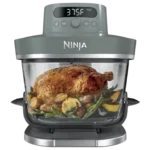
Ninja Crispi Pro Feature Scores
Explore all 39 feature scores for Ninja Crispi Pro, organized into pros and cons.
Scores by Feature
Summary
39 reviewed features-
Very positive 4.5-5.016 (41%)
-
Positive 3.5-4.415 (38%)
-
Neutral 2.5-3.45 (13%)
-
Negative 1.5-2.43 (8%)
Pros
Sort
-
Fast cooking and little or no preheating are standout strengths; fries, reheats and proteins often finish well ahead of conventional-oven timing.
-
Overall satisfaction is very high, with many owners using it daily and calling it a favorite kitchen appliance. Price, bowl handling and a smaller cluster of reliability failures keep the enthusiasm from being universal.
-
Air frying is the Crispi Pro’s biggest strength: fries, wings, chicken, vegetables and leftovers generally come out crisp and well cooked. Difficult bakes and overcrowded loads are the main exceptions.
-
Precise time and temperature control is a meaningful upgrade over the original Crispi, and mid-cook adjustments are easy. Max Crisp is more constrained than the other modes.
-
Dishwasher-safe glass bowls, lids and crisper plates make cleanup convenient. The large glass bowl is heavy, and some users prefer hand washing.
-
Air Fry, Max Crisp, Recrisp, Roast, Bake/Proof and Dehydrate cover a broad range of meals and leftovers. Baking and dehydrating are more situational than the core air-fry and reheat modes.
-
Clear glass makes it easy to judge browning without repeatedly opening the fryer, and built-in lighting is praised where present. One regional review noted the lack of illumination as a missed opportunity.
-
The dial-and-button setup is generally intuitive and quick to learn, with exact time and temperature adjustment. A few users disliked faint labels or individual control ergonomics.
-
Cleaning is one of the strongest selling points thanks to glass and dishwasher-safe parts. The main nuisance is the crevice around the permanently attached handle/base, where water or debris can collect.
-
Crisping is consistently strong, with crunchy fries, wings, bacon and reheated leftovers getting especially high praise. Max Crisp can be aggressive for delicate or already-thin foods.
-
The six-mode lineup is broad enough to replace several everyday countertop tasks for many users, even if some premium rivals offer more specialized functions.
-
The clean glass design, compact visual profile and multiple colors are widely praised, with many owners happy to leave it on the counter.
-
Reviewers repeatedly praise juicy, tender centers with crisp exteriors on chicken, potatoes, fries and reheated food. Overcooking or top-heavy baking can produce occasional dry or underdone spots.
-
Max Crisp and Recrisp receive the most consistent praise, while Roast is strong for vegetables and meats. Bake/Proof and Dehydrate work, but they are more dependent on the food and user expectations.
-
Most foods cook evenly with good browning, particularly when shaken or turned as needed. Baking and crowded loads expose the top-heavy heat pattern more readily.
-
The wide temperature range is highly valued for proofing, dehydrating and aggressive crisping, with reviewers praising the added precision over the original model.
-
Most tests produce attractive golden browning and crisp finishes, especially on fries, vegetables and meats. Top-only heat can brown baked goods faster on top than underneath.
-
The main unit and glassware are usually described as sturdy and premium-feeling. A smaller set of users reported dents, loose trim, or other quality-control disappointments.
-
The raised crisper plates let fat and drippings collect below the food, helping bacon and meats stay crisper and less greasy.
-
The controls are easy for beginners, but inserting the glass bowls has a learning curve. Once users learn the angle and pressure needed, most describe operation as straightforward.
-
The timer is easy to set, and automatic pausing when the bowl is removed is especially useful for shaking or checking food mid-cook.
-
The 6-quart bowl is tall enough for whole chickens and larger roasts, but several users point out that its flat cooking surface is not much wider than smaller bowls. Flat foods may still require batches.
-
The glass cooking vessels are a defining strength for shoppers trying to reduce coated or plastic cooking surfaces. Some users still object to rubber, plastic or ceramic-coated components around the food path.
-
Value depends heavily on use: frequent air-fryer users and glass-focused buyers often feel the convenience justifies the premium. Occasional users frequently find the near-$300 price hard to defend.
-
The digital display is generally clear and useful for tracking mode and time. One reviewer found mode labels too faint when viewed off-angle.
-
The fixed heating element and cool-grip design are seen as safer than the original Crispi’s detachable pod. The hot glass and a few reports of smoke, odor or sharp edges still warrant care.
-
The stand can be compact compared with dual-basket fryers, but it is heavier and less portable than the original Crispi. Separate glass bowls also require real cabinet or counter storage.
-
The glass prep-cook-serve-store workflow is widely loved, especially with the included lids. The recurring drawback is that bowls can be fiddly or heavy to insert and remove.
-
Side handles make serving and carrying the glass bowls easier, and many stay relatively cool. The large bowl’s weight and overall heat still lead some users to use two hands or mitts.
-
Glass reduces reliance on a coated basket, but the crisper plates still raise coating questions. Scratching, wear and material transparency are the main concerns.
-
One owner reported that temperature control seemed to work fine, but direct accuracy feedback is limited.
Cons
Sort
-
The short power cord frustrates several users because it limits placement and can force the unit closer to walls or cabinets.
-
Reliability is the clearest long-term concern: many units perform consistently, but multiple customers reported ADD POT errors, container-detection failures or controls failing within months.
-
There is no app control, a notable omission at this premium price compared with some rivals.
-
There are no smart or app-connected cooking features, which stands out more because of the premium price.
-
Noise feedback is split: many owners call it quiet or tolerable, while one instrumented test found it unusually loud. Completion beeps also draw mixed reactions.
-
Heat management is mixed: the appliance often keeps the kitchen cooler than an oven and handles can stay manageable, but the glass, vents and nearby base can become very hot.
-
The two bowls, lids and crisper plates are useful, but the absent mid-size 4-quart bowl is a repeated frustration. Many owners consider that size the everyday sweet spot despite its extra cost.
-
Durability feedback is mixed: many units and glass bowls feel robust, but scratched crisper plates, wear concerns and some breakage reports reduce confidence.