
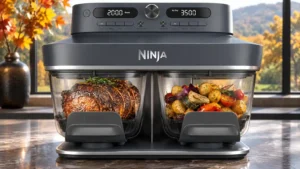
Ninja Crispi DualZone DD101 Feature Scores
Overall Scorata score: 3.6/5
Based on 19 analyzed reviews · View source samples
Explore all 54 feature scores for Ninja Crispi DualZone DD101, organized into pros and cons.
Scores by Feature
Summary
54 reviewed features-
Very positive 4.5-5.015 (28%)
-
Positive 3.5-4.419 (35%)
-
Neutral 2.5-3.412 (22%)
-
Negative 1.5-2.48 (15%)
Pros
Sort
-
The +1 Minute button gets repeated praise because it extends cooking without resetting the cycle. It is particularly helpful when food needs a small finishing adjustment.
-
Six cooking modes and independently adjustable zones create genuine flexibility for different foods. The ability to bake, roast, dehydrate, or crisp separate items is a major strength, although the settings have restrictions.
-
The glass containers, plates, and lids can go through the dishwasher, and repeated test cycles caused no obvious damage. This significantly reduces cleanup work after full meals.
-
Glass vessels and removable plates are generally easy to clean, sometimes easier than coated baskets. One tester found water trapped beneath an attached base after dishwasher cycles.
-
Clear glass lets cooks monitor browning without opening a drawer, a widely appreciated advantage. However, one tester found food difficult to see in dimmer lighting.
-
The removable glass dishes look good enough for table service and reduce transfers between cooking and eating. This is most useful for meals served directly from the same container.
-
The strongest approval comes from households that regularly cook two foods and value glass serving and storage. Others see too much weight, cost, and complication for everyday single-dish use.
-
Smart Finish coordinates independent dishes, and Match Cook mirrors settings for bigger batches. In real tests, inaccurate timing instructions sometimes leave one food underdone or the other overcooked.
-
Removing one basket can automatically pause both cooking zones, preserving a synchronized schedule. Testers view that coordination as thoughtful and practical.
-
Six modes cover routine frying, baking, roasting, reheating, and dehydration without requiring a separate appliance. The selection is valued in regular family cooking.
-
It produces appealing fried food and can crisp well in both baskets, but its regular Air Fry mode sometimes needs extra time. Max Crisp helps rescue underdone frozen foods, although it has dual-zone restrictions.
-
Chicken wings, pierogies, and some frozen snacks develop excellent crunch, especially with Max Crisp or adjusted cook times. Thick or wet foods and crowded fries can remain unevenly crisp.
-
Flip reminders are appreciated for food that needs turning or stirring, especially wings, tots, and fries. They reduce the chance of forgetting halfway through cooking.
-
Modern colors and glass containers give the appliance a more attractive appearance than common black-box air fryers. Several cooks are happy to keep it on display.
-
The body and thick glass make a solid, premium impression. Some reports describe stable baskets and sturdy construction, though others notice a little play in the tray fit.
-
Glass food vessels appeal to cooks who prefer them over standard coated-metal baskets, while ceramic-coated crisper plates remain part of the system. Claims about coating chemistry should not be read as meaning every component is uncoated.
-
Storage lids, crisper plates, and extra glass vessels support a cook-serve-store workflow. Included accessories get particular praise for keeping leftovers in the same container.
-
A clearer four-digit timer reduces confusion compared with earlier models, and one report calls the screen readable even in bright daylight. Display usability is a modest strength.
-
Burgers can cook without the grease splatter associated with a skillet. A relatively tidy cooking process is appealing for everyday meals.
-
Warm-up is described as rapid enough that preheating often feels unnecessary. Fast readiness helps short everyday cooking sessions.
-
The glass vessels and snap-on lids streamline transferring leftovers to the fridge and reduce extra dishes. The heavy whole appliance, however, is inconvenient to lift into storage after every meal.
-
Smart Finish and Match Cook can simplify coordinated cooking and larger batches. Their benefit is real when timings are calibrated, but unexpected pauses or inaccurate recipe times can undermine the convenience.
-
Max Crisp produces welcome extra crunch and everyday Air Fry settings are useful, but ordinary presets can undercook frozen foods. Max Crisp cannot run in both zones simultaneously.
-
Removable components survived multiple dishwasher cycles, and limited owner reports suggest the glass holds up in daily use. Long-term reliability is not established by these early impressions.
-
The combined capacity handles multiple dishes and family portions, but the two individually small vessels have limited flat cooking area. Total quartage overstates what fits in a single basket.
-
The basic buttons, dial, and one-minute adjustment can be convenient, but configuring Match Cook and Max Crisp together is confusing. Some users needed multiple checks of the manual.
-
Salmon can be moist and flaky, chicken can cook through nicely, and knots can turn out fluffy. Some wings dry out after losing too much fat, and fries can become dry before fully crisping.
-
One assessment values being able to cook two different foods without flavor transfer. Separate glass vessels provide the distinction.
-
Assembly is described as simple: put the glass pots into their bases, slide them into place, and cook. Initial setup does not require complicated installation.
-
Some cooks find the buttons intuitive after setup, while others report a learning curve around two-zone settings and cook times. Straightforward recipes become easier once the timing differences are learned.
-
One account says the non-slip feet keep the heavy machine in place when a basket is pulled out. That adds some reassurance during loading.
-
The fan is described as a manageable low hum rather than a shrill noise. It may still be distracting during conference calls in an open-plan room.
-
The ceramic nonstick crisper plates simplify cleanup without relying on conventional PTFE-based coatings. Their contribution is mostly convenience during washing.
-
One account mentions a faint initial burn-off smell that disappears after the first cycle. No ongoing odor problem was reported in that account.
Cons
Sort
-
The roughly 30-pound machine takes significant permanent counter space and is cumbersome to move. Its bulk is one of the most consistent complaints, particularly for small kitchens.
-
Glass containers can become scorching hot and remain hot after cooking, making removal and washing more demanding. The main body may stay cooler, but the vessel surfaces need real caution.
-
Fingerprints, grease, and visible splatters readily show on the transparent and smooth surfaces. Keeping it looking pristine involves more frequent wiping than an opaque fryer.
-
Starter recipes and temperature charts can help, but several testers found their suggested cook times inaccurate for frozen items and synchronized meals. Expect to adjust instructions to match your ingredients.
-
Fries and vegetables still benefit from turning or stirring during cooking, and heavy glass vessels are awkward to shake like regular drawers. It is not consistently hands-off.
-
Glass stays hot after the fryer stops, delaying safe washing or storage. Users should plan a cooling period before handling the vessels casually.
-
The hot glass, partly obscured ventilation, and potential for children to touch exposed vessels raise safety concerns. Counter placement and oven mitts matter even when heat-safe feet are included.
-
The price is routinely described as premium, often around $350–$380, and multiple cooks question the upgrade value. It is easier to justify when glass storage and two-zone cooking are used frequently.
-
Strong airflow made burger cheese flap during a finishing step. Lightweight toppings may need securing to stay in place.
-
Materials disclosures are qualified because statements about PFAS/PTFE-free glassware do not necessarily cover every food-contact piece. The ceramic-coated crisper plates and version differences warrant careful reading.
-
Using both baskets can slow cooking and call for longer timings, especially for foods like bacon. Wings fare better, with some batches doubling in size for only a modest extra wait.
-
Separate temperatures and times make two dishes flexible, but restricted Max Crisp pairing and sometimes locked preset temperatures frustrate customization. Expect to learn which combinations are allowed.
-
Basic setup directions are easy enough to follow, but important Max Crisp and Match Cook limitations are not always obvious. Some testers repeatedly consulted the manual.
-
The broad set of temperatures supports high-heat crisping and gentler cooking methods. However, a tester could not adjust the Max Crisp temperature as expected, limiting fine control.
-
Temperatures remain reasonably stable after recovering from added food, but the machine is not ideal for highly precise heat control. The assessment is more favorable for ordinary frying than precision recipes.
-
Removable glass containers are useful for serving and storage and slide into guided tracks, but they can feel loose and are awkward to shake. Separate baskets also limit larger single items.
-
Fast frozen snacks and efficiently doubled wing batches are balanced by slow bacon, thick meats, and recipes requiring additional minutes. Cooking speed depends substantially on whether one or both zones are active.
-
Many dishes cook evenly, including salmon and some meats, but fries and vegetables occasionally have both undercooked and overdone sections. Batch loading and food moisture affect consistency.
-
Wings and fries can achieve attractive browning, but the color is not always uniform. A few frozen pieces may remain pale while others brown too far.
-
Front handles help slide the baskets smoothly, and one report says they stay cool. However, heavy, extremely hot glass makes a secure grip and protective mitts important.
Use Cases
Best for
Sort
-
Separate cooking zones are the clearest strength: users can prepare different foods with their own temperatures and timing. It is especially worthwhile for main-and-side meals.
-
Cooking a main and side in separate baskets can work well for family dinners, especially around four people. Larger families or guests may find the individual basket sizes limiting and need batches.
-
Preparing a protein and a side together can make weeknight dinners faster and more convenient. Single-dish cooks may not benefit enough to offset the setup and space requirements.
-
Wings, shrimp, salmon, steak, and burgers can cook well, with especially good outcomes for salmon and shrimp. Some lab tests found wings and chicken too dry, so results vary by protein and settings.
-
Meals can be cooked and stored in the same lidded glass containers, which is particularly practical for preparing food ahead. Heavy handling and limited single-basket size remain tradeoffs.
-
The glass baskets appeal to cooks trying to avoid conventional PTFE-coated metal drawers, but the exact coating status of every food-contact component is not independently established.
-
Pierogies and some frozen fries and appetizers turn out nicely crisp, but nuggets sometimes remain underdone at the suggested times. Extra time or Max Crisp can help, with a learning curve.
-
Garlic knots came out fluffy, and the shallow baskets are presented as suitable for small muffins and cookies. Full-size loaves would need a different oven.
-
The dehydrate mode produced tasty jerky and encouraged experimentation with fruits and tomatoes. Slow, multi-hour cycles mean it is not useful for preparing an instant snack.
-
Two containers let hosts prepare more of the same food or two different dishes, making entertaining more flexible. Large parties may still require batch cooking.
-
A hands-on cook reports that pizza bites were a hit. This supports small pizza snacks rather than proving the machine can fit a full pizza.
Conditional or not ideal for
Sort
-
Whole chickens and tall roastsEach separate basket is too small for a whole chicken or other bulky roast. A large uninterrupted basket would be more suitable for these foods.
-
Vegetable roastingBroccoli can roast with good flavor and pleasant texture, but some batches cook unevenly. One timed sweet-potato test had to be stopped early to prevent burning.
-
Cooking for one or twoSmall portions fit, but a heavy two-zone appliance is rarely the best fit when cooking only one dish or reheating for one or two. The glass containers are still convenient for dividing portions.
-
First-time air fryer usersSome reviewers find the modes easy to learn, but others explicitly advise beginners against this model. Independent zones, synchronization, and mode restrictions make it less approachable than basic single-basket fryers.
-
Small kitchens and apartmentsThe large, deep countertop footprint and need to pull out hot containers make this a difficult fit for compact kitchens. A permanent, well-cleared counter location is preferable.
-
Dough proofingReports differ by version: one account says low-temperature proofing is possible, while other listings warn that the U.S. six-mode model lacks a dedicated Prove setting. Verify the exact controls before relying on bread proofing.
-
Reheating leftoversA test of Recrisp restored leftover cheesy tots successfully in five minutes. Reheating is capable, though the large machine may be excessive for tiny servings.
-
Bacon cookingA bacon test ran for more than 15 minutes and still produced uneven crispness. Bacon is not a strong reason to buy this particular dual-zone model.
-
Griddle-style cookingBurgers cook through but do not develop the strong seared crust expected from a skillet or griddle. It is better for convenient enclosed cooking than flat-top browning.
-
Shared kitchens and officesIt may be disruptive in an open-plan home office during calls because of its fan noise. Quiet shared workspaces are not its strongest setting.