
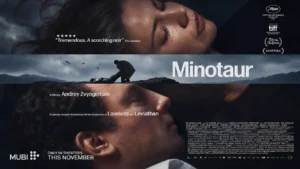
Minotaur Feature Scores
Overall Scorata score: 4.3/5
Based on 38 analyzed reviews · View source samples
Explore all 52 feature scores for Minotaur, organized into pros and cons.
Scores by Feature
Summary
52 reviewed features-
Very positive 4.5-5.033 (63%)
-
Positive 3.5-4.49 (17%)
-
Neutral 2.5-3.46 (12%)
-
Negative 1.5-2.43 (6%)
-
Very negative below 1.51 (2%)
Pros
Sort
-
The forced conscription and culture of denial create a bleak attack on a society accepting wartime sacrifice. The critique resonates far beyond the domestic plot.
-
The invasion of Ukraine transforms a marital-crime story into an indictment of authoritarianism and complacency. Some think the connections are blunt or the political thread more powerful than the marriage.
-
An unusually long, meticulous crime-cleanup sequence turns ordinary physical actions into gripping suspense and dark comedy. A few viewers struggle with the slower buildup.
-
Cold, meticulous widescreen images turn homes, streets, and offices into moral landscapes. Most find the framing hypnotic, although a few dislike the static, gray aesthetic.
-
The demand for fourteen draft names makes human sacrifice a believable business decision, and the departing soldiers give it devastating consequences.
-
The restrained ensemble conveys deep unhappiness, fear, and moral evasiveness without grand speeches. Most reactions single out the leads, though a dissenting voice finds the acting flat.
-
Police, politicians, and business leaders sustain one another through favors, allowing Gleb to evade the consequences others face.
-
Dmitriy Mazurov makes Gleb chilling, controlled, and at times pitiful, while Iris Lebedeva gives Galina an emotionally charged counterpoint. The subtle performances are a major draw.
-
Elegant but empty rooms, gray streets, and long silences build a suffocating sense of dread. That chilly severity appeals to many but bores some viewers.
-
The film exposes how privilege, willful ignorance, and institutional favors normalize cruelty. Its morally compromised characters are protected when others pay the price.
-
The glass-walled house and spare offices expose the characters’ wealth, separation, and insecurity. The clean modern architecture is often as expressive as the dialogue.
-
Wealth and influence shield Gleb and his circle while poorer workers face the consequences of their choices. This contrast gives the story its sharp social edge.
-
Andrey Zvyagintsev controls space, silence, and tension with exacting precision. A few critics consider the austerity heavy-handed or lifeless, but the prevailing response is enthusiastic.
-
Black comedy arrives at particularly grim moments, especially during the awkward cleanup after a crime. Most appreciate the restraint, though one harsh critic finds the jokes out of place.
-
The mythical fourteen sacrifices, glass-walled homes, and final sky imagery link private wrongdoing to a consuming state. Some find the imagery potent, while others call the message too obvious.
-
Images of drafted men and grieving families, as well as the cold final reckoning, leave many viewers shaken. Some feel the austere style keeps emotion too distant.
-
Claude Chabrol’s adultery-thriller framework remains recognizable, but the Russian wartime setting changes its moral implications. Some celebrate the reinvention, while others see an overly faithful remake.
-
The careful screenplay links an unhappy marriage, a killing, and state-sanctioned sacrifice with economical detail. Praise for its discipline is tempered by complaints about familiar plotting.
-
A father’s violent lesson to his son and the wealthy men’s casual sexism show power being passed down as coercion. These everyday exchanges make the broader critique sharper.
-
A familiar tale of adultery and murder becomes a pointed fable about wartime Russia. Most admire the result, while skeptics find the domestic drama predictable or less engaging than the politics.
-
The final sequence leaves a bleak, unresolved judgment about political and private impunity. Most find it haunting, while some object to its bluntness or extra scenes.
-
Galina’s constricted identity and the powerful men’s casual misogyny are central to the domestic critique, with visual staging adding nuance.
-
A highly controlled visual and narrative production creates a polished, spacious atmosphere that many find impressive.
-
Long takes and deliberate pauses give ordinary actions and final images their weight; the film turns duration into discomfort rather than chasing quick cuts.
-
The marriage drama slips into a murder thriller without losing sight of the war outside the family home. That collision makes a familiar story feel more consequential.
-
Even the most absurdly awkward moments of body disposal stay rooted in dread, letting the film be darkly funny without turning into broad comedy.
-
Sparse, uneasy music heightens the weight of silence and impending danger. A strongly negative reaction finds the spare soundtrack pretentious instead.
-
Hard gray daylight, deep shadows, and occasional stained-glass color make the domestic setting beautiful but emotionally cold.
-
The comparatively direct thriller story offers a wider point of entry than some of the director’s more austere dramas, although the mood remains punishing.
-
The visually striking cast makes even an unsympathetic protagonist unexpectedly easy to empathize with.
-
Borrowings from classic cinema are used inventively in framing, foreshadowing, and the moral structure of the crime plot.
-
The stylish clothing reinforces the couple’s wealth and carefully maintained public image.
-
Speech is kept economical, letting gestures and pauses carry much of the emotional conflict. The occasional plainspoken line lands especially hard.
-
Latvia convincingly doubles for a depopulated provincial Russian setting, with deserted streets that reinforce the wartime emptiness.
-
The final imagery and one painstaking cleanup sequence linger long after the credits, giving familiar noir material a disquieting afterlife.
-
The coercive draft quotas and cynical bargaining among officials and businessmen feel disturbingly plausible in the wartime setting.
-
Despite the substantial running time, some find every minute purposeful, especially through the prolonged central sequence.
-
The serious, unflinching approach makes the social criticism more forceful but can be demanding.
-
The refusal to deliver clear punishment or an easy moral verdict invites interpretation, though viewers seeking closure may feel frustrated.
-
Gleb’s advice to his bullied son doubles as a troubling lesson in intimidation and the misuse of force.
-
Gleb remains troubling, but his outward warmth and vulnerability can briefly earn sympathy.
-
A military send-off invokes Christian language in an unsettling way, placing public piety beside the decision to sacrifice ordinary men.
Cons
Sort
-
Gleb’s ruthless psychology is vividly communicated, but Galina and the marriage are sometimes judged insufficiently explored. A few viewers feel shut out from both.
-
The mystery holds few surprises for one especially negative viewer, who sees its turns coming well ahead of time.
-
The borrowed adultery plot is immediately recognizable, but many find new urgency in its political relocation. Dissenters argue that the story and the director’s austere style reveal too few surprises.
-
For many, the extended suspense and devastating political portrait are engrossing. Others find the bleak pacing and emotionally remote characters exhausting rather than absorbing.
-
The slow, observational first half polarizes reactions. Many admire its patience and the sustained crime sequence, while others find the build-up tedious.
-
The central affair and disintegrating marriage serve a larger political allegory. Critics who want richer relationship drama sometimes find the couple underdrawn.
-
The strained marriage and a father’s instruction to his son mirror the wider culture of coercion. Some critics wish the son’s relationship had more dramatic weight.
-
The domestic crime and political context unfold in parallel, connecting most forcefully late in the film. Some find that structure rewarding, others uneven.
-
Galina’s frustration with a life defined by marriage and motherhood is vividly expressed, especially through Lebedeva’s acting. Some critics feel the screenplay still sidelines her perspective.
-
The controlled, chilly palette and austere framing give the film a distinct oppressive look. A minority find the gray tones monotonous or sterile.
Use Cases
Best for
Sort
-
Best suited to viewers who appreciate measured noir suspense and a meticulously detailed crime sequence, not constant twists or chases.
-
The cold compositions and patient scenes reward admirers of austere cinema, while those allergic to slow pacing may find it punishing.
-
Composition, duration, classical thrillers, and mythological allusions provide plenty for film-minded viewers to unpack.
-
A strong choice for viewers interested in Russia’s wartime society and the way power protects corruption.
-
Open moral questions, the mythology, and the relation between private crime and public violence make this fruitful discussion material.
-
The controlled, expressive leads offer much to notice in gestures and silences, especially Galina’s suppressed anger.
-
The drama reveals how political corruption is reproduced in ordinary private decisions and relationships.
-
The fumbling crime cleanup and bureaucratic indifference provide uneasy laughs without undercutting the tragedy.
-
The relatively direct crime story gives first-time viewers an easier entry into this director’s bleak style than some earlier work.
-
The horror comes chiefly from moral indifference and mounting dread rather than monsters or jump scares.
Conditional or not ideal for
Sort
-
Patient viewingThose willing to follow the slow setup gain a more gripping second half, but the drawn-out pauses are a genuine obstacle for some.
-
Character-focused viewingThe lead performances are rich, yet the script sometimes shortchanges Galina and the family relationships, making it a mixed choice for character-first viewers.
-
Scare-sensitive viewingThe oppressive mood and gruesome cleanup may be stressful even without a conventional jump-scare rhythm.
Cast & Creators
-
DirectorHis disciplined framing and unsparing political vision earn widespread admiration. Dissenters find the familiar austerity too severe or the allegory blunt.
-
GalinaHer performance conveys Galina’s quiet frustration, volatility, and heartbreak through tiny shifts of expression and posture. She is a frequent standout.
-
CinematographerHis precise widescreen framing turns spaces into emotional pressure chambers, although a minority miss the visual richness of earlier collaborations.
-
GlebHe plays Gleb with controlled menace, exhaustion, and flashes of awkward physical comedy, making a morally repellent man watchable.
-
WriterHis adaptation work is praised for tightening a familiar adultery tale and expanding it into a political fable.
-
Production DesignerThe carefully staged modernist interiors make the family home feel like an oppressive, exposed cage.
-
Production DesignerHer production design helps transform domestic luxury into an unsettling space of isolation.
-
ComposerThe haunting music presses unease into otherwise quiet scenes.