If you want better fun factor
Choose Pragmata. It scores 4.9 vs 3.6 for fun factor, with a 4.3 overall score.

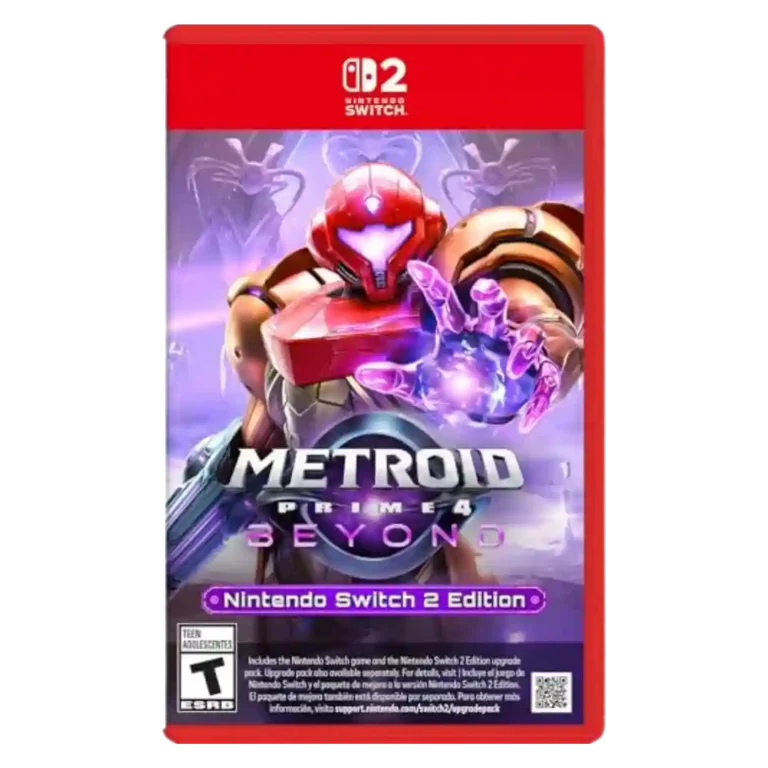
Choose Metroid Prime 4: Beyond for gorgeous Prime-style dungeons, atmosphere, bosses, and smooth controls. Skip it if an empty desert hub, green-crystal grind, chatty companions, and uneven pacing would sour the experience.
Best for players who want a polished first-person Metroid adventure focused on atmosphere, scanning, environmental storytelling, boss fights, and high-end Switch 2 presentation. It especially suits fans comfortable with a more guided, Zelda-like structure.
Not for players who mainly want dense nonlinear Metroidvania exploration with minimal chatter. Reviewers repeatedly warn that the empty desert hub, companion hints, green-crystal collection, and linear pacing can frustrate purists.
Metroid Prime 4: Beyond lands as a technically impressive but uneven return. Reviewers repeatedly praise its gorgeous presentation, strong art direction, atmospheric facilities, responsive controls, memorable bosses, and classic scan-driven world-building. The tradeoff is that its biggest new structures often work against those strengths: Sol Valley is repeatedly described as empty or padded, the green-crystal requirement hurts pacing, and the voiced Federation support can feel intrusive or clichéd. The best-supported read is that the game excels whenever it behaves like a dense Prime adventure, but becomes more divisive when it stretches into open-zone traversal, companion banter, and conservative modernization.
Compared with other Video Games, this product is above average in aiming precision, frame rate stability, boss design, near average in faithfulness to franchise, soundtrack quality, below average in open-world design, upgrade system, fast travel convenience.
| Attribute | This product | Category average | Difference |
|---|---|---|---|
| open-world design | 2.2 | 3.8 | -1.6 |
| upgrade system | 2.0 | 3.9 | -1.9 |
| fast travel convenience | 2.0 | 3.8 | -1.8 |
| protagonist appeal | 2.0 | 3.7 | -1.7 |
| writing quality | 2.1 | 3.6 | -1.5 |
| checkpoint system | 2.0 | 3.5 | -1.5 |
| enemy variety | 2.0 | 3.5 | -1.5 |
| aiming precision | 4.5 | 3.1 | +1.4 |
Choose Pragmata. It scores 4.9 vs 3.6 for fun factor, with a 4.3 overall score.
Choose Tales of Xillia Remastered. It scores 5.0 vs 2.8 for innovation, with a 3.9 overall score.
Choose Death Stranding 2: On the Beach. It scores 4.9 vs 1.9 for companion AI, with a 4.3 overall score.
Choose Fatal Frame II: Crimson Butterfly Remake. It scores 5.0 vs 2.0 for save system reliability, with a 3.8 overall score.
Products reviewers directly compared with this model, grouped into quick takeaways.
Reviews are mixed but often positive. Many praise the classic Prime fundamentals, atmosphere, bosses, and presentation, while others feel the desert hub and companions dilute the formula.
The clearest praise goes to graphics, art direction, atmosphere, sound, responsive controls, boss fights, and the dense dungeon-like facilities where scanning and exploration matter most.
Sol Valley is the main recurring issue. Many reviewers describe the desert hub as empty, padded, boring, or less compelling than the main areas, especially when tied to green-crystal collection.
They are divisive. Some reviewers warmed to the Federation cast, but many disliked the chatter, hints, revives, or tonal shift away from Samus's usual isolation.
Most reviewers praise the controls, gyro support, and smooth Switch 2 performance. Mouse-style Joy-Con aiming can be precise, but several reviewers found it awkward for extended couch play.
Most evidence points to conservative innovation. The bike, psychic powers, and open-zone structure add new wrinkles, but many reviewers say the best parts are still the familiar Prime fundamentals.
These are a few of the reviews included in our analysis.

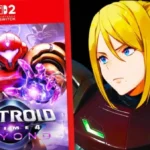

Best for fluid traversal, rewarding exploration, striking art, and forgiving quality-of-life features. Skip it if you want deep combat, radical genre innovation, or consistently demanding bosses.
Pros: difficulty balance, boss design
Cons: innovation, sandbox freedom

Good if you want fast, tactical roguelite combat with huge progression depth, striking art, and standout music. Skip it if repetition, resource micromanagement, or a less emotionally satisfying sequel story...
Pros: combat system, progression system
Cons: originality

Good if you want a beautiful, demanding survival sandbox built around exploration, building, progression, and memorable co-op. Skip it if long resource runs, harsh death recovery, and deliberate pacing sound...
Pros: town-building system, exploration quality
Cons: grind level, fast travel convenience

Best for joyful destruction, dense exploration, and a charming DK-Pauline adventure. Skip it if camera quirks, frame-rate dips, easy bosses, or premium Switch 2 pricing are dealbreakers.
Pros: fun factor, world interactivity
Cons: frame rate stability, boss design